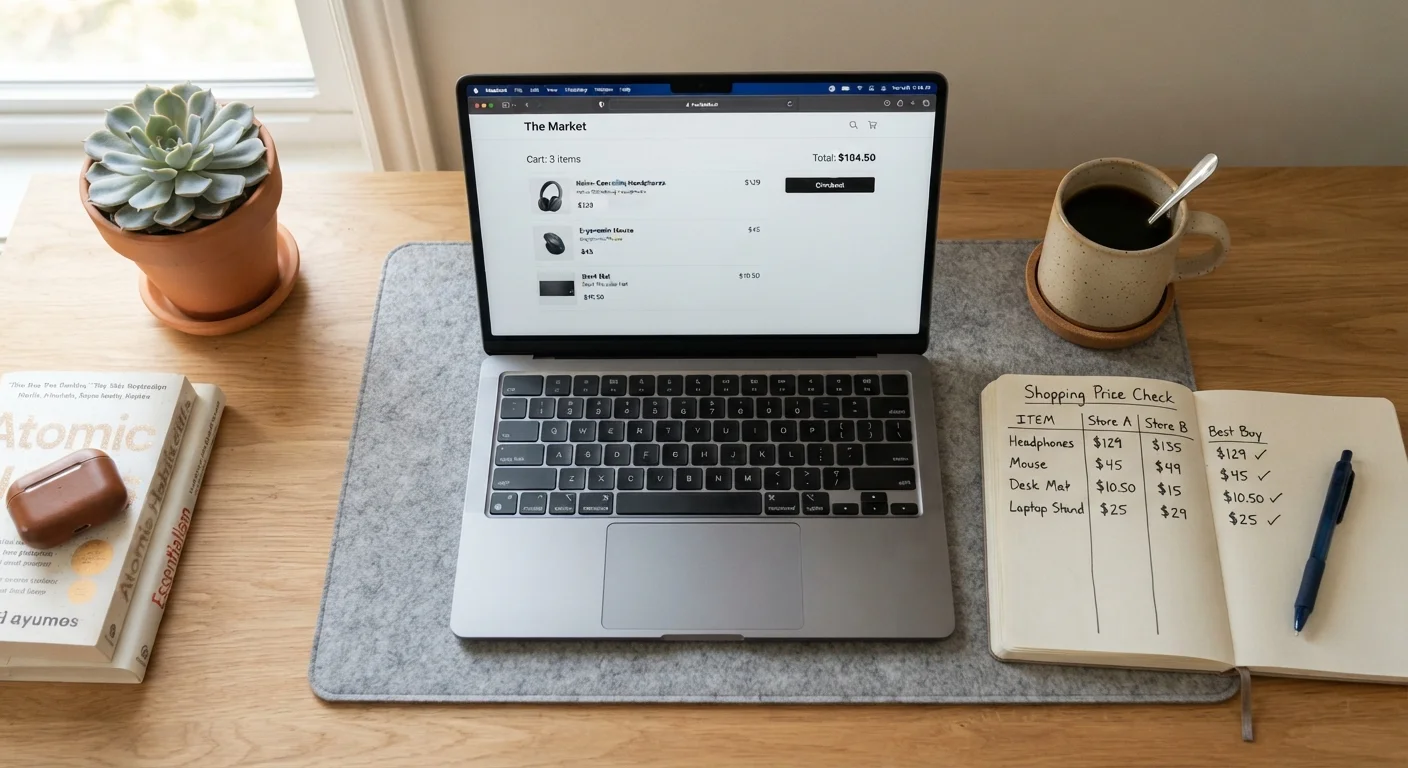
Run through this checklist before finalizing any online order to make sure you're not leaving money on the table.
Key Takeaways
Many "sale" prices are not reductions from a genuine previous price - verify independently.
Checking the total cost at checkout (including shipping and fees) often changes the math on a deal.
Coupon codes, price history tools, and return policies take minutes to check but can prevent regret.
Urgency and scarcity messaging is a common tactic; slow down before responding to it.
This checklist works for any online purchase, regardless of category or retailer.
Why You Need a Pre-Purchase Checklist
Most overspending in online shopping doesn't happen because consumers are careless - it happens because the checkout experience is engineered for speed. Countdown timers, bold "X% OFF" banners, and low-stock warnings all push you to decide before you've had a chance to think. A short, consistent checklist breaks that momentum.
This guide is focused specifically on savings verification: confirming that the price you're seeing is genuinely good, that no obvious savings are being left behind, and that the total cost is what you expect. For a parallel focus on security and seller legitimacy, see our pre-purchase security checklist before entering your payment details.
Check the item's price history using a browser-based price tracker to confirm the current price is an actual reduction, not an inflated baseline.Must
Search for the same product on at least two other retailers to establish a real market price before accepting the listed figure.Must
Note whether the "original" or "was" price shown is realistic - artificially inflated reference prices are a documented retail tactic.Must
Check whether the item recently appeared cheaper on the same site, especially around major sale events.Should
Coupon and Code Search
Search for publicly available promo codes for this retailer before proceeding to checkout - many are published on deal-aggregator sites.Must
Check whether the retailer's own email list or loyalty program offers a discount for first-time orders or current members.Should
Test any code you find in the cart before assuming it will work - codes expire and are often category-specific.Must
Check if your credit card or bank app offers automatic cashback or a portal rebate for this merchant.Nice to have
Total Cost Calculation
Add the item to your cart and proceed to the shipping stage to see the fully loaded total, including taxes and delivery fees.Must
Compare the all-in price (product + shipping + tax) against competitors, not just the base product price.Must
Check whether a subscription or membership fee is required to unlock the advertised price - factor that cost into your comparison.Should
Confirm there are no auto-renewal add-ons, extended warranties, or protection plans pre-checked in your cart.Must
Urgency and Scarcity Check
Pause when you see a countdown timer or "only X left" message - verify independently whether the scarcity claim appears consistent over multiple visits.Should
Ask yourself whether the purchase decision would change if you came back in 24 hours; if not, the urgency is manufactured.Should
Return and Refund Policy
Locate and read the return window and conditions before checkout - a low price on a final-sale or short-window item carries more risk.Must
Check whether return shipping is free or charged to you, and factor that potential cost into your value calculation.Should
Confirm the refund method offered (store credit vs. original payment) so there are no surprises if the item doesn't meet expectations.Nice to have
How to Use This Checklist
Work through each group in order before confirming your order. Most steps take under two minutes individually; the full checklist should take no longer than 10-20 minutes for a typical purchase. Keep this page open in a separate tab while you shop.
Countdown Timers Are Often Not What They Seem
Many site-wide timers reset on page reload or restart for each visitor session - they are a presentation choice, not a reflection of real inventory constraints. Treat any timer-driven urgency as a cue to slow down, not speed up. Refresh the page or revisit the item the next day to check whether the "deal" persists.
Not every item will apply to every purchase - a low-cost consumable doesn't warrant the same research depth as an expensive appliance. Use the priority labels (must, should, nice to have) to triage when you're short on time.
A significantly discounted item with a no-returns or store-credit-only policy shifts the entire financial risk onto you if the product arrives damaged, incorrect, or not as described. Always weigh the return terms alongside the price. For high-value or unfamiliar purchases, a slightly higher price with a generous return window is often the better financial choice.
Smart Shopping Editorial Team is the collective byline for our editorial team and contributor network. Articles published under this byline or an editorial pen name are researched, written, and reviewed according to our editorial standards for clarity, consistency, and independence before publication.
The content on this site is for informational purposes only and is not a substitute for professional advice. Always consult a qualified professional for guidance specific to your situation.