
Why a Nutrition Vocabulary Matters
Understanding nutrition labels, dietary guidelines, and health articles is much easier once you know what the key terms actually mean. Words like macronutrient, Daily Value, and bioavailability appear constantly in food packaging and wellness coverage-yet they're rarely defined where they appear. This reference fills that gap.
Use it alongside our guide to reading a Nutrition Facts label for a complete picture of how nutrition information is presented on U.S. food products. For a deeper look at individual vitamins and minerals, see our article on micronutrients your body quietly depends on.
| Macronutrients | Carbohydrates, protein, fat (U.S. Dietary Guidelines) |
| DV calorie reference | 2,000 calories per day (FDA Nutrition Facts regulations) |
| "High" DV threshold | 20% DV or more per serving (FDA label guidance) |
| "Low" DV threshold | 5% DV or less per serving (FDA label guidance) |
| Calories per gram of fat | 9 kcal (Standard nutrition science) |
| Calories per gram of carbs or protein | 4 kcal (Standard nutrition science) |
Core Nutrition Terms Defined
The glossary below covers the terms most commonly encountered on food labels, in dietary guidelines, and in everyday health articles. Definitions reflect established nutrition science and U.S. regulatory framing.
Macronutrient
The three nutrients the body requires in large amounts: carbohydrates, protein, and fat. Each provides energy measured in calories, and each plays distinct roles in bodily function.
Micronutrient
Vitamins and minerals needed in smaller quantities but essential for health. Unlike macronutrients, most micronutrients do not provide calories directly.
Daily Value (DV)
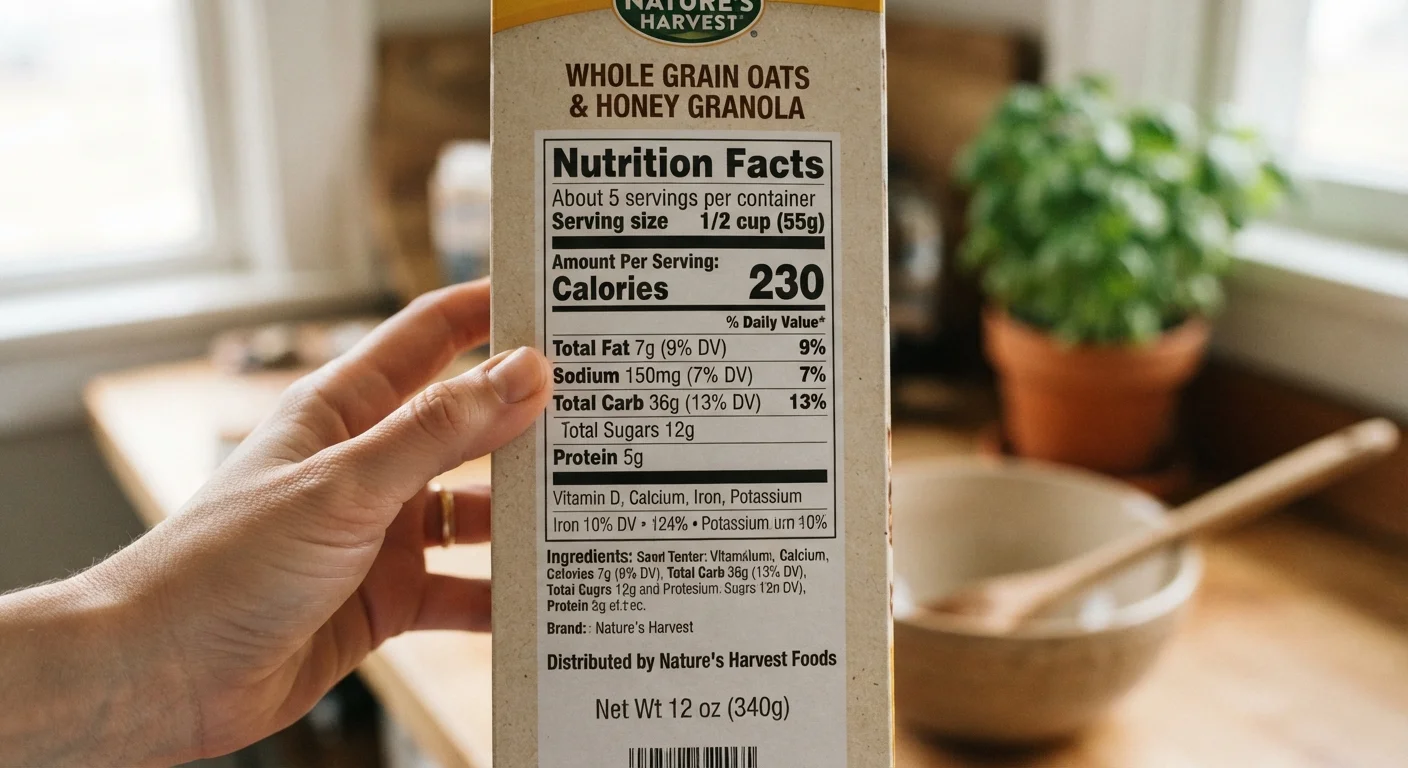
A reference amount set by the FDA indicating how much of a nutrient one serving of a food contributes relative to a daily intake of 2,000 calories. Expressed as a percentage on Nutrition Facts panels.
Dietary Reference Intake (DRI)
An umbrella term for a set of reference values-including RDAs and AIs-developed by national health authorities to guide nutrient intake recommendations across different population groups.
Recommended Dietary Allowance (RDA)
The average daily intake level sufficient to meet the nutrient needs of nearly all healthy individuals in a specific life stage and sex group. One of the values within the broader DRI framework.
Adequate Intake (AI)
Used when there is insufficient evidence to establish an RDA. It is a recommended average daily intake assumed to be adequate based on observed or experimental data.
Bioavailability
The proportion of a nutrient that is actually absorbed and used by the body after consumption. The same nutrient can have different bioavailability depending on its food source, preparation method, and what else is eaten with it.
Added Sugars
Sugars and syrups added to foods or beverages during processing or preparation, distinct from naturally occurring sugars found in whole fruit or plain dairy. U.S. Dietary Guidelines recommend limiting added sugar intake.
Saturated Fat
A type of dietary fat found mainly in animal products and some tropical oils. It is solid at room temperature and is one of the fats dietary guidelines generally recommend limiting.
Dietary Fiber
The indigestible portion of plant foods. Fiber supports digestive health, helps maintain steady blood sugar levels, and contributes to feelings of fullness. It is often under-consumed in typical American diets.
Sodium
A mineral and electrolyte that regulates fluid balance and nerve function. Most sodium in the U.S. diet comes from processed and restaurant foods rather than table salt added at home.
Caloric Density
The number of calories provided per gram or per unit volume of a food. Foods with low caloric density-like most vegetables-provide fewer calories relative to their portion size compared to high-caloric-density foods.
When you feel ready to put these concepts into practice, our practical nutrition starting point walks through how to apply them in a first week of more intentional eating.
How Daily Values Work in Practice
The Daily Value (DV) figures printed on U.S. Nutrition Facts panels are based on a reference intake of 2,000 calories per day, established by the FDA. They give a consistent benchmark so consumers can compare products-but they're population-level guides, not personalized prescriptions.
- 5% DV or less is generally considered low for a nutrient.
- 20% DV or more is generally considered high.
- DVs exist for both nutrients to limit (sodium, saturated fat, added sugars) and nutrients to get enough of (fiber, calcium, vitamin D, iron).
2,300 mg
Sodium Daily Value for adults
The FDA sets the DV for sodium at 2,300 mg per day, reflecting the upper limit recommended by U.S. dietary guidelines.
28 g
Daily Value for dietary fiber
Based on the FDA's 2,000-calorie reference diet; most Americans consume significantly less than this amount daily.
10%
Added sugars DV limit
U.S. Dietary Guidelines recommend that added sugars contribute no more than 10% of total daily calorie intake.
Because individual calorie and nutrient needs vary by age, sex, activity level, and health status, these numbers work best as a rough compass rather than an exact target. A qualified healthcare provider or registered dietitian can help translate general DVs into guidance suited to your specific situation.
You can also use our weekly eating habits audit to spot gaps in your current diet patterns against these benchmarks.
DVs Apply to Adults and Children 4+
The Daily Values on U.S. Nutrition Facts labels are designed for adults and children aged four and older. Nutrient needs differ significantly for infants, toddlers, pregnant individuals, and older adults. If you're making dietary decisions for someone in a special population group, consult a healthcare provider rather than relying solely on label percentages.
This article is for general informational and educational purposes only and is not a substitute for professional medical or dietary advice. Consult a qualified healthcare provider or registered dietitian for guidance specific to your health needs.