What Each Filter Actually Does
Despite sharing a name and a similar look, cabin and engine air filters operate in completely separate systems with no overlap in function.
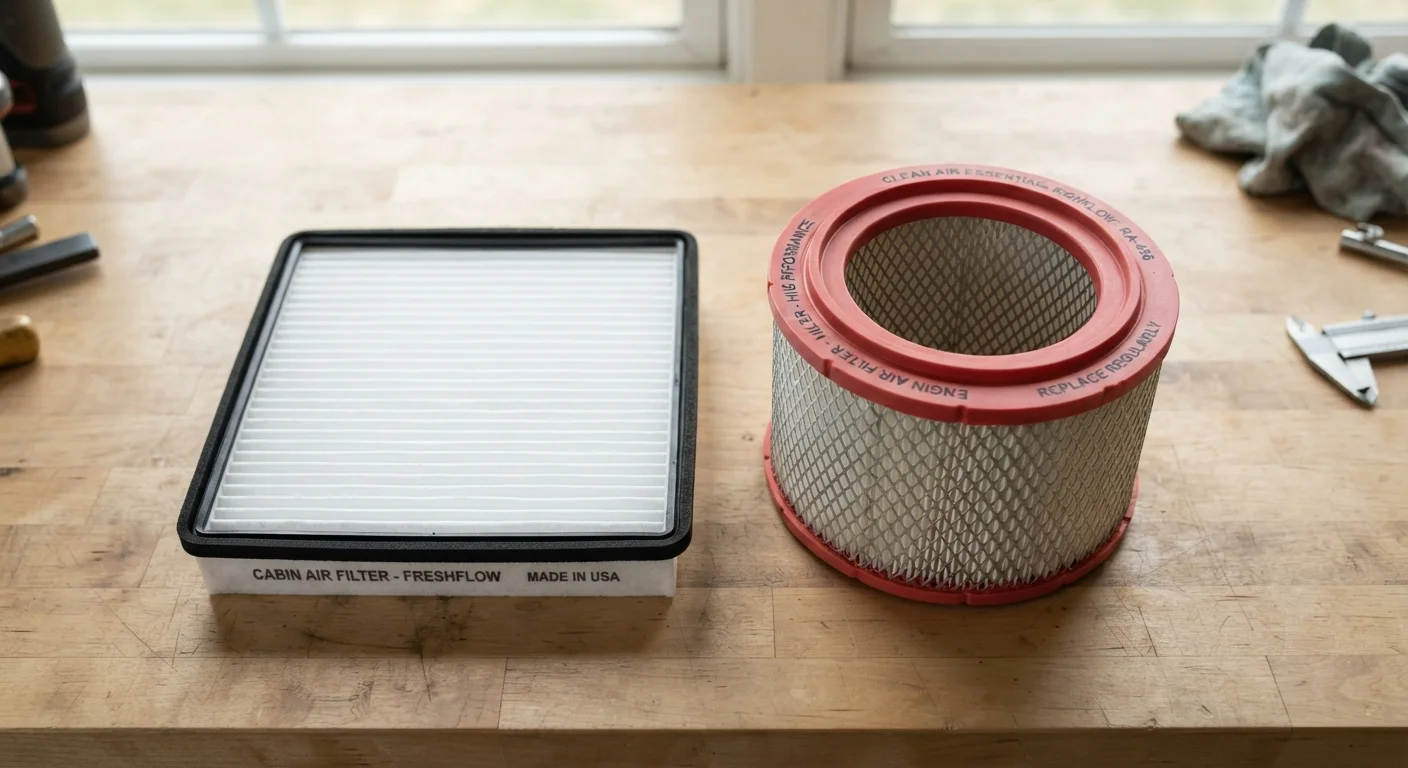
The cabin air filter is part of your vehicle's heating, ventilation, and air conditioning (HVAC) system. It captures airborne contaminants - pollen, dust, exhaust particles, mold spores - before they reach the passenger compartment through the dashboard vents. Think of it as the air purifier for the space where you and your passengers sit.
The engine air filter sits at the intake of the engine's air induction system. Its job is to stop grit, insects, road dust, and other debris from entering the combustion chamber. Clean air is essential to proper fuel combustion; without adequate filtration, abrasive particles accelerate wear on cylinders, pistons, and other internal components. See our complete maintenance schedule guide for where both filters fit into your broader service routine.
| Criterion | Cabin Air Filter | Engine Air Filter |
|---|---|---|
| Primary function | Filters passenger compartment air | Filters air entering combustion chamber |
| System location | HVAC / dashboard area | Engine intake / air box |
| Typical replacement interval | Every 15,000-25,000 miles | Every 15,000-30,000 miles |
| Key warning signs | Weak vents, musty odors | Poor acceleration, lower MPG |
| Impact if neglected | Poor interior air quality | Engine wear, reduced efficiency |
| DIY accessibility | Moderate (varies by model) | Generally easy (engine bay) |
| Affected by environment | Urban pollution, high pollen | Dusty roads, construction zones |
Replacement Intervals: Not the Same Clock
One of the most common misconceptions is that both filters follow identical schedules. They don't - and conflating the two can leave either your engine or your passengers underserved.
Engine air filter: Most manufacturers recommend inspection around every 15,000 miles and replacement roughly every 15,000 to 30,000 miles under normal driving conditions. However, vehicles driven frequently in construction zones, on dirt roads, or in arid climates may need replacement considerably sooner. Always consult your owner's manual for the manufacturer's specific recommendation for your vehicle.
Cabin air filter: Replacement intervals generally fall between 15,000 and 25,000 miles, but cabin filters can degrade faster in urban environments with heavy air pollution or during high-pollen seasons. Some drivers notice reduced vent airflow or a musty smell long before the mileage threshold - both are reliable signals to inspect the filter regardless of schedule.
Up to 10%
Potential fuel economy loss from a clogged engine filter
The U.S. Department of Energy notes that a severely restricted engine air filter can reduce fuel economy on older carbureted vehicles; modern fuel-injected engines primarily see power losses rather than MPG drops, though the effect on older vehicles remains well documented.
15,000-25,000 mi
Typical cabin filter replacement range
Most vehicle manufacturers publish this interval in owner's manuals, though real-world driving conditions - particularly high-pollen or high-pollution environments - can cut effective filter life significantly shorter.
If your vehicle spends significant time in stop-and-go urban traffic or near construction sites, treating both filter intervals as closer to the shorter end of the recommended range is a reasonable, conservative approach.
How to Tell When Each One Needs Attention
You don't always need to wait for a scheduled service to know a filter is due. Each filter sends its own warning signals.
Signs the cabin air filter needs replacing
- Noticeably reduced airflow from dashboard or floor vents even at high fan speeds
- Persistent musty or stale odor when the HVAC system is running
- Increased dust accumulation on interior surfaces
- Allergy symptoms that seem worse inside the car than outside
Signs the engine air filter needs replacing
- Reduced throttle response or sluggish acceleration
- Decline in fuel economy without other obvious causes
- Black or dark gray smoke from the exhaust under acceleration
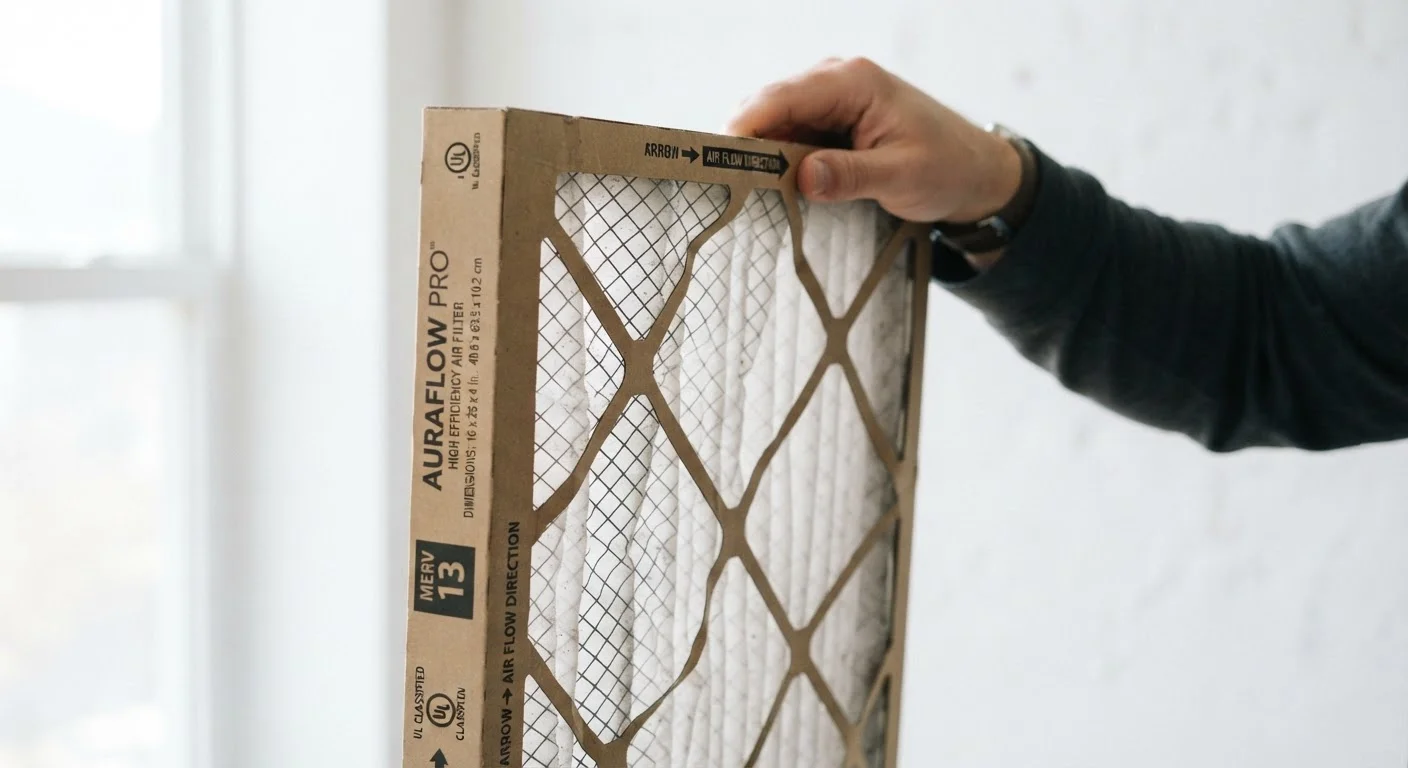
- A visibly gray, clogged, or debris-coated filter on inspection
Check Your Owner's Manual First
Manufacturer-specified replacement intervals for both filters are listed in your vehicle's owner's manual and should always be your primary reference. Generic mileage guidelines are useful starting points, but your specific make, model, and engine can shift the recommended schedule meaningfully. Some manufacturers also specify inspection at intermediate service intervals even when replacement isn't yet due.
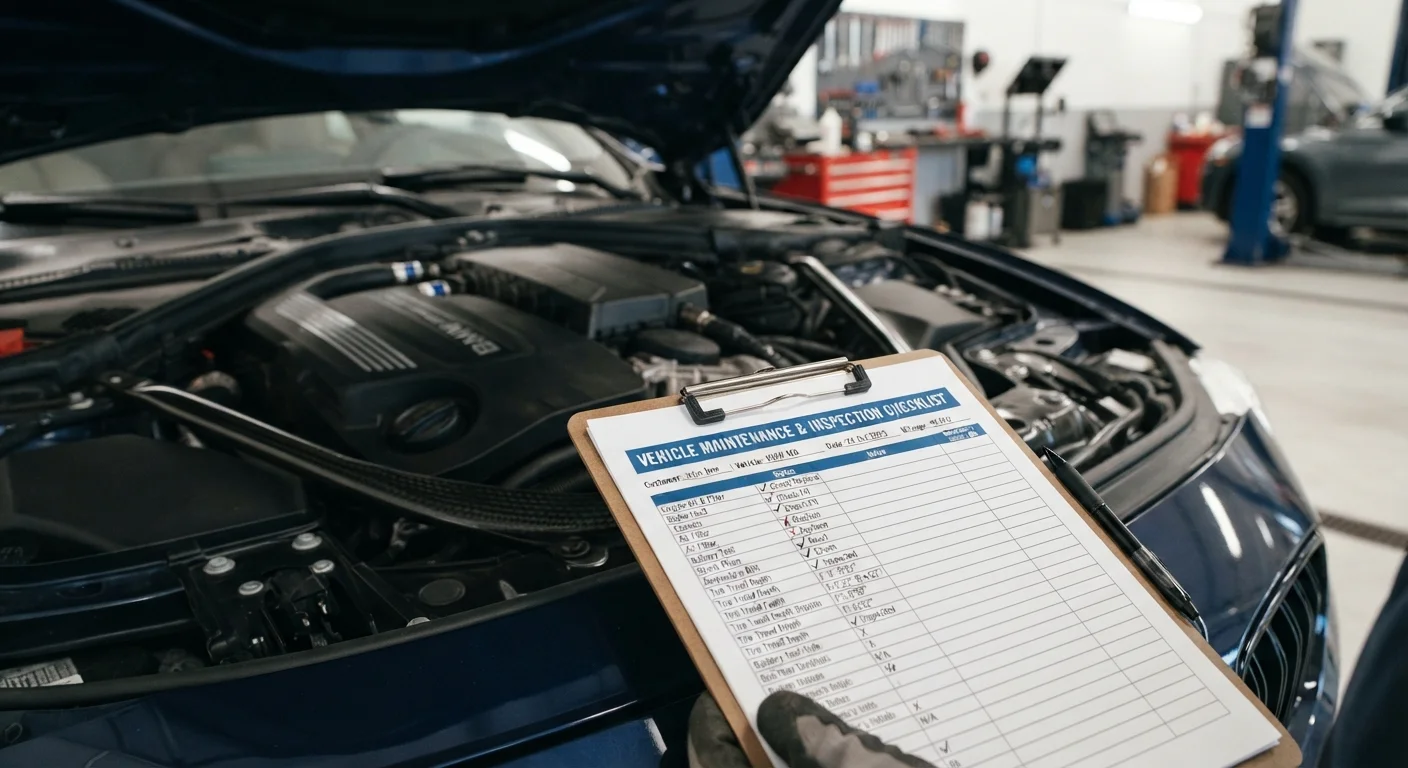
Inspecting either filter is generally straightforward - the cabin filter is often located behind the glove box or under the dashboard, and the engine filter sits in a housing in the engine bay. If you are uncomfortable performing the inspection yourself, a qualified mechanic can check both during any routine service visit.
DIY Inspection vs. Professional Replacement
Both filters are among the more accessible maintenance items on most modern vehicles, making DIY inspection realistic for many drivers. That said, the difficulty varies significantly by make and model.
For the cabin filter, access usually involves removing the glove box or a panel beneath the dashboard - a process that takes 10 to 20 minutes on most vehicles. Some models, however, route the filter through a tight or awkward location that makes even inspection time-consuming.
For the engine air filter, the housing is typically a large plastic box with clips or wing-nuts located prominently in the engine bay. On many vehicles, inspection takes only a few minutes without any tools.
If you prefer to understand how these tasks fit into your overall vehicle care, our vehicle maintenance schedule explainer outlines what to expect at common service milestones. Drivers interested in how filter ratings work more broadly may also find our guide to HVAC filter ratings a useful reference, since cabin filters share some underlying filtration principles with home air systems.
When in doubt - particularly if your vehicle has limited engine bay access or the cabin filter location requires significant disassembly - having a qualified mechanic handle replacement is a practical, safe choice.