
Why Myths About Budgeting Are So Sticky
Budgeting sits in an unusual position in personal finance: nearly everyone agrees it matters, yet a large share of Americans have never used a formal system. Research from various consumer finance surveys consistently finds that a majority of households operate without a written or tracked budget, even when they're aware of the concept.
The gap between knowing and doing usually isn't about information - it's about perception. A handful of persistent myths make budgeting feel punishing, complicated, or pointless before anyone even tries. Correcting those myths is often the most useful first step. For a grounded look at what a budget actually is before diving into what it isn't, see what a personal budget really means.
Myth
Budgeting means giving up everything fun - coffee, restaurants, vacations, all of it.
Fact
A budget allocates money to things you value, including discretionary spending. Cutting fun entirely is a choice, not a requirement.
This myth probably persists because the most dramatic budget stories involve extreme sacrifice. But a budget is simply a plan for how your money gets used - and that plan can include dining out, entertainment, and travel if those matter to you. The point is to spend on those things deliberately rather than by default. If your numbers don't allow for much discretionary spending right now, a budget makes that visible so you can decide what to adjust. It doesn't make the decision for you.
Myth
Budgeting only works if you're good at math.
Fact
A basic budget requires nothing beyond addition and subtraction - skills most people use daily without thinking about it.
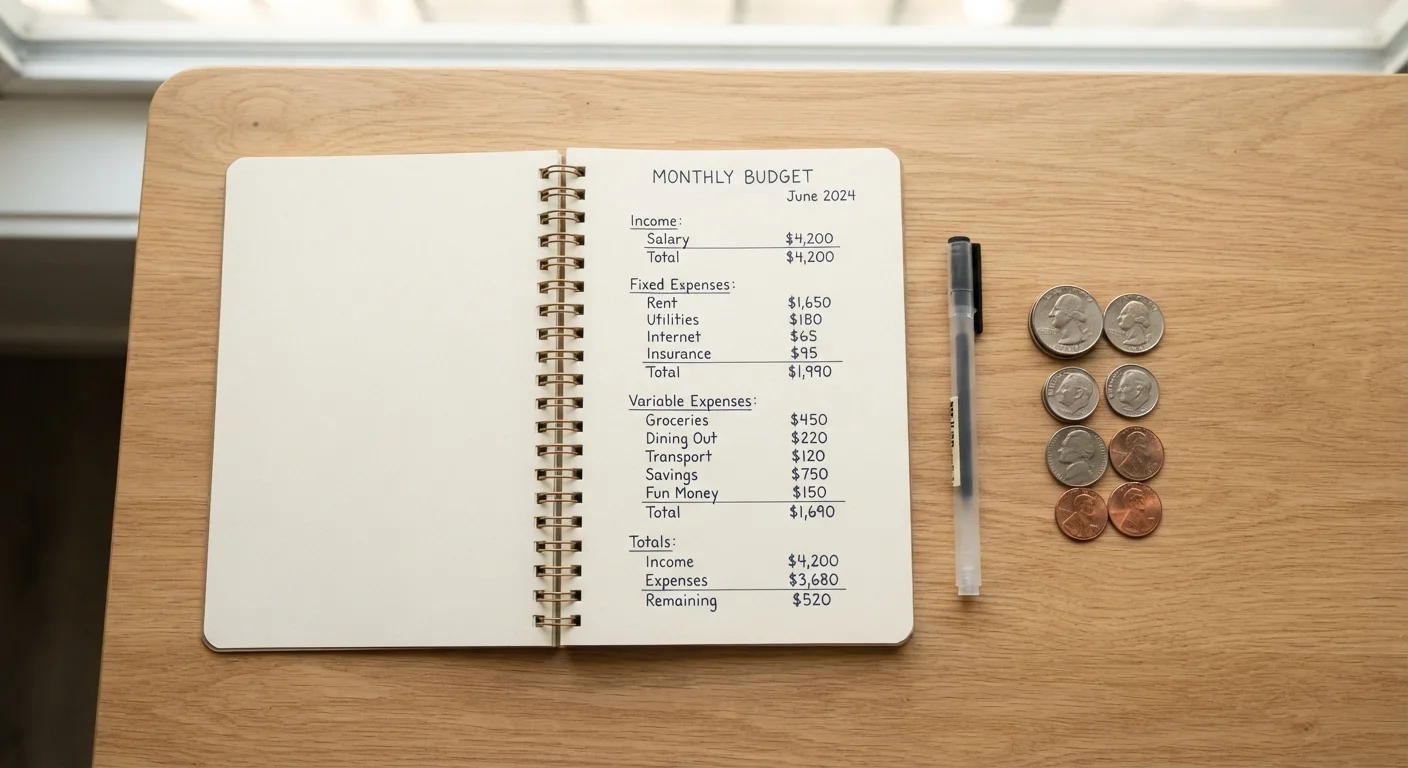
The arithmetic in a household budget is genuinely simple: income minus expenses equals what's left. No algebra, no spreadsheet formulas, no financial background required. A pen and a sheet of paper work fine. People who believe they're bad at math often mean they're uncomfortable with finances generally - which is a confidence issue, not a skills gap. The numbers involved are far simpler than most people expect going in.
Myth
My income is too irregular to budget - it wouldn't mean anything.
Fact
Irregular income makes budgeting harder to set up, but it also makes budgeting more valuable, not less.
Freelancers, gig workers, and anyone with variable pay face genuine complexity, but the solution isn't to skip budgeting - it's to adapt the format. Common approaches include budgeting from a conservative baseline (a lower-than-average month), building a buffer fund to smooth out lean periods, and prioritizing fixed expenses first when income arrives. Saving and goal-setting concepts become especially important when income swings unpredictably, since a cushion is what keeps one slow month from creating a crisis.
Myth
You need to track every single penny for a budget to work.
Fact
Broad category tracking is enough for most people; obsessive detail often causes burnout, not better results.
The goal of tracking is awareness, not accounting perfection. Knowing roughly what you spend on housing, food, transportation, and discretionary categories is sufficient to make useful decisions. Chasing every small transaction tends to feel exhausting within a few weeks and is one of the common reasons new budgeters quit. A system you actually maintain - even an imprecise one - will outperform a theoretically perfect system you abandon. Note that there are also expenses people consistently forget to include, like annual subscriptions or irregular bills, which matter more than tracking daily coffee purchases.
Myth
I don't make enough money for a budget to matter.
Fact
Lower incomes make deliberate money management more important, not less - the margin for unplanned spending is smaller.
The idea that budgeting is for people with money to spare gets things backwards. When income is tight, there's less room for spending to drift without consequences. A budget in this situation isn't about finding luxuries to cut; it's about making sure the most critical expenses are covered first and that small available amounts are directed somewhere useful rather than absorbed without notice. Even modest, consistent saving - addressed in common myths about saving money - can compound into meaningful progress over time.
Myth
You have to wait for the right moment - a new month, a new year, a raise - to start.
Fact
The best time to start a budget is with whatever information you have today.
Waiting for a clean starting point is one of the most effective ways to never start at all. A budget begun mid-month with incomplete data is still more useful than one that never gets made. The first version of any budget is mostly an estimate anyway; it gets refined with real spending data over the following weeks. Starting imperfectly and adjusting is the normal process - not a sign that you're doing it wrong.
What Getting Started Actually Looks Like
Once the myths are out of the way, the mechanics become much less intimidating. A workable first budget doesn't require perfect data, the right app, or a tidy income. It requires a honest accounting of what comes in and what goes out - and a decision about what you'd like to change.
Don't Budget From the Wrong Number
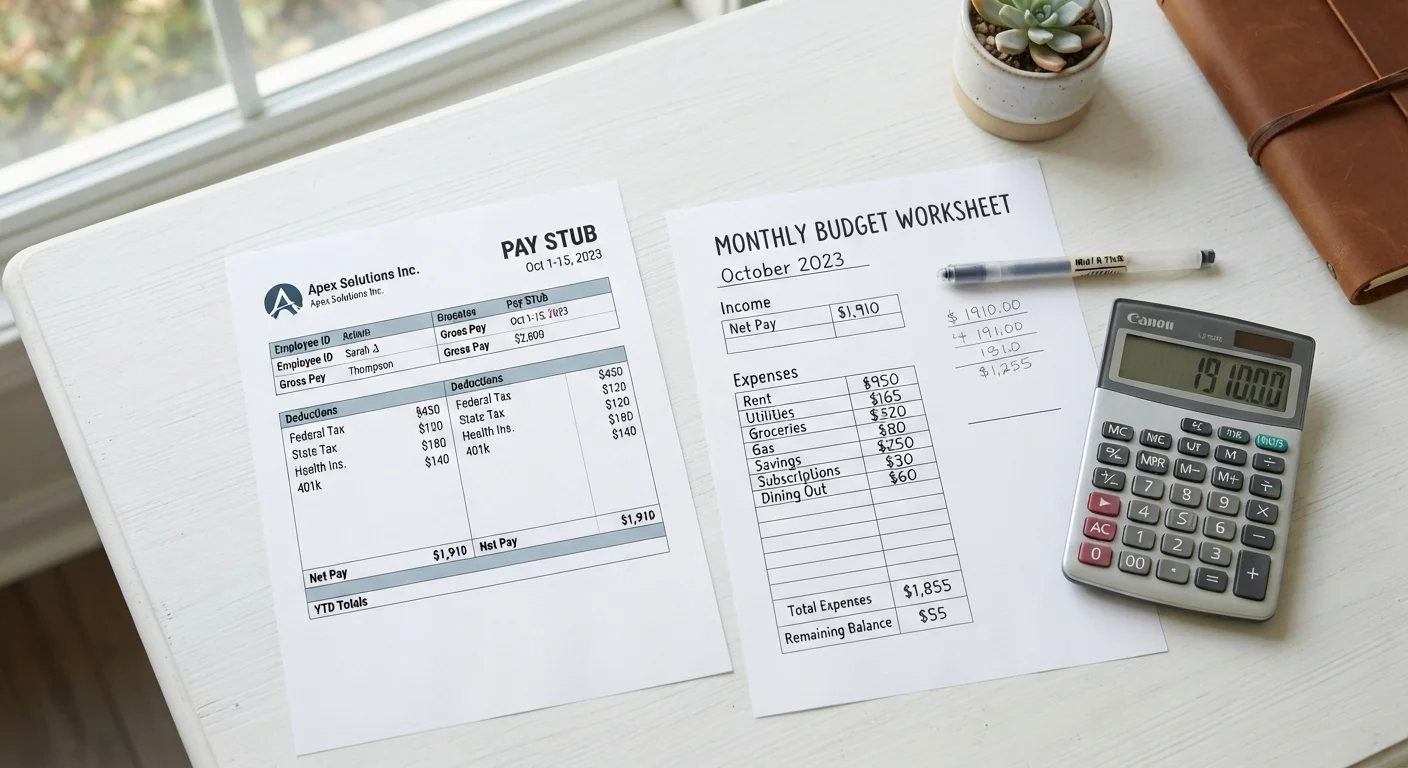
One of the most common early mistakes is building a budget from gross (pre-tax) income rather than net (take-home) pay. Gross pay is what you earn before taxes, retirement contributions, and other deductions are taken out - it's not money you can spend. Budgeting from gross makes your spending plan look more comfortable than it actually is, which leads to shortfalls that feel confusing. Always use your net pay as the starting figure.
One structural note worth catching early: many first-time budgeters accidentally plan from their gross (pre-tax) pay rather than their net (take-home) pay, which makes every spending category look more affordable than it is. The article net income vs. gross income explains which number to use and why it matters.
When you're ready to move from concept to action, a monthly budget setup checklist can walk you through each step, from gathering income figures to scheduling a monthly review. And if you want to understand what tends to derail new budgets before they gain traction, why most first budgets fall apart in month two covers the patterns worth watching out for.
This article provides general financial information and education only. It is not personalized financial advice. For guidance specific to your situation, consider consulting a qualified financial professional.