
Why Maintenance Myths Persist - and What They Cost You
Car maintenance advice travels fast and ages slowly. Advice that made perfect sense for carbureted engines in the 1970s gets passed down to drivers of modern fuel-injected vehicles, where it no longer applies - and sometimes causes harm. The result is that many well-intentioned drivers spend money on services they don't need while missing the ones that actually matter.
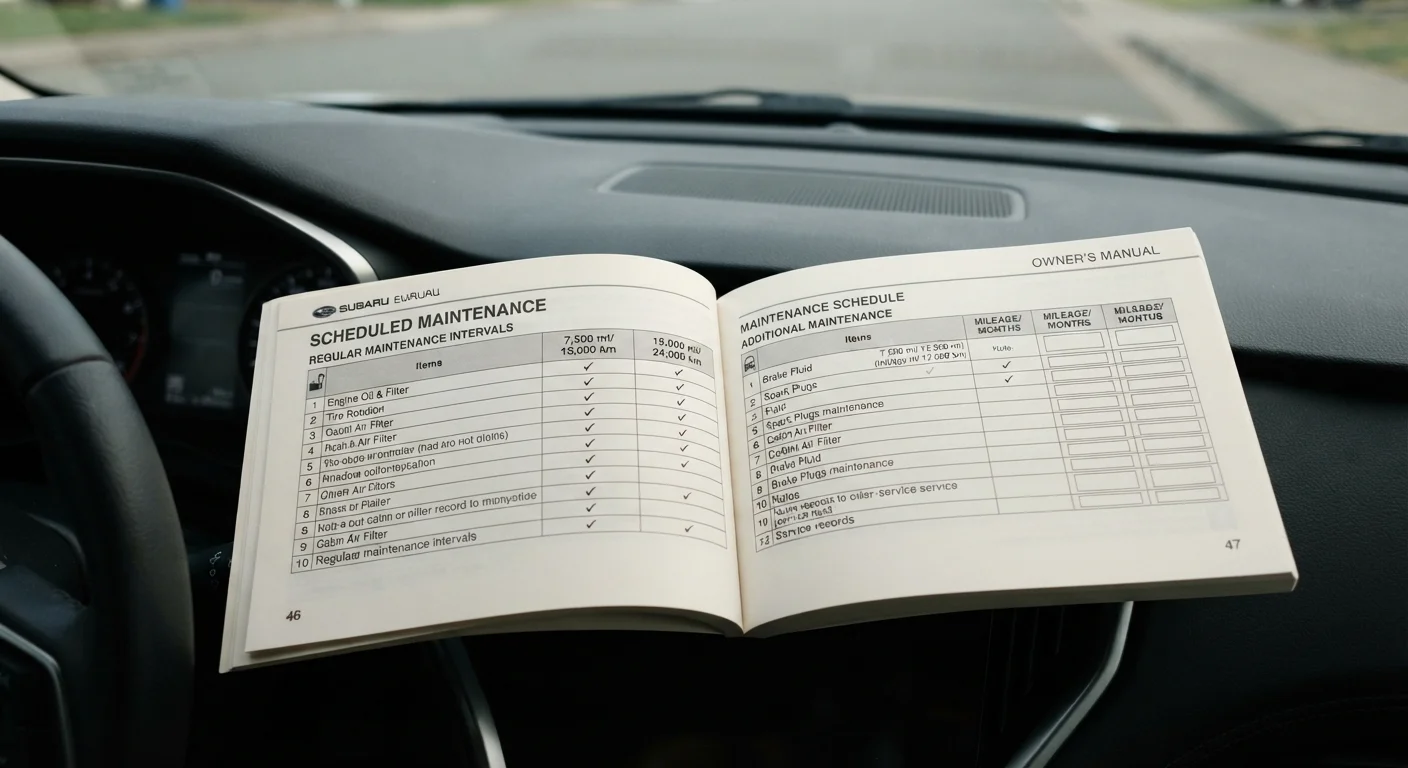
The antidote is straightforward: consult your vehicle's owner's manual and understand the reasoning behind each service interval. For a deeper look at how to interpret that document, see the maintenance sections most drivers ignore. In the meantime, the myth-busting below covers the most financially damaging misconceptions in circulation today.
Myth
You need to change your oil every 3,000 miles, no exceptions.
Fact
Most modern vehicles with conventional oil can safely go 5,000-7,500 miles between changes; synthetic oil often extends that to 10,000 miles or more, depending on the manufacturer.
The 3,000-mile interval was sensible for older engine designs and lower-quality motor oils. Modern engines are built to tighter tolerances, and oil formulations - especially full synthetic - have advanced considerably. Your owner's manual will specify the correct interval for your vehicle. Following that schedule, rather than an outdated rule of thumb, can save hundreds of dollars per year without compromising engine life. For a full comparison of oil types and intervals, see synthetic vs. conventional motor oil intervals.
Myth
You should let your engine warm up by idling for several minutes before driving in cold weather.
Fact
Fuel-injected engines - standard on virtually every vehicle sold in the past 30-plus years - warm up faster and more efficiently under gentle driving load than they do sitting at idle.
Extended idling in cold weather wastes fuel and can actually cause unburned fuel to wash oil off cylinder walls in some engine types, increasing wear over time. The correct approach is to start the vehicle, allow 30-60 seconds for oil to circulate, and then drive gently for the first few miles. The engine reaches operating temperature much faster this way, which is when it runs most efficiently and cleanly.
Myth
Premium fuel makes any car run better and protects the engine.
Fact
Premium fuel only benefits engines with higher compression ratios specifically engineered to require or recommend it. Using it in a standard engine produces no measurable performance or protection advantage.
The octane rating on a fuel pump indicates its resistance to engine knock, not its overall quality. If your owner's manual specifies regular (87 octane), premium offers no benefit whatsoever. If it recommends premium, using regular may reduce performance and, in some performance engines, trigger knock over time. "Recommended" versus "required" language in the manual also matters - required means use it; recommended means the engine will adapt but may perform slightly better with it.
Myth
If your tires look fine and feel properly inflated, they're at the right pressure.
Fact
A tire can be significantly under-inflated and still look normal to the naked eye. Proper inflation must be verified with a gauge against the pressure listed on your vehicle's door jamb sticker.
Tires lose roughly 1 PSI per month under normal conditions, and temperature drops cause further pressure loss (approximately 1 PSI per 10°F drop). Under-inflated tires increase rolling resistance, reduce fuel economy, cause uneven tread wear, and can raise the risk of a blowout. The correct target pressure is found on the sticker inside the driver's door frame - not on the tire sidewall, which lists the tire's maximum allowable pressure, not the vehicle's recommended operating pressure.
Myth
Brake fluid never needs to be changed unless something goes wrong.
Fact
Brake fluid is hygroscopic - it absorbs moisture from the air over time - which lowers its boiling point and can lead to reduced braking performance and internal corrosion.
Most manufacturers recommend replacing brake fluid every two to three years or at specified mileage intervals, regardless of appearance. Old, moisture-saturated fluid can boil under heavy braking and cause a spongy pedal or brake fade - a serious safety concern. If you're unsure when your brake fluid was last replaced, a qualified mechanic can test moisture content with an inexpensive probe. For related brake concerns, understanding brake squealing is worth reading alongside this.
Putting Accurate Maintenance Into Practice
Debunking myths is only useful if it changes behavior. The most important habit any driver can build is cross-referencing service recommendations - from a shop, an ad, or a well-meaning relative - against the manufacturer's guidance in the owner's manual. Manufacturers engineer maintenance schedules for specific engines, transmissions, and operating conditions. No generic rule of thumb can replicate that precision.
Don't Let the Service Counter Override Your Manual
Quick-lube and dealership service advisors sometimes recommend intervals shorter than your manufacturer specifies - often defaulting to the 3,000-mile oil change rule or suggesting fluid flushes your vehicle doesn't yet need. Always compare any recommendation against your owner's manual before authorizing work. Unnecessary services add up quickly across the life of a vehicle.
Owners of older, high-mileage vehicles should also be aware that their needs diverge from newer cars in specific ways - what high-mileage vehicles need covers those differences in detail. And if you're just getting started with car ownership, building sound maintenance habits early can prevent years of avoidable expense. For a broader view of keeping ownership costs in check, managing vehicle costs over the long haul is a practical companion resource.
5,000-10,000 mi
Typical modern oil change interval
Many vehicle manufacturers now specify intervals well beyond 3,000 miles - consult your owner's manual for your specific vehicle's recommendation.
1 PSI / mo
Average monthly tire pressure loss
Tires naturally lose approximately 1 PSI per month, making monthly pressure checks a straightforward way to protect fuel economy and tire life.