Why Attic Insulation Matters More Than Most People Realize
Heat moves toward cold. In winter, that means warm air inside your home is constantly trying to escape through your ceiling and into the attic. In summer, the opposite happens - the superheated attic space pushes heat down into your living areas. Without adequate insulation, your heating and cooling system works harder than it needs to, and your home stays less comfortable year-round.
The attic is responsible for a significant portion of a home's heat loss and gain, making it one of the highest-impact areas to address when improving energy efficiency. And unlike many home improvement projects, attic insulation is relatively accessible - in many homes, you can improve it significantly without major construction.
Attic Insulation and Local Building Codes
Most attic insulation upgrades do not require a permit in the United States, but requirements vary by municipality. If your project involves structural changes, spray foam on the roof deck, or alterations to HVAC systems, check with your local building department before proceeding. Some jurisdictions also have minimum R-value requirements that apply when a home is sold or renovated.
The Three Main Insulation Types and Where Each Fits
There is no single best insulation type - the right choice depends on your attic's layout, existing conditions, and your project goals.
Batt Insulation
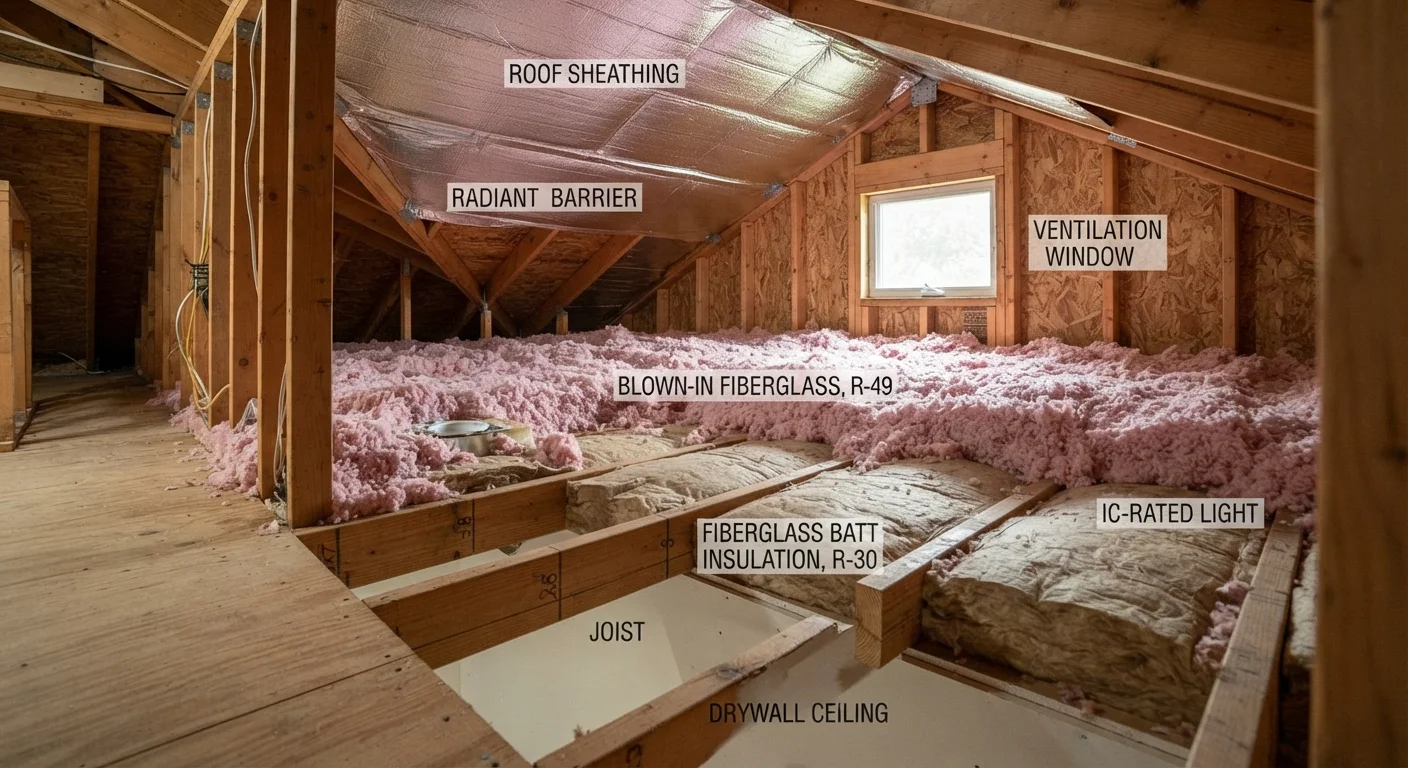
Batt insulation comes in pre-cut panels, most commonly made from fiberglass or mineral wool. It fits between standard joist spacing and is straightforward to handle. Batts work well in attics with clear, unobstructed joist bays and no existing insulation. They are less effective in attics with irregular framing, many penetrations, or existing material already in place, since gaps and compression significantly reduce their real-world performance.
Blown-In (Loose-Fill) Insulation
Blown-in insulation - made from cellulose, fiberglass, or mineral wool - is installed using a blowing machine that distributes material evenly across the attic floor. It conforms to irregular shapes, fills around obstacles, and layers easily over existing insulation. This makes it a strong choice for older homes with uneven framing or anyone topping up an under-insulated attic. Cellulose, made largely from recycled paper, is a popular option for its environmental profile and ability to settle into tight spaces.
Spray Foam Insulation
Spray polyurethane foam expands on contact, sealing gaps and providing insulation simultaneously. It achieves the highest R-value per inch of any common insulation type. Open-cell foam is softer and vapor-permeable; closed-cell foam is denser and acts as a vapor barrier. Spray foam is especially useful when insulating the roof deck (creating a conditioned attic) rather than the attic floor. Due to the specialized equipment and chemical handling required, this work is typically done by a licensed professional.
R-38 to R-60
Recommended attic R-value for most U.S. climates
According to the U.S. Department of Energy's climate zone guidelines for existing homes.
~3.5 per inch
R-value per inch for standard fiberglass batt
Fiberglass batts typically achieve R-2.9 to R-3.8 per inch depending on density and product type.
~6-7 per inch
R-value per inch for closed-cell spray foam
Closed-cell spray polyurethane foam delivers the highest R-value per inch of common residential insulation materials.
Air Sealing: The Step That Makes Insulation Actually Work
Adding insulation without first air-sealing your attic is one of the most common mistakes homeowners make. Insulation slows conductive heat transfer - but it does not stop air movement. Gaps around light fixtures, plumbing penetrations, attic hatches, and top plates allow conditioned air to bypass insulation entirely.
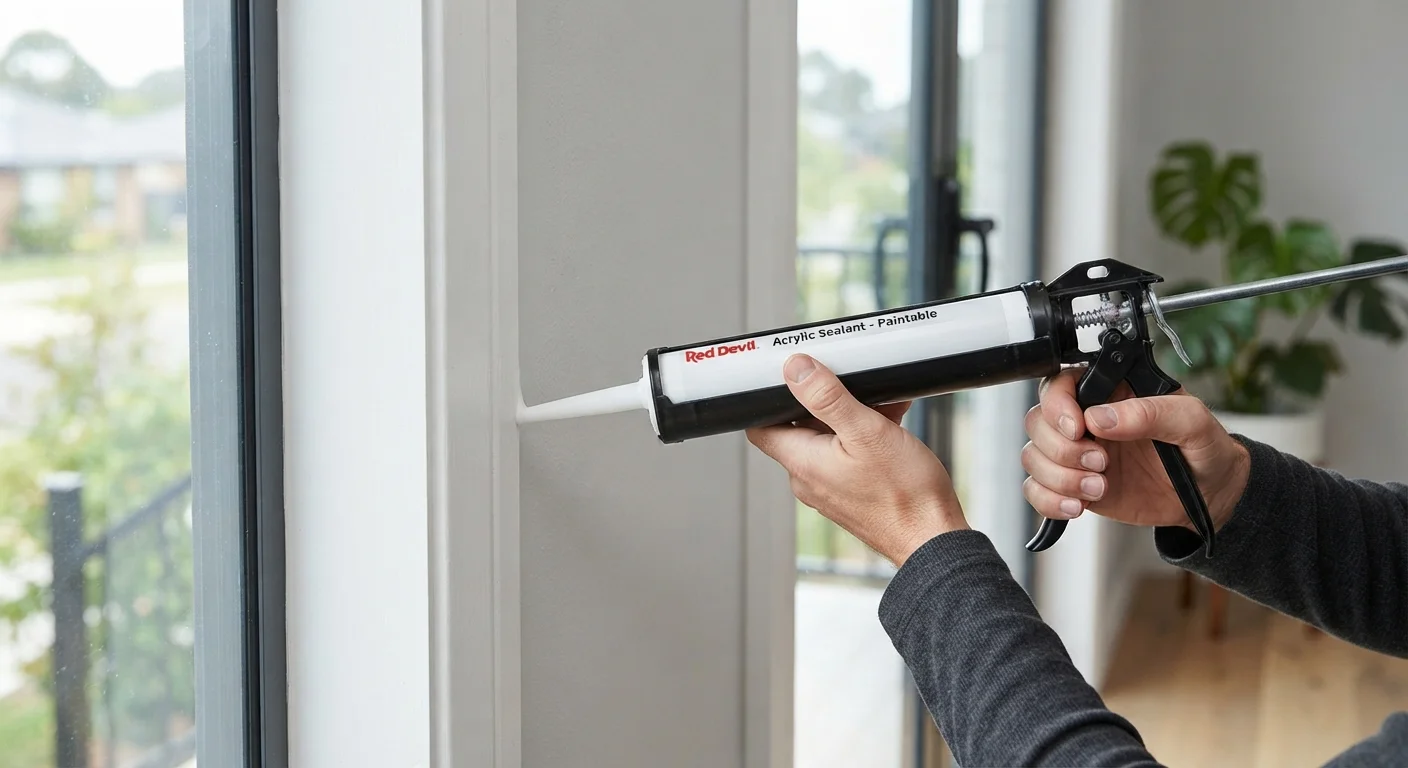
Before adding any insulation, use canned spray foam or caulk to seal visible gaps and penetrations from the attic side. Pay particular attention to the perimeter where interior walls meet the attic floor, and around any recessed lighting cans or HVAC ducts. This step alone can make a meaningful difference in comfort and efficiency - and it makes whatever insulation you add afterward far more effective.
Seal Before You Insulate
Before laying or blowing in any new insulation, spend time on the attic floor identifying and sealing gaps with canned spray foam or acoustical caulk. Focus on areas where interior walls meet the attic floor, around any electrical boxes or light fixtures, and along plumbing or HVAC penetrations. Air sealing is inexpensive and dramatically improves the real-world performance of whatever insulation you add.
Choosing the Right Approach for Your Attic
Start by assessing what you already have. Use a ruler to measure the depth of existing insulation and compare it to the R-value per inch for that material. If you are well below your climate zone's recommended level, you have a clear case for adding more.
For most homeowners with an accessible, floor-insulated attic, blown-in insulation on top of existing material - preceded by air sealing - is the most practical path forward. For new construction or a completely bare attic with standard joist spacing, batts are efficient and easy to manage. If your home has HVAC equipment or ductwork in the attic, a spray foam roof deck application may be worth exploring with a professional, since it brings that mechanical equipment into conditioned space.
Whatever you choose, verify that your attic ventilation remains unobstructed at the eaves. Blocking soffit vents with insulation creates moisture problems that can outweigh any thermal benefit.