Step One: What Cleansing Is Actually Doing
Your cleanser's job is straightforward but easy to underestimate: it lifts away the stuff that doesn't belong on your skin - excess oil, environmental pollutants, makeup residue, sweat, and dead skin cells that have settled on the surface. Without this step, anything you apply afterward has to work through a layer of buildup, which limits how well it can absorb.
The goal, though, is selective removal. A good cleanser targets impurities without stripping away the natural oils and proteins that keep your skin barrier intact. That barrier - technically called the stratum corneum - is your skin's frontline defense against moisture loss and environmental irritants. When cleansers are too harsh or used too frequently, they can compromise it, leaving skin feeling tight, dry, or reactive.
Different cleanser textures (gels, foams, creams, micellar waters) are formulated for different skin types and needs, but the principle is the same across all of them. If you've ever wondered why your skin seems oilier after you wash it aggressively, there's a biological reason for that - over-cleansing can backfire by triggering your skin to compensate with more oil production.
A Gentler Cleanser Goes a Long Way
If your skin feels tight, dry, or squeaky after washing, that's a signal your cleanser may be too harsh - not a sign it's working harder. A cleanser should leave skin feeling comfortable, not stripped. Many dermatologists suggest choosing a formula that maintains a slightly acidic pH (around 4.5-5.5) to stay compatible with the skin's natural environment.
Step Two: What Toner Is (and Isn't) Doing
Toner has a bit of an image problem. For decades, it was synonymous with alcohol-heavy astringents designed to obliterate any remaining traces of oil - which often meant obliterating a good portion of your skin's natural moisture along with it. That reputation has largely been replaced by a much more diverse product category.
Today, toners range from lightweight hydrating mists packed with humectants like glycerin or hyaluronic acid, to exfoliating formulas containing AHAs or BHAs that help clear the surface of dead cells, to calming blends with ingredients like niacinamide or centella asiatica. The common thread is that toner is applied to clean skin - before moisturizer - so it can interact directly with your skin and set the stage for what comes next.
If your toner contains exfoliating acids, it's doing chemical exfoliation work. If it's hydrating, it's giving your skin a moisture head start before your moisturizer seals things in. And if it contains actives like niacinamide, it's targeting specific concerns such as uneven tone or enlarged-looking pores. Want to decode exactly what those active ingredients are doing? Our plain-English guide to skincare actives breaks it all down.
~40%
Adults who report regular daily face cleansing
Survey data from consumer skincare research consistently finds that a significant share of adults skip daily cleansing, particularly at night when buildup is greatest.
2-4 weeks
Typical time to see results from a new routine
Dermatologists generally note that the skin's surface renewal cycle is approximately 28 days, meaning most new routines need at least that long before meaningful changes are visible.
3 types
Moisturizer ingredient categories that hydrate differently
Humectants, emollients, and occlusives each work through distinct mechanisms; most effective moisturizers combine at least two of these categories in one formula.
Step Three: What Moisturizer Is Locking In
Moisturizer is the step most people understand intuitively - it adds moisture - but the mechanics are a little more nuanced than that. Most moisturizers work through a combination of three mechanisms: humectants draw water toward the skin (ingredients like hyaluronic acid and glycerin), emollients smooth and soften the skin's surface (think ceramides, fatty acids, and squalane), and occlusives form a light seal over the surface to slow water from escaping (petrolatum, shea butter, and beeswax all do this).
This is why moisturizer is the final step - it's partly designed to hold in whatever hydration you've built up through the previous steps, including any water-based toner or serum you've applied. Applied to dry skin with nothing underneath, it has less to work with.
It's also worth noting that moisturizer supports barrier function even if your skin doesn't feel dry. A compromised barrier shows up in different ways: sensitivity, redness, or skin that reacts to products it never used to. Regular moisturizing helps maintain the skin's integrity over time.
Once you understand what each step is doing, sequencing becomes intuitive. Our guide to layering skincare products in the right order explains how to fit serums and treatments into this framework without undermining any of the steps.
Putting It Together: Why the Order Matters
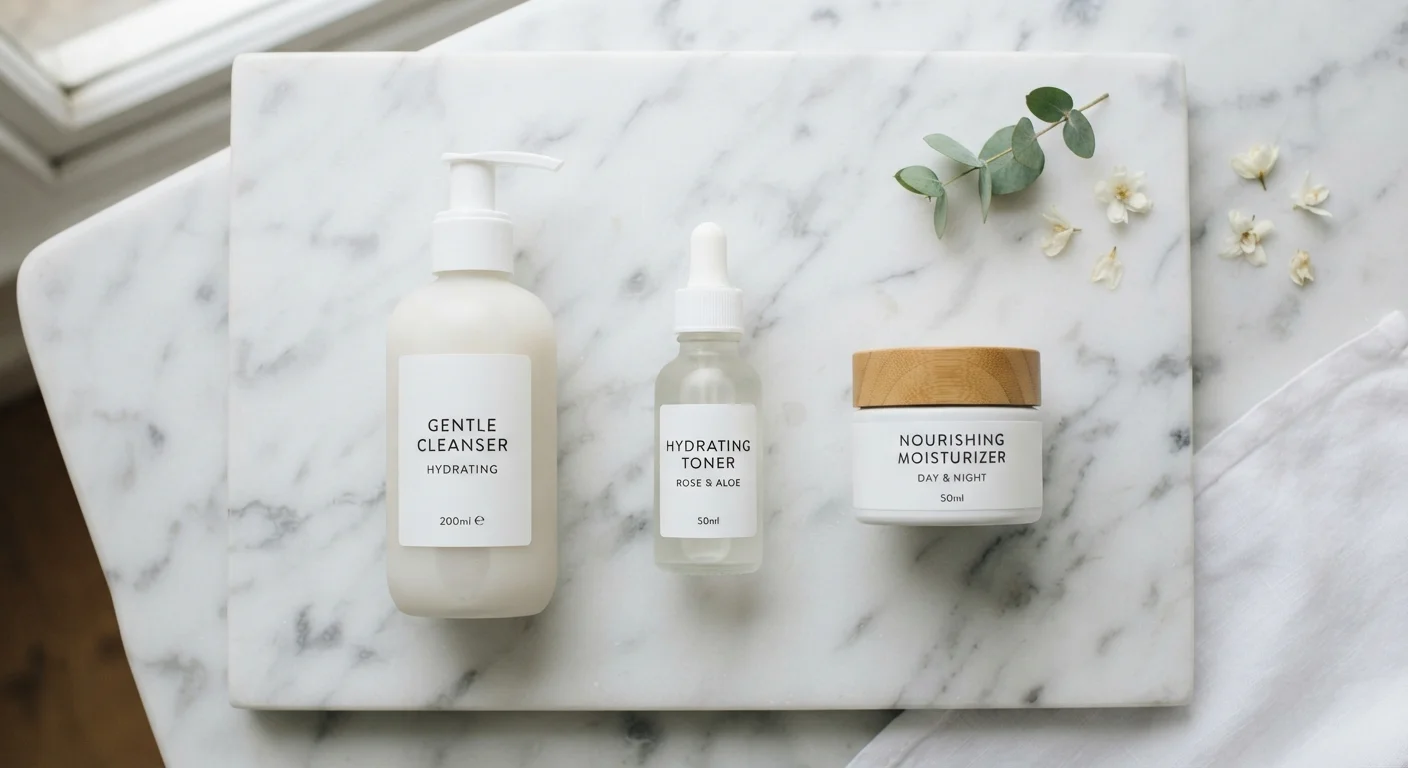
The reason routines follow a specific sequence - cleanser, toner, moisturizer - isn't arbitrary. It mirrors the logic of preparing and then protecting. You clear the canvas, you deliver what you want the skin to receive, and then you seal it in. Reversing or skipping steps doesn't just waste product; it can actually reduce the effectiveness of what you're using.
For anyone building a routine for the first time, the core three steps are the most important place to start. You don't need a complex regimen to see results - consistency with the basics is more valuable than an elaborate routine that's hard to maintain. If you're starting from scratch, building a simple morning routine is a practical next step. And if you've gone years without any routine at all, there's no shame in that - starting a skincare routine after years of doing nothing is a realistic, judgment-free place to begin.
It's also worth keeping in mind that what you put on your skin is only part of the picture. Sleep, stress, diet, and environmental factors all shape how your skin looks and behaves - factors that quietly affect your skin explores those variables in more depth.
This article is for general informational and educational purposes only and is not a substitute for advice from a qualified dermatologist or healthcare professional. If you have specific skin concerns or conditions, consult a licensed professional.
Sunscreen Belongs After Moisturizer
If you're building out a morning routine, sunscreen is considered by many dermatologists to be the single most important daytime step - applied last, after moisturizer. It doesn't replace any of the core three steps; it completes them. Our article on why daily SPF matters covers the science behind why it's so consistently recommended.