What Makes a Sugar 'Natural' or 'Added'?
Both natural and added sugar are chemically similar - largely glucose, fructose, or combinations of the two. The meaningful difference is context: where the sugar comes from and what surrounds it in the food.
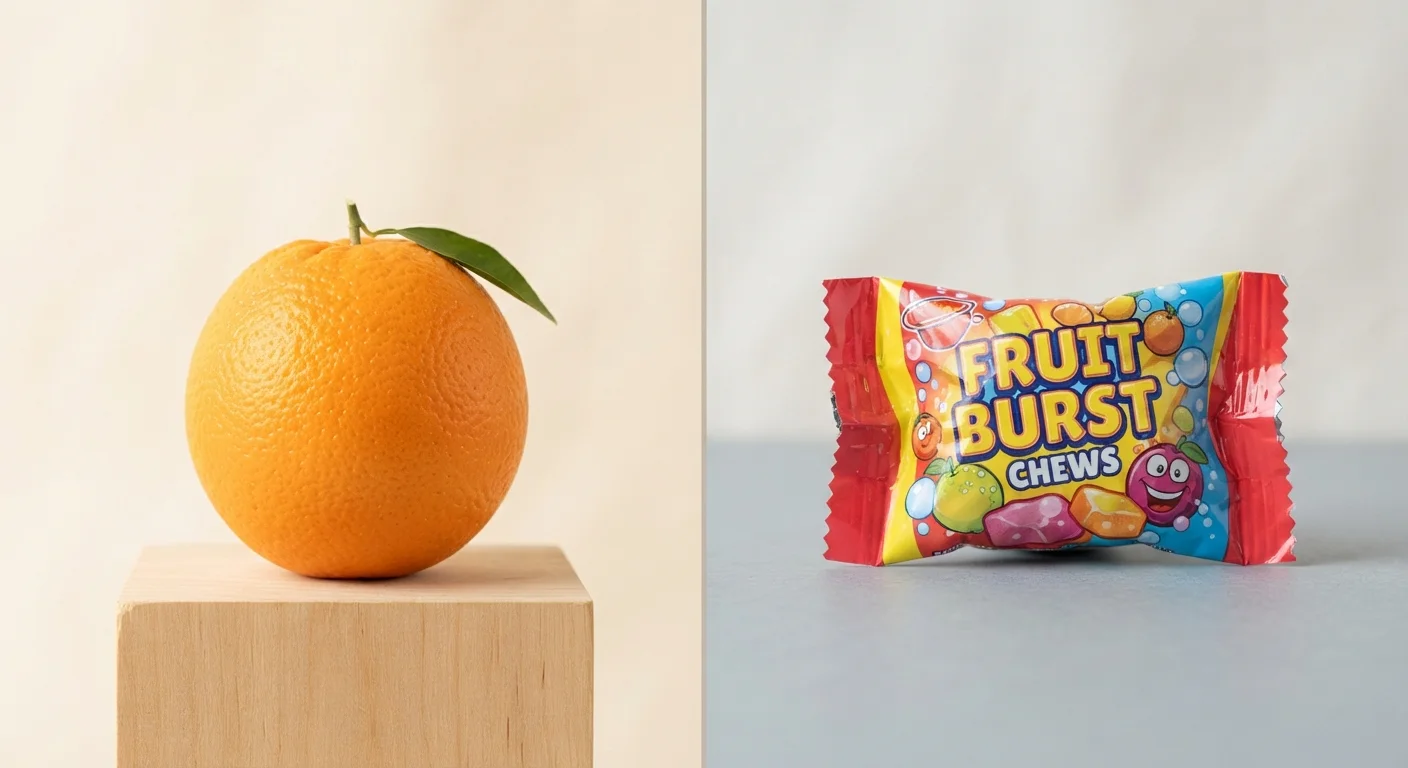
Natural sugars occur in foods as they grow. The fructose in a peach and the lactose in a cup of plain yogurt are naturally present. These foods come with fiber, water, protein, vitamins, and minerals that change how quickly sugar enters the bloodstream and how your body processes it.
Added sugars are any sugars or caloric sweeteners - including cane sugar, high-fructose corn syrup, honey, agave, and many others - introduced during manufacturing, cooking, or at the table. A plain apple contains natural sugar; sweetened applesauce may contain added sugar on top of it. Neither the body nor the label treats these identically.
For a plain-language breakdown of how these terms appear on food packaging, see Reading a Nutrition Facts Label Without Getting Lost.
| Criterion | Natural Sugar | Added Sugar |
|---|---|---|
| Source | Occurs naturally in whole foods | Added during processing or cooking |
| Examples | Fructose in fruit, lactose in milk | Cane sugar, HFCS, honey in packaged foods |
| Nutrient company | Fiber, vitamins, minerals, water | Typically minimal to none |
| Blood sugar impact | Generally slower rise due to fiber buffer | Often faster absorption without fiber |
| Dietary guideline limit | No specific cap for whole foods | Less than 10% of total daily calories |
| Shown on Nutrition Facts | Included in 'Total Sugars' | Listed separately as 'Added Sugars' |
Why the Distinction Matters for Your Health
The U.S. Dietary Guidelines for Americans recommend limiting added sugars to fewer than 10% of total daily calories - roughly 50 grams on a 2,000-calorie diet. No equivalent ceiling is placed on naturally occurring sugars in whole foods, and for good reason.
17 tsp
Average daily added sugar intake for U.S. adults
According to CDC data, average adult Americans consume roughly 17 teaspoons of added sugar per day - well above the recommended limit of about 12 teaspoons.
~47%
Share of added sugar from beverages
The CDC estimates that nearly half of all added sugar consumed by U.S. adults comes from sweetened drinks, making beverages the single largest source.
10%
Recommended added sugar ceiling (% of daily calories)
The U.S. Dietary Guidelines for Americans set an upper limit of 10% of total daily caloric intake from added sugars for adults and children over age two.
When you eat a whole food, the fiber physically slows digestion and the stomach empties more gradually. The result is a more moderate rise in blood glucose compared to the same gram count of sugar consumed in a sweetened drink with no fiber buffer. This is why research consistently associates heavy consumption of sugar-sweetened beverages with metabolic concerns, while high fruit intake is generally associated with neutral or beneficial health outcomes in population studies.
Added sugar also tends to arrive in foods that crowd out more nutritious options. A large sweetened coffee drink, a flavored yogurt, or a bowl of sweetened cereal can use up a significant portion of a day's added-sugar allowance while delivering relatively little protein, fiber, or micronutrients in return.
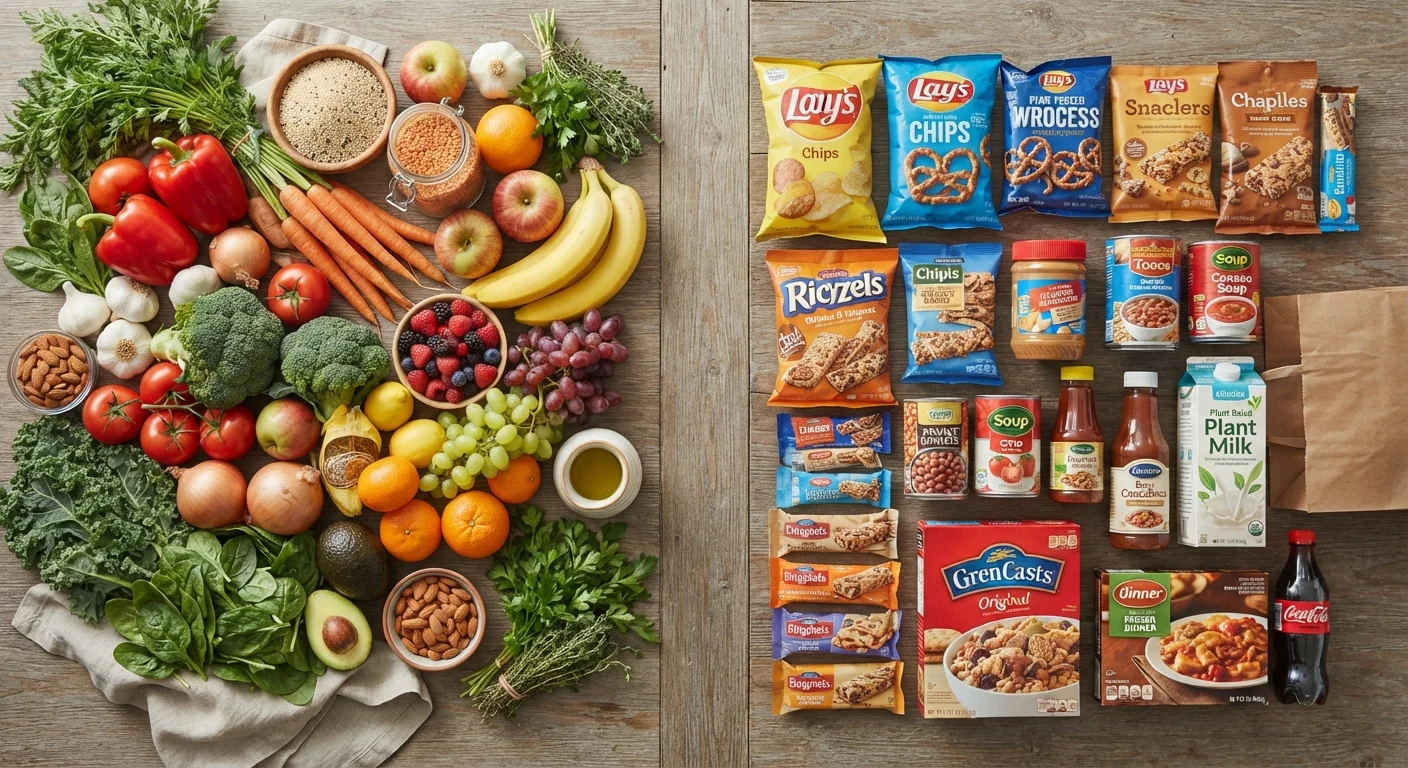
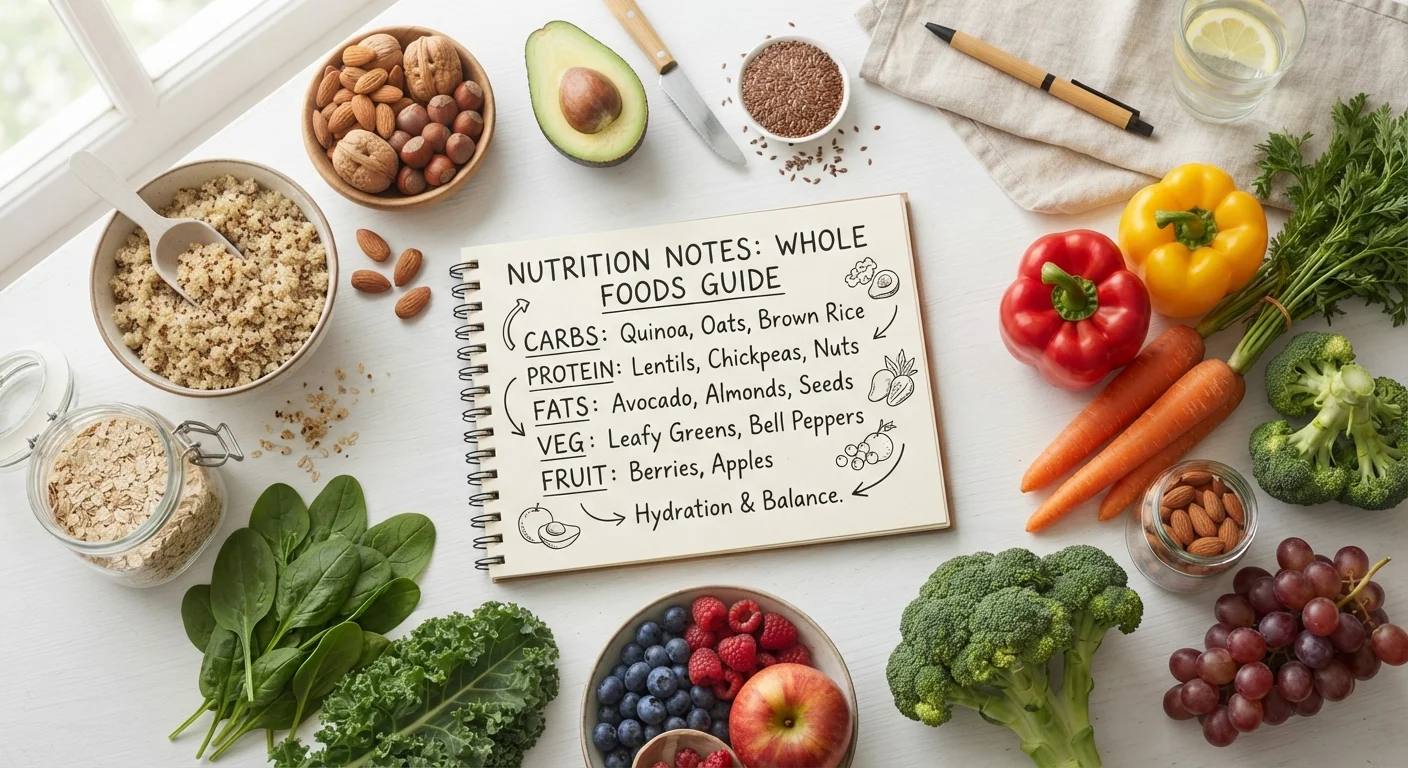
That said, no single food or ingredient defines a diet. The broader pattern - how much whole food versus processed food makes up your meals - carries more predictive weight than any single number. Whole Foods vs. Processed Foods explores that spectrum in more depth.
Finding Added Sugar on Labels and In Your Diet
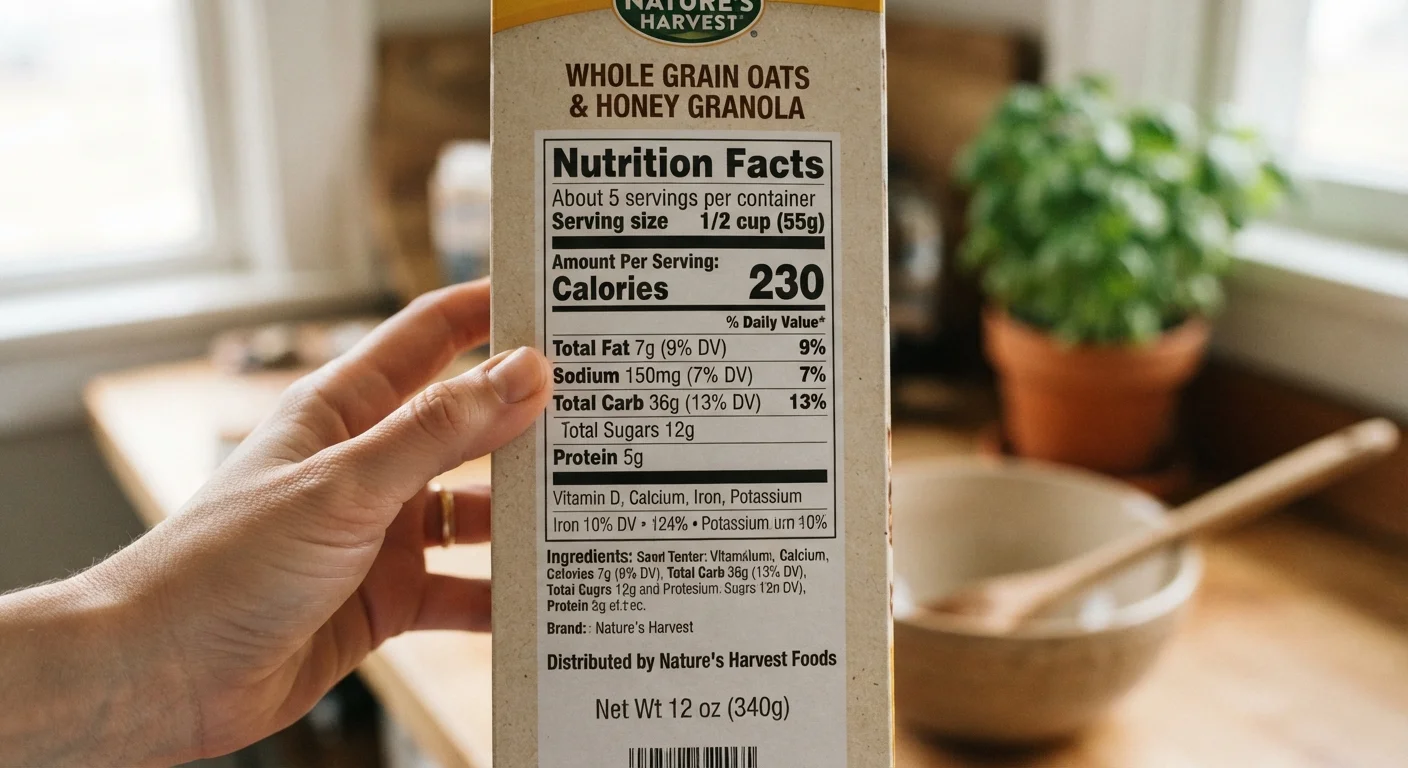
Since 2020, U.S. Nutrition Facts panels have been required to list added sugars as a sub-line under total sugars, along with a percent Daily Value. This update was a significant shift - previously, a consumer had no way to tell from the label alone how much sugar was inherent to the food versus how much was added during production.
Label Update: Spotting Added Sugars
Since 2020, all U.S. packaged foods meeting FDA labeling requirements must display added sugars as a separate sub-entry beneath total sugars on the Nutrition Facts panel, including a percent Daily Value. If you see '5g Added Sugars' with '10%' beside it, that means 5 grams accounts for 10% of the recommended daily maximum on a standard 2,000-calorie diet. This makes comparison shopping more straightforward - but remember that serving sizes vary, so always check how many servings a package contains.
Common sources of added sugar worth knowing:
- Sweetened beverages - sodas, energy drinks, flavored coffees, fruit-flavored drinks
- Condiments and sauces - ketchup, barbecue sauce, many salad dressings
- Flavored dairy - sweetened yogurts, flavored milks, ice cream
- Packaged snacks and cereals - granola bars, breakfast cereals, cookies
- Breads and baked goods - many commercially produced breads contain added sugar
Added sugar hides under dozens of ingredient names. If you see words like syrup, juice concentrate, maltose, dextrose, or anything ending in -ose in an ingredients list, those are likely added sugars. For a quick-reference guide to these and other label terms, the Household Nutrition Reference is a useful starting point.
This article is for general informational and educational purposes only and is not a substitute for professional medical or dietary advice. Consult a registered dietitian or qualified healthcare provider for guidance specific to your health needs and circumstances.