Why Layering Order Actually Matters
Skincare products aren't interchangeable in sequence - the order you apply them directly affects how well each one works. The core principle is simple: apply thinnest to thickest. Lightweight, water-based formulas need direct contact with skin to absorb; heavier creams and oils create a partial seal that can block thinner products from penetrating if applied first.
Think of it in terms of molecular weight. Small molecules (like those in serums) need an unobstructed path to skin cells. Large molecules (like those in heavy creams and oils) work best as a finishing layer, locking in everything beneath. When you flip the sequence - say, applying oil before your vitamin C serum - you're essentially putting up a wall that dilutes the active's effectiveness.
It's also worth knowing that your skin's behavior changes based on environment and season. Our article on seasonal skincare adjustments covers how to adapt your layering routine when conditions shift. And if you're curious about factors beyond your products, lifestyle factors that shape your skin offers helpful context.
Damp Skin Absorbs Water-Based Products Better
Applying a hydrating toner or serum to skin that's still slightly damp from cleansing can boost absorption. The moisture on your skin's surface helps draw in water-soluble ingredients more efficiently. Pat dry gently but don't wait until your skin is completely dry before applying your first leave-on layer.
What You'll Need Before You Start
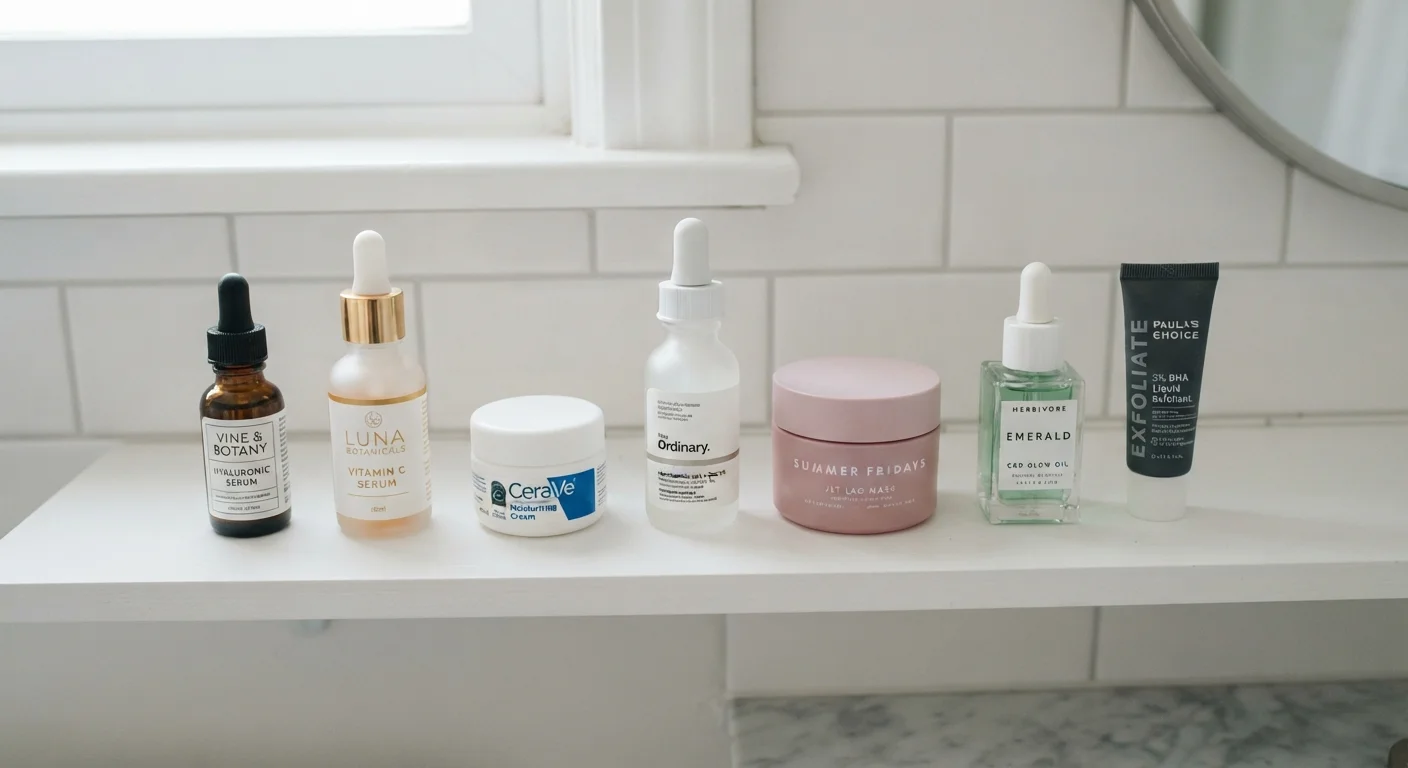
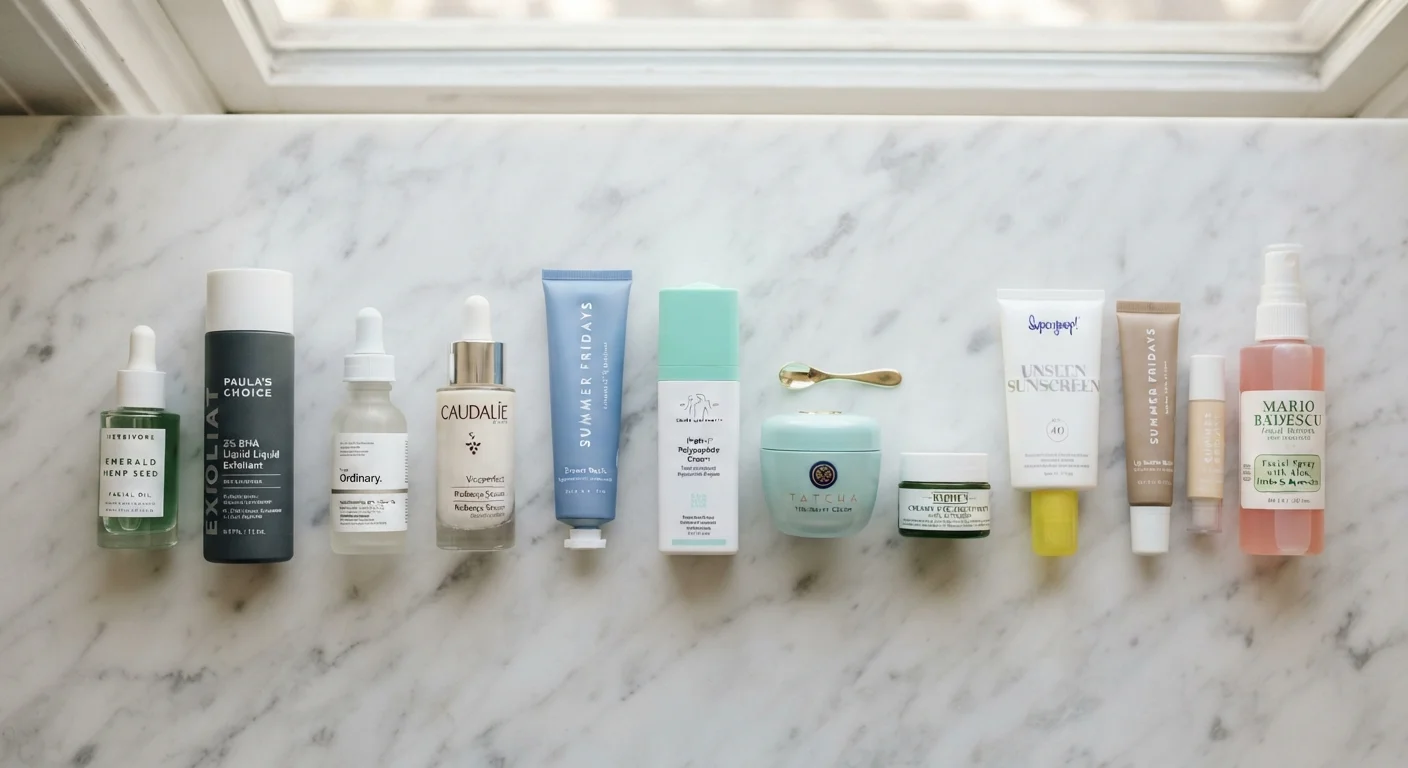
You don't need a 10-step routine to layer correctly - even a three-product routine follows the same principles. Gather whatever products you currently use and sort them roughly by texture: thinnest liquids first, richest creams and oils last. Then follow the steps below.
What you will need
Cleanser
Removes dirt, oil, and makeup so subsequent products absorb onto a clean surface.
Toner or essence
Preps skin with hydration and balances pH before serums are applied.
Water-based serum
Delivers concentrated active ingredients (like vitamin C or hyaluronic acid) directly to skin.
Eye cream
Provides targeted treatment for the delicate undereye area before heavier products are applied.
Moisturizer
Seals in previous layers and supports the skin barrier.
Face oil
Used as a final nourishing layer over moisturizer to lock in hydration.
SPF sunscreen
Protects skin from UV damage and must be the final step in a daytime routine.
Step-by-Step Layering Instructions
Follow these steps in order for your morning or evening routine. Allow about 30-60 seconds between each layer - this short pause gives each product a chance to begin absorbing before the next one goes on. You don't need to wait until skin is bone dry; just give it a moment.
Cleanse your face
Start with a clean canvas. Use a gentle cleanser suited to your skin type - foaming for oilier skin, cream or balm formulas for drier types. Cleansing removes surface debris so nothing blocks the products you're about to apply. Rinse with lukewarm water and pat dry with a clean towel, leaving skin just slightly damp.
Apply toner or essence
If your routine includes a toner or hydrating essence, apply it now while your skin is still slightly damp. These thin, watery formulas replenish surface moisture and prep the skin to absorb serums more effectively. Pat or press it in gently rather than rubbing - this limits irritation and improves penetration.
Apply water-based serums and actives
This is where your targeted treatments go - vitamin C, niacinamide, hyaluronic acid, AHAs, or BHAs. These are typically thin, water-based formulas designed to penetrate deeply. Apply the most active or treatment-focused serum first, or start with the one your skin needs most. Use a pea-sized amount and press it gently into skin.
Apply eye cream
If you use an eye cream, this is its moment. The skin around the eyes is thinner and more delicate than the rest of your face, so it benefits from targeted formulas applied before heavier moisturizers. Use your ring finger to gently tap - never rub - a small amount along the orbital bone, not directly on the lash line.
Apply moisturizer
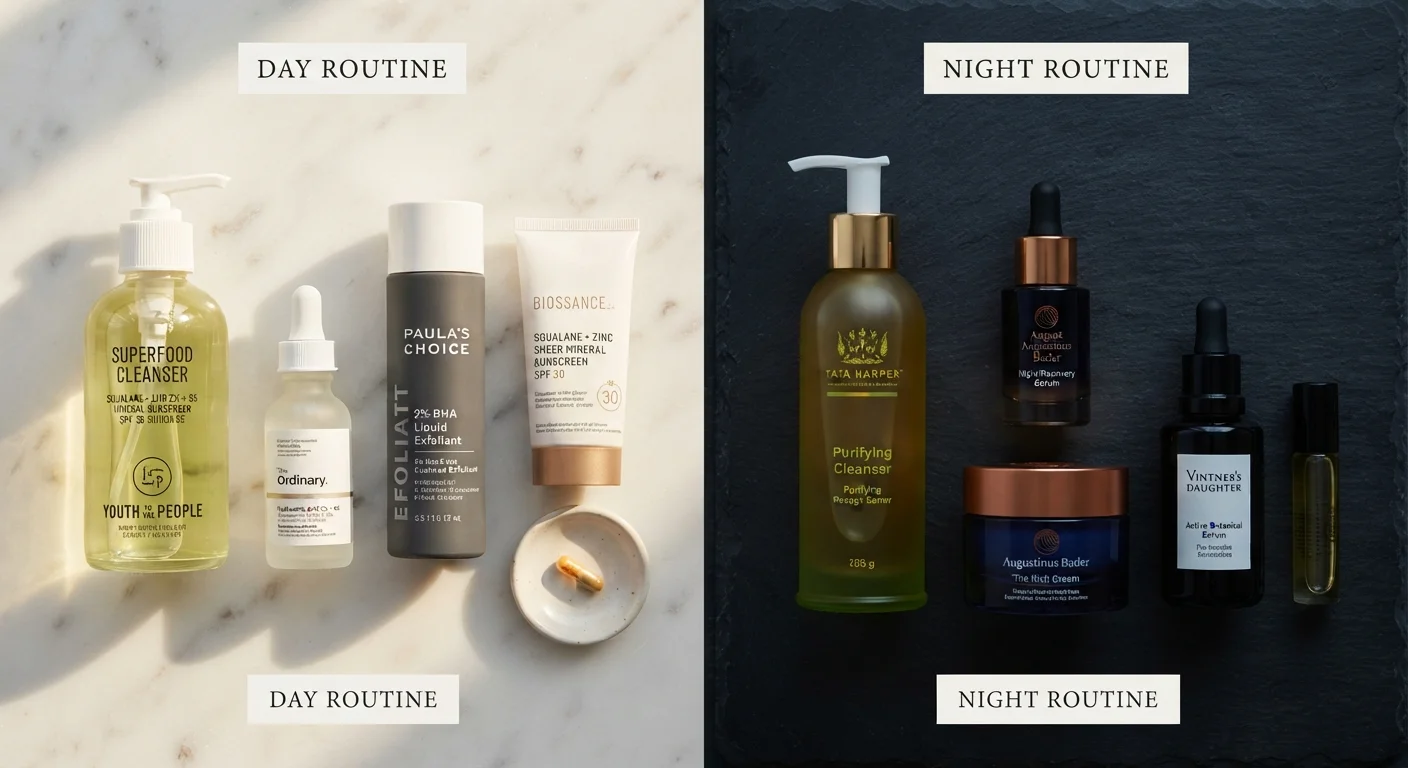
Moisturizer serves two jobs: it adds hydration and it seals the layers beneath it. Apply it over your serums once they've had 30-60 seconds to absorb. Choose a formula appropriate for your skin type - lightweight gel moisturizers suit oily or combination skin, while richer creams work better for dry or mature skin. For daytime and nighttime differences in moisturizer choice, see our guide on daytime vs. nighttime routines.
Apply face oil (if using)
Oils are occlusive - they form a physical barrier that slows moisture loss. Because of this, they go on after your moisturizer, not before. A few drops pressed lightly over your moisturizer is all you need. Avoid rubbing, which can disrupt the layers underneath.
Apply sunscreen (morning only)
Sunscreen is the final step every single morning - no exceptions. It goes over your moisturizer and any oils, and nothing goes on top of it during the day except makeup. Give it 1-2 minutes to settle before applying foundation or tinted products. For a full morning routine walkthrough, see building a simple morning skincare routine.
Sunscreen Is Non-Negotiable Last
Sunscreen must always be the very last step in your morning routine - applied over moisturizer and any other leave-on products. Applying anything on top of sunscreen can dilute its protective film and reduce SPF efficacy. This is one layering rule that has no exceptions.
Common Layering Mistakes to Avoid
Even with the right products, a few common missteps can undermine your routine. Applying oils before water-based serums is one of the most frequent errors - oil creates a barrier that prevents the serum from reaching your skin effectively. Similarly, applying SPF and then a foundation or setting spray can disrupt the sunscreen film, reducing its protective coverage.
Another pitfall: using too many actives at once. Stacking multiple exfoliating acids or pairing retinol with strong vitamin C formulas can cause irritation that mimics a reaction rather than a result. If you're assembling a new routine or adding products, the guidance on introducing new skincare products safely can help you pace it sensibly.
Don't Mix Certain Actives
Some active ingredients can irritate or destabilize each other when layered together - for example, vitamin C paired with certain exfoliating acids can cause unnecessary irritation for many skin types. If you're unsure how your actives interact, use them at separate times of day or on alternating days. When introducing anything new, see our guide on introducing a new skincare product without disrupting your routine.
This article is for general informational and educational purposes only and does not constitute dermatological or medical advice. For personalized guidance on skin concerns or conditions, consult a qualified dermatologist or healthcare provider.