Why Skincare Myths Are So Hard to Shake
Beauty advice travels fast - through social media, family wisdom, and decades of marketing language. The problem is that some of the most widely repeated skincare "rules" have little or no scientific backing. Separating fact from folklore matters because following bad advice can mean wasted money, irritated skin, or skipping genuinely beneficial habits.
This article examines the myths dermatologists most commonly encounter in practice, and replaces them with what the evidence actually supports. If you enjoy debunking misconceptions in other areas, you might also appreciate our look at nutrition myths that refuse to die.
Myth
Steam opens your pores, and cold water closes them.
Fact
Pores are not muscular structures and cannot open or close. Their size is largely determined by genetics and skin elasticity.
The idea that pores behave like tiny doors is one of the most persistent myths in skincare. Pores are follicular openings - they have no muscles to contract or dilate. What steam actually does is temporarily soften the debris and oil inside a pore, which can make manual cleaning slightly easier. Cold water may temporarily make skin look more toned, but it does not physically shrink pores. Long-term pore appearance is influenced by factors like sun damage (which degrades collagen), genetics, and consistent cleansing habits.
Myth
"Natural" or "organic" ingredients are always safer and gentler than synthetic ones.
Fact
Natural origin does not determine safety or irritation potential. Many natural ingredients are known allergens or irritants.
Poison ivy is natural. So is urushiol, the compound that causes its rash. Citrus oils, essential oils, and certain plant extracts appear frequently in "clean" beauty products yet are among the most common causes of contact dermatitis. Conversely, many synthetic ingredients - including silicones and certain preservatives - have long safety records backed by decades of dermatological research. The relevant question is always: what does the evidence say about this specific ingredient at this concentration, for this skin type?
Myth
Oily skin doesn't need moisturizer.
Fact
Oily and dehydrated are two different conditions. Even oily skin needs hydration to maintain a healthy barrier.
Skin can overproduce oil precisely because its moisture barrier is compromised - a cycle where skipping moisturizer can actually worsen oiliness. The goal is to choose a lightweight, non-comedogenic (formulated not to clog pores) moisturizer rather than skipping the step entirely. Ingredients like hyaluronic acid and glycerin provide hydration without adding heaviness. Dermatologists note that well-hydrated skin often regulates sebum production more effectively over time.
Myth
You only need sunscreen on sunny days or when spending time outdoors.
Fact
UV radiation - particularly UVA - penetrates clouds and glass, causing cumulative skin damage year-round.
UVA rays, which are associated with photoaging and increased skin cancer risk, maintain relatively consistent intensity regardless of season or cloud cover. They also pass through standard window glass. Studies on long-term sun exposure patterns consistently show that incidental, everyday UV exposure accumulates significantly over a lifetime. Daily SPF use - even on overcast days or when you're mostly indoors - is one of the most consistently recommended preventive steps in evidence-based skincare.
Myth
Expensive skincare products work better than affordable ones.
Fact
Efficacy depends on active ingredients, their concentration, and formulation stability - not price.
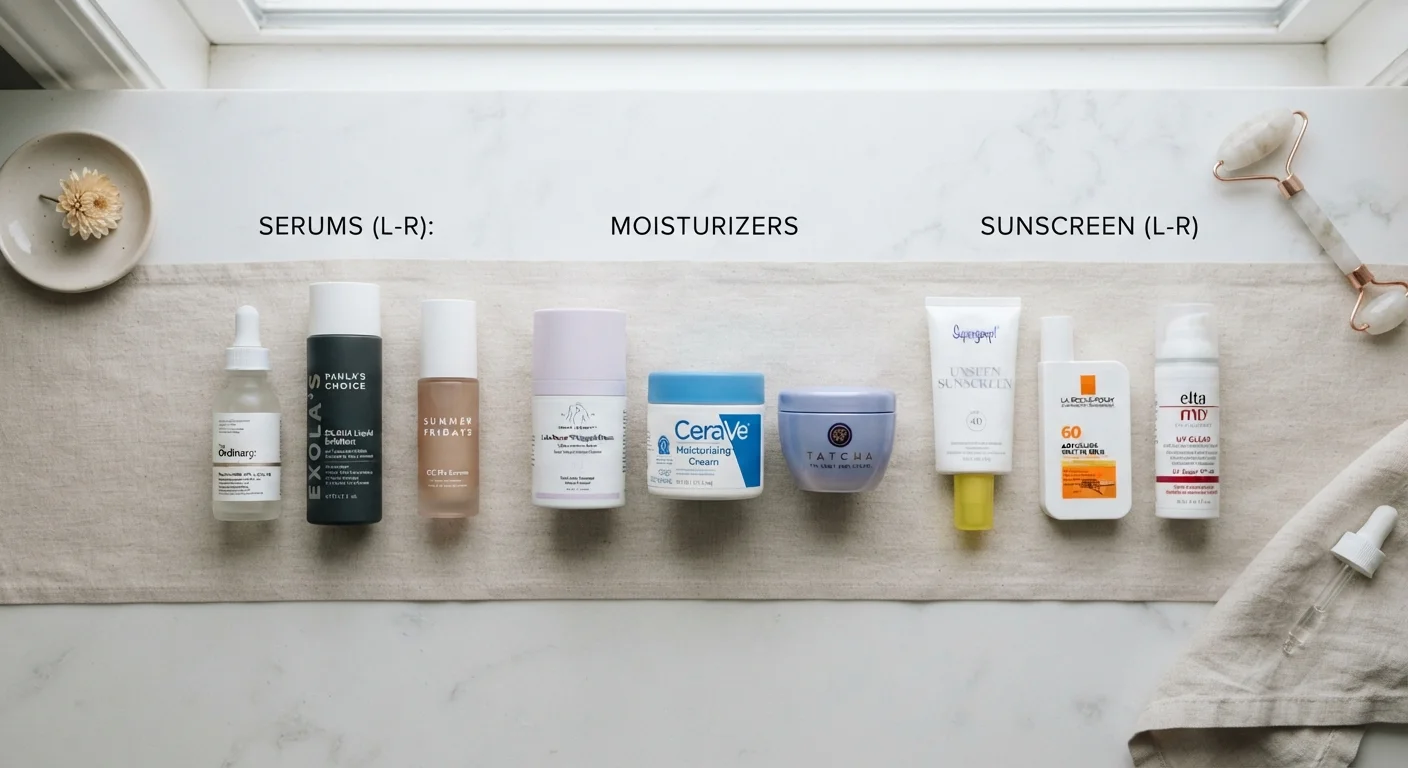
Premium pricing in skincare often reflects packaging, fragrance, brand positioning, and marketing rather than superior active ingredients. Many well-studied actives - retinol, niacinamide, salicylic acid, glycolic acid - appear across product price ranges. The meaningful questions are whether a product contains the right ingredient for your concern, at an effective concentration, in a stable formulation. A dermatologist or cosmetic chemist can help evaluate products based on these criteria rather than cost.
Myth
You should feel a "tingling" sensation for a product to be working.
Fact
Tingling or burning typically signals irritation, not efficacy. Many effective products feel entirely neutral on application.
The belief that skincare has to sting to work is likely rooted in the sensation certain actives (like high-concentration AHAs or vitamin C) can produce. But sensation and effectiveness are not the same thing. Tingling or burning can indicate that a product is disrupting the skin barrier - the opposite of what most routines aim for. A gentle cleanser that produces no sensation can outperform an aggressive scrub that leaves skin red and reactive. If a product consistently stings or burns, discontinue use and consult a dermatologist.
How to Build a Smarter Routine Instead
Cutting through skincare mythology clears the way for habits that genuinely work. A few research-supported principles worth anchoring your routine to:
- Sun protection daily: Broad-spectrum SPF is consistently described by dermatologists as the single most evidence-backed preventive skincare step. Our companion piece explains the science behind daily sunscreen use in detail.
- Consistency over complexity: A short, consistent routine generally outperforms an elaborate one used sporadically. Cleanse, moisturize, and protect - then add targeted actives only if a specific concern warrants them.
- Patch-test new products: Even well-formulated products can cause reactions in some individuals. Apply a small amount to your inner arm and wait 24-48 hours before using it on your face.
- Read ingredients, not price tags: Active ingredients like retinoids, niacinamide, and peptides appear in products across all price ranges. Efficacy depends on concentration and formulation, not cost.
Be Cautious With DIY Skincare Trends
Home remedies featuring lemon juice, baking soda, apple cider vinegar, or neat essential oils circulate widely online. These ingredients can significantly disrupt the skin's natural pH, damage the moisture barrier, or cause chemical burns and photosensitivity reactions. Just because something is commonly shared does not mean it is safe for regular use on skin.
If you have a persistent skin concern - acne, rosacea, hyperpigmentation, or anything that doesn't resolve with gentle care - a board-certified dermatologist can provide guidance tailored to your skin. General skincare content, including this article, is educational information and not a substitute for professional medical advice.