
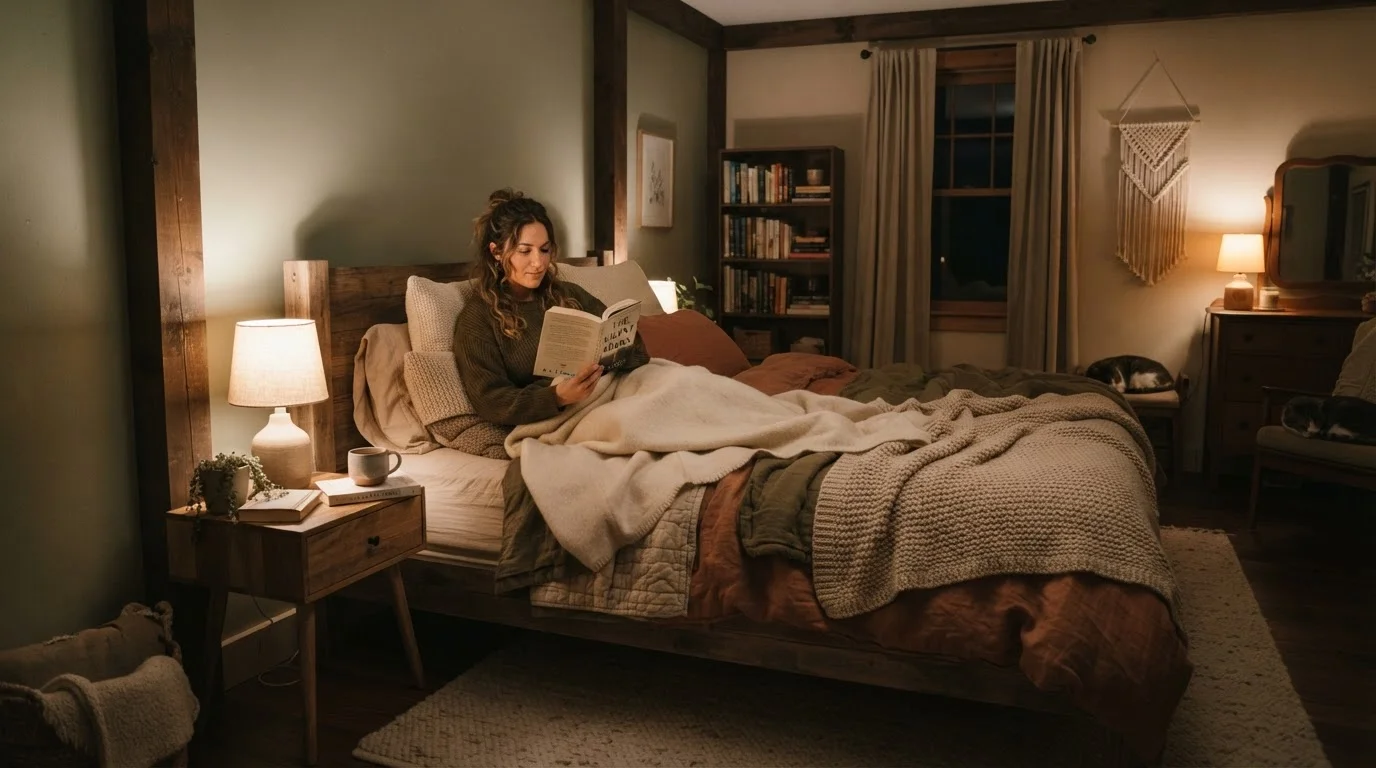
Why a Wind-Down Routine Works
Sleep does not switch on like a light. The transition from wakefulness to sleep is a gradual neurological process driven partly by rising melatonin levels and a drop in core body temperature - both of which are influenced by the cues your environment and behavior send. When those cues are inconsistent or contradictory (bright light, emotional stimulation, irregular timing), your nervous system stays in a higher-alert state longer than it needs to.
A reliable wind-down routine works by creating a predictable sequence of low-stimulation events that your brain begins to associate with sleep - effectively conditioning a faster, smoother transition. Over time, even beginning the routine can trigger drowsiness before you reach the pillow. This is the same principle behind why certain daily patterns can keep your stress response elevated without you realizing it.
Sleep and mental health are also bidirectional. Poor sleep worsens mood regulation, and elevated stress or anxiety disrupts sleep. Understanding that relationship - explored in depth in The Sleep-Mental Health Connection Explained - reinforces why consistent wind-down habits are a legitimate, non-pharmacological tool for supporting overall wellbeing.
Dim or warm-toned lighting
Low, amber-toned light in the evening supports natural melatonin production by reducing blue-light exposure.
A physical book or journal
Non-screen reading or journaling gives the mind a focused, low-stimulation activity that encourages mental deceleration.
White noise machine or earplugs
Minimizes environmental noise that can delay sleep onset or cause nighttime waking.
Alarm clock (non-phone)
Removes the temptation to check notifications when using your phone as an alarm.
How to Build and Personalise Your Routine
Before starting, confirm you have the basics in place:
What you will need
The steps below take approximately 10-20 minutes total. The goal is not to follow a rigid script but to establish a repeatable pattern your nervous system can learn to recognize.
Set a consistent wind-down start time
Choose a time 45-60 minutes before your target sleep time and treat it as a non-negotiable cue. Your circadian rhythm responds to consistency more than any single activity. Setting a repeating reminder for the first two weeks can help this anchor take hold.
Dim your environment and cut screen exposure
Switch overhead lighting to a lamp or use a dimmer. Avoid bright overhead fluorescent light, which signals daytime wakefulness to the brain. Put phones and tablets face-down or in another room. If you must use a screen, enabling a warm-color mode reduces - but does not eliminate - stimulating blue-light exposure.
Do a brief mental download
Spend five minutes writing tomorrow's tasks or unresolved thoughts onto paper. Research published in the Journal of Experimental Psychology found that writing a concrete to-do list before bed - rather than ruminating on tasks - was associated with faster sleep onset. This offloads mental loops that would otherwise replay as you try to fall asleep.
Choose a calming anchor activity
Pick one low-stimulation activity that reliably relaxes you: reading fiction, gentle stretching, slow breathing exercises, or a warm shower. A warm shower or bath in the evening has a secondary physiological benefit - the subsequent drop in skin temperature as you dry off mimics the body's natural thermal drop that precedes sleep. Rotate activities only occasionally; familiarity itself becomes a sleep cue over time.
Prepare your sleep environment
Keep your bedroom cool (most sleep researchers point to roughly 65-68°F as a commonly cited comfortable range, though individual preference varies), dark, and quiet. Make this preparation part of the routine - pulling curtains, adjusting the thermostat, and removing clutter take under two minutes and signal that sleep is imminent.
Get into bed only when sleepy
Avoid lying in bed while still alert or anxious. Sleep specialists often recommend reserving the bed for sleep (and sex) only - a principle called stimulus control - so that the brain learns to associate the bed with drowsiness rather than wakefulness. If you are not sleepy after 20 minutes, returning to a quiet activity in dim light until you feel sleepy is more effective than forcing it.
Start Smaller Than You Think You Need To
A three-step routine you actually follow beats a ten-step routine you abandon by day four. Choose one or two anchoring habits first - a consistent lights-out time and a screen cutoff, for example - and layer additional elements only once those feel automatic.
Once your evening routine is consistent, you may find that mornings also feel less reactive. A calmer start is easier to sustain when the night before was genuinely restorative - see our low-stress morning checklist for a practical complement to this evening habit.
This Is General Information, Not Medical Advice
The guidance in this article is intended for general educational purposes only and does not substitute for advice from a qualified healthcare provider. If you experience persistent sleep difficulties, excessive daytime fatigue, or symptoms that affect your daily functioning, please consult a doctor or licensed sleep specialist.
Common Pitfalls and How to Avoid Them
The most common reason wind-down routines fail is inconsistency on weekends. Sleeping in significantly on weekends shifts your circadian timing - a phenomenon sometimes called social jet lag - which makes Monday night harder and can unwind the conditioning you built during the week. Keeping your sleep and wake times within about an hour of your weekday schedule, even on weekends, preserves the routine's effectiveness.
Avoid Stimulants in the Hours Before Bed
Caffeine has a half-life of roughly five to six hours in most adults, meaning a late-afternoon coffee can still be active in your system at bedtime. Alcohol may feel sedating initially but disrupts sleep architecture later in the night, often causing earlier waking and lighter rest overall.
Another common pitfall is over-engineering the routine. More steps are not inherently better. Recovery, whether from exercise or daily stress, is a biological process - your job is to remove obstacles, not add complexity. A short, repeatable wind-down routine consistently followed will outperform an elaborate one followed only occasionally.
This article is for general informational and educational purposes only and is not a substitute for professional medical advice, diagnosis, or treatment. If you have concerns about your sleep or overall health, please consult a qualified healthcare provider.