Why Water Is the Foundation of Nutrient Delivery
Think of water as the transportation network your body depends on. Nutrients extracted during digestion don't move through your body on their own - they dissolve in or travel alongside fluids through the bloodstream to reach cells, organs, and tissues. Without adequate hydration, that delivery system slows down.
Digestion itself is a fluid-intensive process. Saliva starts breaking down carbohydrates in your mouth. Stomach acid - mostly water-based - continues the breakdown. The small intestine, where most nutrient absorption happens, requires water to move digested material along and to facilitate the transfer of nutrients across the gut wall into the blood.
Fat-soluble vitamins - A, D, E, and K - rely on bile, a digestive fluid the liver produces and stores in the gallbladder. Bile is made up largely of water. If you're dehydrated, bile production can be compromised, and absorption of these critical nutrients may suffer. You can learn more about what each of these nutrients does in our guide to essential vitamins and minerals.
Water-Soluble vs. Fat-Soluble Vitamins
Water-soluble vitamins - including all B vitamins and vitamin C - dissolve directly in water and are transported through the bloodstream. They're not stored in large amounts, so regular intake matters. Fat-soluble vitamins (A, D, E, K) are stored in body fat and liver tissue, but they still require water-based digestive processes to be absorbed from food in the first place. Both categories depend on adequate hydration to function as intended.
How What You Drink Can Undermine What You Eat
Not all beverages support nutrition equally - some actively interfere with how well your body uses the food you eat.
- Coffee and tea: Tannins, the compounds that give these drinks their astringency, can bind to non-heme iron found in plant foods, reducing how much your body absorbs. This matters particularly for people who rely on plant-based sources of iron.
- Alcohol: Alcohol disrupts the absorption of B vitamins - especially folate, thiamine (B1), and B12 - and also interferes with how the liver processes and stores nutrients. Regular or heavy alcohol use can contribute to nutrient depletion over time.
- Sugary beverages: High sugar intake can alter the gut microbiome, which plays a supporting role in nutrient metabolism. Excess added sugar is also linked to inflammation, which can impair how cells respond to nutrients.
This doesn't mean you need to eliminate these drinks - context and frequency matter. But understanding the interactions helps you make more informed choices about when and how much you consume them.
~75%
Americans estimated to be chronically mildly dehydrated
Commonly cited in public health contexts, though precise survey figures vary; general agreement is that most Americans drink less fluid than is recommended.
Up to 35%
Reduction in non-heme iron absorption from tea consumed with meals
Research published in nutrition journals has documented significant inhibition of plant-based iron absorption when tea is consumed alongside or immediately after iron-rich meals.
90%+
Water content in many common fruits and vegetables
Foods like cucumbers, strawberries, and celery contribute meaningfully to daily fluid intake alongside beverages, according to USDA nutritional data.
Hydration, Hunger, and Appetite Signals
Mild dehydration is commonly mistaken for hunger. The hypothalamus - the brain region that regulates both thirst and appetite - processes these signals in overlapping ways, which means the body sometimes sends hunger cues when fluid intake is actually what's needed.
Eating in response to thirst rather than true hunger doesn't satisfy the underlying need, and it can lead to overeating while still leaving you feeling sluggish. Drinking a glass of water before meals is a simple, well-supported practice that helps clarify genuine hunger and may reduce the likelihood of eating past your body's actual needs.
Fiber absorption also depends on water. Dietary fiber pulls water into the gut to bulk up stool and slow digestion - a process that supports stable blood sugar and sustained fullness. Without adequate hydration, fiber can't do its job effectively, and may even cause discomfort. Our article on why most Americans fall short on fiber covers this connection in more detail.
A Simple Habit Worth Starting Today
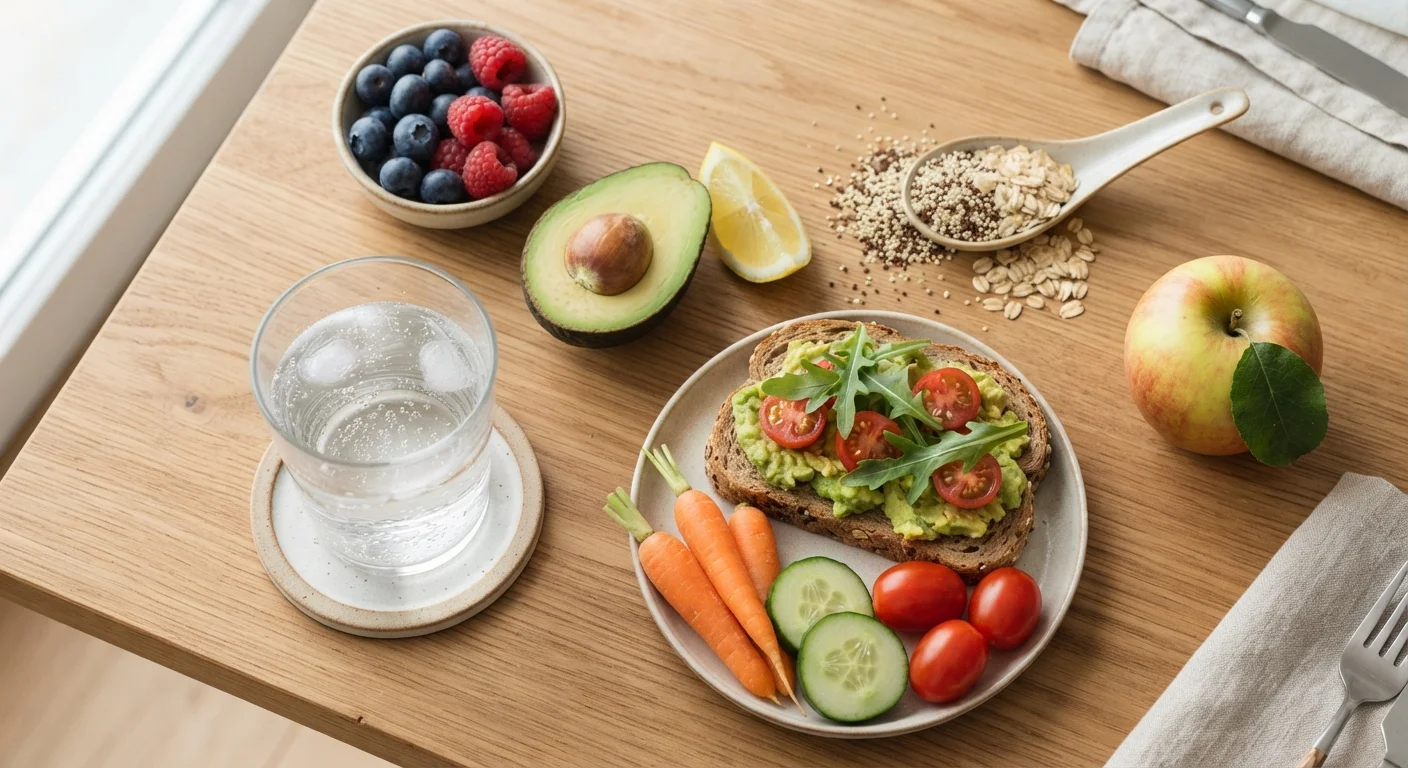
Keep a glass of water on your kitchen counter or dining table as a visual reminder to drink before and during meals. You don't need a tracking app or a rigid schedule - small environmental cues are often the most sustainable way to build consistent hydration habits. Even modest improvements in daily fluid intake can support digestion and how well your body uses the nutrients you eat.
Building Hydration Into Your Daily Eating Habits
Good hydration doesn't only come from what you drink - it also comes from what you eat. Many fruits and vegetables have water content above 90%, including cucumbers, celery, oranges, strawberries, and leafy greens. Incorporating these foods regularly means your hydration baseline is partially covered before you've had a sip of water.
A few practical habits that support the hydration-nutrition connection:
- Drink water consistently throughout the day rather than large amounts all at once - steady intake supports ongoing digestive function better than irregular surges.
- Time caffeinated drinks thoughtfully - spacing coffee or tea away from iron-rich meals by at least 30 minutes can reduce interference with absorption.
- Pay attention to urine color - pale yellow is a widely used practical indicator of adequate hydration; dark yellow or amber signals a need for more fluids.
- Account for increased needs - exercise, heat, illness, and certain medications all raise fluid requirements. If you're in a special population (pregnant, elderly, or managing a chronic condition), consult a healthcare provider for personalized guidance.
If you want to audit your overall eating and hydration patterns together, the weekly nutrition habits checklist is a useful starting point.
This article is for general informational and educational purposes only and is not a substitute for professional medical or dietary advice. Consult a qualified healthcare provider with questions about your personal health needs.