
What Meal Planning Actually Does
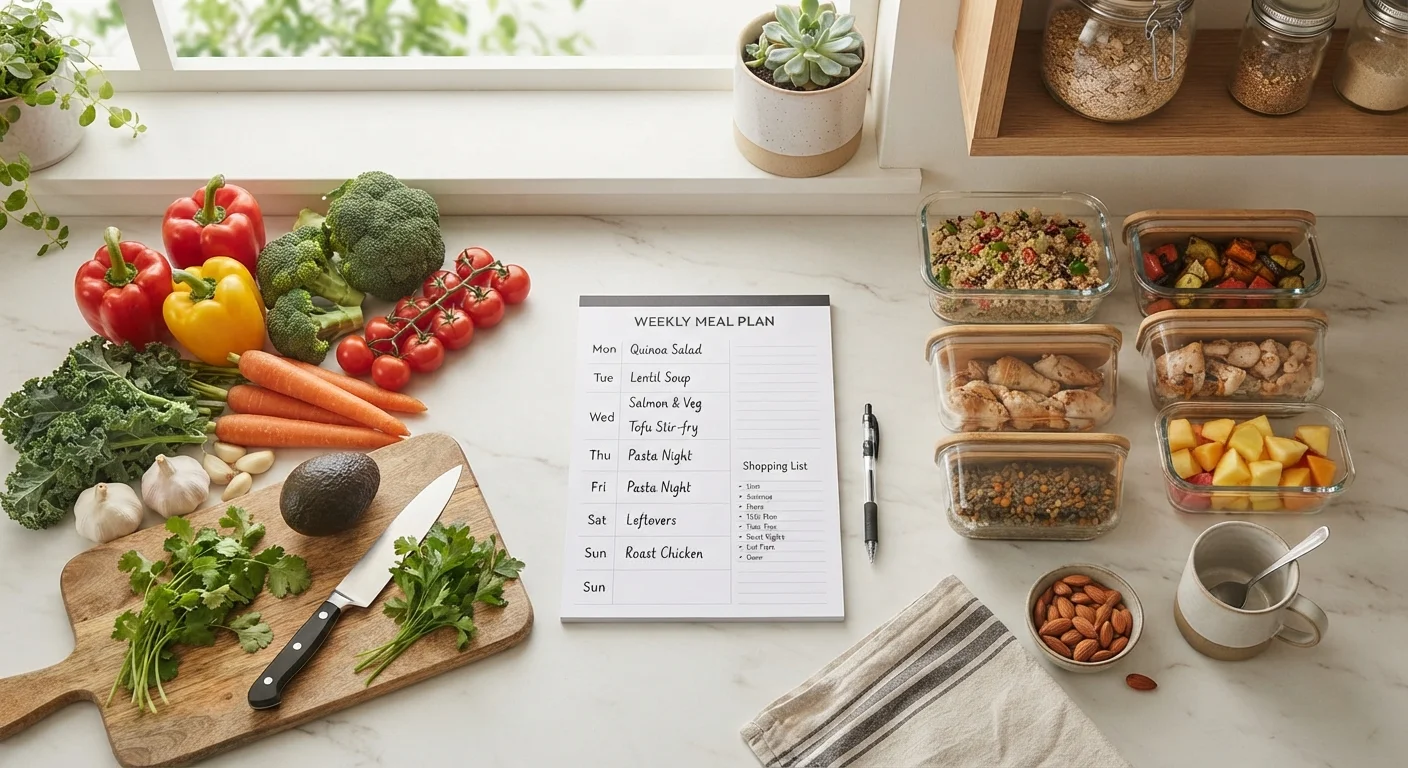
Meal planning, at its core, means deciding what you'll eat before you're hungry. It can range from a detailed spreadsheet with every snack accounted for to a simple list of five dinners jotted on a notepad. The format is less important than the underlying principle: reducing in-the-moment food decisions.
The practical benefits are real. When you know dinner is already figured out, you're less likely to order takeout at 6 p.m. out of exhaustion. When your grocery list is tied to actual meals, you buy less of what you won't use. These aren't small things - for many households, they translate to less stress and lower weekly spending.
Planning also creates a structure that makes it easier to build a more balanced plate - not because planning magically improves your choices, but because it gives you a moment to think about them before you're tired and hungry.
Cuts daily decision fatigue around food
Choosing what to eat three or more times a day is a real cognitive load. Having meals decided in advance removes that friction, particularly on busy weekday evenings when willpower is lowest.
Tends to reduce food waste and grocery costs
Buying ingredients with specific meals in mind means fewer impulse purchases and less produce left to spoil. Many households report noticeable grocery savings after adopting even a loose weekly plan.
Creates predictable structure for consistent eating
Irregular eating patterns - skipping meals, grazing without intention - are associated with less stable energy and hunger cues. A plan helps establish rhythm without requiring willpower at every meal.
Supports households with varying dietary needs
When cooking for people with allergies, preferences, or health conditions, planning ahead makes it easier to accommodate everyone without last-minute stress or relying on separate meals.
Pairs well with batch cooking for time efficiency
Preparing grains, proteins, or roasted vegetables in larger quantities once or twice a week can make assembling meals much faster on busier days.
Where Meal Planning Falls Short
The promise of meal planning is often oversold. For people who approach it as a rigid system rather than a flexible guide, the wheels tend to come off quickly. Life doesn't follow a weekly schedule - and a plan that has no room for a cancelled evening, a changed appetite, or an unexpected invitation will feel more like a burden than a support.
There's also a common assumption that planning equals healthy eating. It doesn't, automatically. A meticulously planned week can still consist mostly of processed foods or miss key nutritional variety. The plan reflects your choices - it doesn't upgrade them on its own. If your current eating habits aren't serving you, it's worth understanding why healthy eating efforts stall before adding structure on top.
Time investment upfront can feel prohibitive
Sitting down to plan a full week of meals, build a shopping list, and then shop and prep takes meaningful time - time that not everyone has equally, depending on work schedules and family demands.
Rigid plans often collapse when life changes
An unexpected late meeting, a sick child, or simply not being hungry for what's planned can derail a tightly structured week. Without built-in flexibility, people often abandon the whole approach after one setback.
Planning doesn't guarantee nutritional quality
A person can plan seven days of meals meticulously and still eat in a way that lacks balance. The tool is only as useful as the choices made within it - structure alone doesn't improve what ends up on the plate.
Can reduce food spontaneity and enjoyment
For some people, part of cooking's pleasure is improvising with what's available or following cravings. A strict plan can make mealtimes feel like a checklist rather than something to look forward to.
May reinforce perfectionist or controlling patterns
For individuals with a history of disordered eating or an anxious relationship with food, rigid meal planning can sometimes intensify those tendencies rather than ease them. Anyone in this situation should speak with a healthcare professional.
How to Make It Work Without Burning Out
The most sustainable version of meal planning is one that fits your actual week, not an idealized version of it. A few approaches tend to work better than others:
- Plan fewer meals than you think you need. If you plan five dinners but only have time for four, you're covered. If you plan seven and life intervenes, you feel like you've failed.
- Build in one flexible night. Designating one evening for leftovers, a simple fallback meal, or takeout without guilt removes pressure from the rest of the week.
- Shop with a list, not a perfect recipe. Buying versatile staples - eggs, a grain, a protein, seasonal vegetables - gives you options without locking you into one outcome.
Planning Is a Tool, Not a Rule
There's no single correct way to meal plan. Some people plan every meal in detail; others simply decide on three dinners for the week and wing the rest. Starting with a light structure - like knowing what protein you'll cook on weeknights - often builds the habit more sustainably than trying to script everything at once. If a plan stops serving you, it's worth adjusting the plan, not abandoning the practice entirely.
For those managing more than stress around meals - including anxiety, a complicated relationship with food, or a chronic condition - mental wellbeing resources and a conversation with a healthcare provider are worth prioritizing alongside any practical food habits.
This article is for general informational purposes only and is not a substitute for advice from a qualified healthcare or nutrition professional. Individual needs vary - consult a professional for guidance specific to your health situation.