
Why Credit Report Errors Are Worth Taking Seriously
A credit report is one of the most consequential financial documents associated with your name. Lenders, landlords, and even some employers review it when evaluating applications. An inaccurate entry - whether a payment incorrectly marked late or an account that belongs to someone else - can affect decisions you may not even be aware are happening. To understand the difference between the report itself and the three-digit score it can influence, see our article on how credit reports and credit scores differ.
Errors are not rare. Research by consumer advocacy groups and federal agencies has found a meaningful share of credit files contain at least one mistake. The good news: federal law gives consumers the right to dispute inaccurate information, and the process - while it requires effort - is free and accessible without professional help.
This Is General Information, Not Legal Advice
The information in this article explains how the credit dispute process generally works under U.S. federal law. It is not a substitute for personalized legal or financial advice. If your situation involves identity theft, fraud, or a complex legal matter, consider consulting a licensed attorney or nonprofit credit counselor.
What You'll Need Before You Begin
Before filing any dispute, pull your reports and gather the right materials. Being prepared saves time and makes your dispute easier to understand for the bureau's review team.
What you will need
AnnualCreditReport.com
The federally authorized source for requesting free credit reports from Equifax, Experian, and TransUnion.
Supporting financial documents
Bank statements, payment confirmations, or account letters that substantiate the error you are disputing.
Written dispute letter template
A structured letter clearly identifying the disputed item, explaining why it is incorrect, and requesting correction or removal.
Certified mail service
Provides proof of delivery when submitting a dispute by mail to a credit bureau.
One area worth checking carefully is the inquiries section of your report. Not all credit checks affect your standing equally - our explainer on hard inquiries versus soft inquiries can help you determine whether an inquiry you don't recognize is worth disputing.
How to Dispute a Credit Report Error: Step by Step
The process below follows the rights and procedures established by the Fair Credit Reporting Act (FCRA), the primary federal law governing credit reporting in the United States. Follow each step carefully and document everything as you go.
Obtain your credit reports
Request your credit report from all three major bureaus - Equifax, Experian, and TransUnion - through AnnualCreditReport.com, the site authorized under the Fair Credit Reporting Act (FCRA). The same error may appear on one, two, or all three reports, so reviewing each one separately matters. Federal law entitles you to at least one free report per bureau every 12 months; additional free access may be available depending on current regulatory provisions.
Identify the specific error
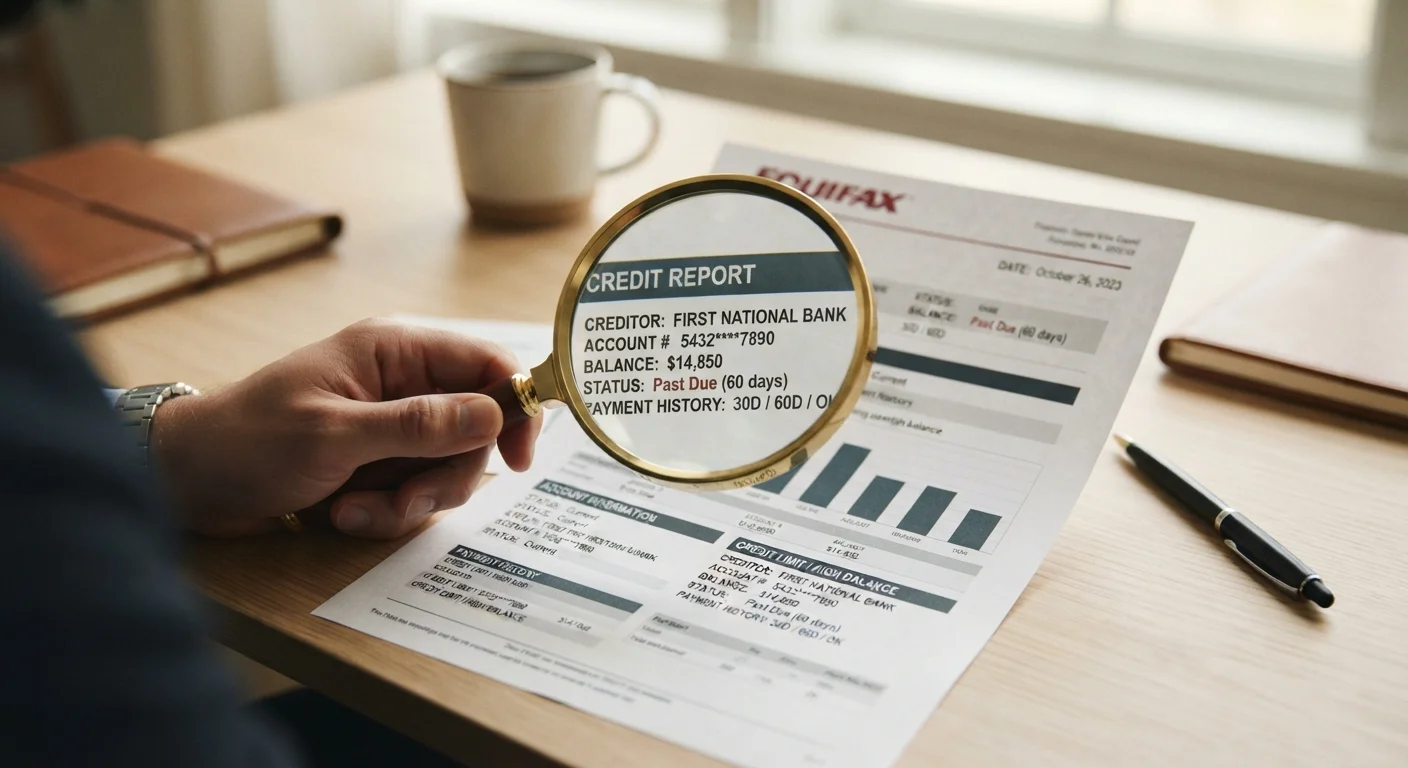
Read through each report section by section. Common errors include: accounts you do not recognize, incorrect account balances or credit limits, payments marked late that were made on time, duplicate accounts, and personal information (name, address, employer) that is wrong. Note the exact account name, account number, and the nature of the inaccuracy for each item you intend to dispute. Understanding what every section of a credit report contains can help you read entries more accurately.
Gather supporting documentation
Collect records that support your claim. Relevant documents might include bank statements showing an on-time payment, a lender letter confirming an account was closed, or a court document proving a judgment was satisfied. The stronger and more specific your documentation, the more clearly it demonstrates the error to the bureau's investigators.
File your dispute with the relevant bureau(s)
Contact each bureau where the error appears. You can dispute online through each bureau's dispute portal, by mail using a written letter, or by phone. Online portals tend to be the fastest. Your dispute should clearly state: which item is incorrect, why it is incorrect, and what correction you are requesting. Include copies of supporting documents. If mailing, send to the bureau's dedicated dispute processing address - available on each bureau's official website.
Dispute with the original data furnisher (if applicable)
Under the FCRA, you may also submit a dispute directly to the company that reported the information - called the data furnisher - such as a lender, credit card issuer, or collection agency. Disputing at both the bureau and the furnisher level can sometimes accelerate resolution, as the furnisher is required to investigate and report corrections back to the bureaus.
Monitor the investigation and outcome
Credit bureaus are generally required to complete their investigation within 30 days of receiving your dispute (45 days in certain circumstances). They must notify you of the results in writing and provide a free updated copy of your report if a change was made. If the bureau sides with you, the item will be corrected or removed. If your dispute is rejected, you have the right to add a 100-word consumer statement to your report explaining your position.
Escalate if the error is not resolved
If a legitimate error remains after the bureau's investigation, you have additional options. You can file a complaint with the Consumer Financial Protection Bureau (CFPB) at consumerfinance.gov or with the Federal Trade Commission (FTC). In cases of persistent inaccuracy or identity theft, consulting a consumer law attorney - some of whom handle FCRA cases on a contingency basis - may be appropriate.
Send Dispute Letters by Certified Mail
If you choose to dispute by mail, send your letter via certified mail with return receipt requested. This creates a documented paper trail showing the bureau received your dispute and when - useful if you ever need to escalate the matter.
Beware of Credit Repair Companies
Third-party companies that promise to "fix" your credit for a fee often charge high costs for services you can do yourself for free. No company can legally remove accurate negative information from your credit report. The dispute process described here is available to any consumer at no cost through the bureaus directly.
This article is for general informational purposes only and does not constitute legal, financial, or credit counseling advice. For guidance specific to your situation, consider speaking with a licensed financial professional or nonprofit credit counselor.