
Why Savings Myths Are So Persistent
Misconceptions about saving money don't usually come from nowhere - many have a kernel of logic that makes them feel true. Others are outdated rules of thumb that no longer reflect how financial products or household economics actually work. The cost of holding onto these myths isn't just intellectual; it's practical. People delay starting, underestimate small progress, or structure their finances in ways that quietly work against them.
This article addresses five of the most common savings myths and explains what the evidence actually shows. Understanding these distinctions won't tell you exactly what to do with your money - that depends on your specific situation - but it can help you ask better questions and avoid assumptions that cost you over time.
Myth
You need a high income before you can meaningfully start saving.
Fact
Savings habits can be built at virtually any income level. The habit of saving - not the dollar amount - is what creates long-term financial stability.
This is one of the most pervasive barriers to getting started. The assumption is that saving is only worthwhile once you cross some income threshold. In practice, the behavior of consistently setting money aside - even $10 or $20 a week - trains the financial habit and builds a foundation. Many personal finance researchers note that the savings rate (what percentage you save) matters more than the raw dollar figure, particularly early on. Starting small and scaling up over time is a widely recognized and effective approach.
Myth
Small amounts aren't worth saving - they won't make a real difference.
Fact
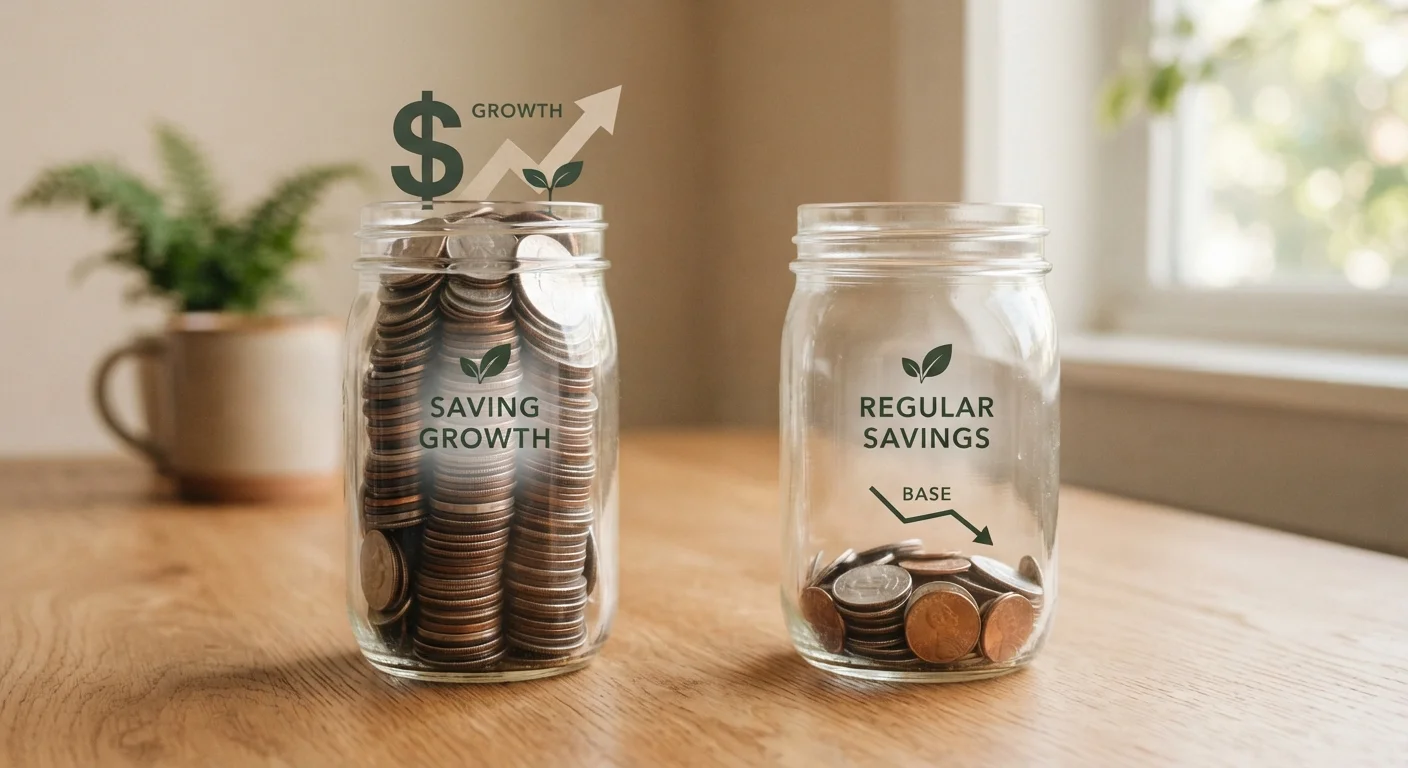
Small amounts saved consistently can compound into significant sums over years, especially when placed in an interest-bearing account.
The math behind compounding interest works regardless of the starting amount. A modest deposit earns interest, and that interest itself earns interest - a process that accelerates over time. For example, saving $50 a month over ten years in an account earning even modest interest results in a materially larger balance than saving nothing at all. The key variable is time, not just amount. Dismissing small savings as pointless often leads to saving nothing, which forfeits any compounding benefit entirely. Learn more about account options in our comparison of high-yield and traditional savings accounts.
Myth
Your savings are fine sitting in a checking account.
Fact
Checking accounts typically earn little to no interest, meaning money left there loses purchasing power to inflation over time.
Many people keep their savings in the same account they use for everyday spending - both for convenience and because they assume it doesn't matter. But standard checking accounts generally offer negligible interest rates. Over months or years, money that could be earning even modest returns in a dedicated savings vehicle instead sits idle. Beyond the lost interest, money in a checking account is also psychologically easier to spend. A separate savings account - particularly one with limited transaction access - creates both a financial and behavioral buffer.
Myth
You should pay off all debt before you start saving.
Fact
In many situations, it makes sense to do both simultaneously - particularly when an employer matches retirement contributions or when an emergency fund is absent.
The logic of paying off all debt first feels intuitive: eliminate what you owe, then save. But this approach overlooks two important factors. First, if your employer offers a retirement contribution match, not contributing means leaving compensation on the table. Second, having no emergency savings while aggressively paying down debt often leads to taking on new debt the moment an unexpected expense arises - undoing the progress. A balanced approach - directing some funds toward high-interest debt while maintaining a basic emergency buffer - tends to be more resilient for most people. For a broader look at how misconceptions derail financial progress, see our piece on common budgeting myths that prevent people from starting.
Myth
Saving requires constant willpower and discipline to work.
Fact
Automating transfers removes the need for repeated willpower decisions, which research consistently shows improves follow-through.
Willpower is a finite resource - relying on it alone to save consistently is a setup for irregular outcomes. Behavioral economics research has long shown that default settings and automation dramatically influence financial behavior. When a savings transfer happens automatically on payday, the decision is made once rather than repeatedly. Most banks and credit unions allow customers to schedule recurring transfers to savings accounts. This single structural change tends to outperform good intentions across time. If you're starting from scratch, our guide to building your first savings plan walks through how to set this up practically.
What These Myths Have in Common
Each of these misconceptions shares a common thread: they make saving feel harder, less worthwhile, or less urgent than it actually is. Whether it's the belief that your income disqualifies you, that small deposits are pointless, or that willpower alone determines success, the net effect is delay. And delay is particularly costly in saving because time is one of the most valuable inputs in the compounding equation.
This Is General Financial Education
The information in this article is intended for educational purposes only and does not constitute personalized financial advice. Your individual circumstances - income, debt load, goals, and risk tolerance - vary. Consult a licensed financial professional before making significant decisions about saving, investing, or debt management.
If you've held any of these beliefs, you're in good company - they're genuinely widespread. The more useful question is how to move forward from here. For a look at why savings goals often stall even when people do start, see why savings goals fail and what gets in the way. And if you're also sorting through myths in adjacent areas of personal finance, common myths about carrying a credit card balance covers several persistent misconceptions worth knowing.
57%
Americans with less than $1,000 saved
A GOBankingRates survey found a majority of Americans held very little in savings, underscoring how common - not shameful - limited savings are as a starting point.
$0
Interest typically earned in a checking account
Most standard checking accounts offer 0% or near-0% APY, according to national banking surveys, meaning money stored there loses real value to inflation annually.
3-6 months
Recommended emergency fund coverage
Financial educators broadly recommend maintaining three to six months of essential expenses in liquid savings before aggressively targeting other financial goals.
This article is for general informational and educational purposes only and does not constitute personalized financial, tax, or investment advice. Readers should consult a qualified financial professional regarding their individual circumstances.