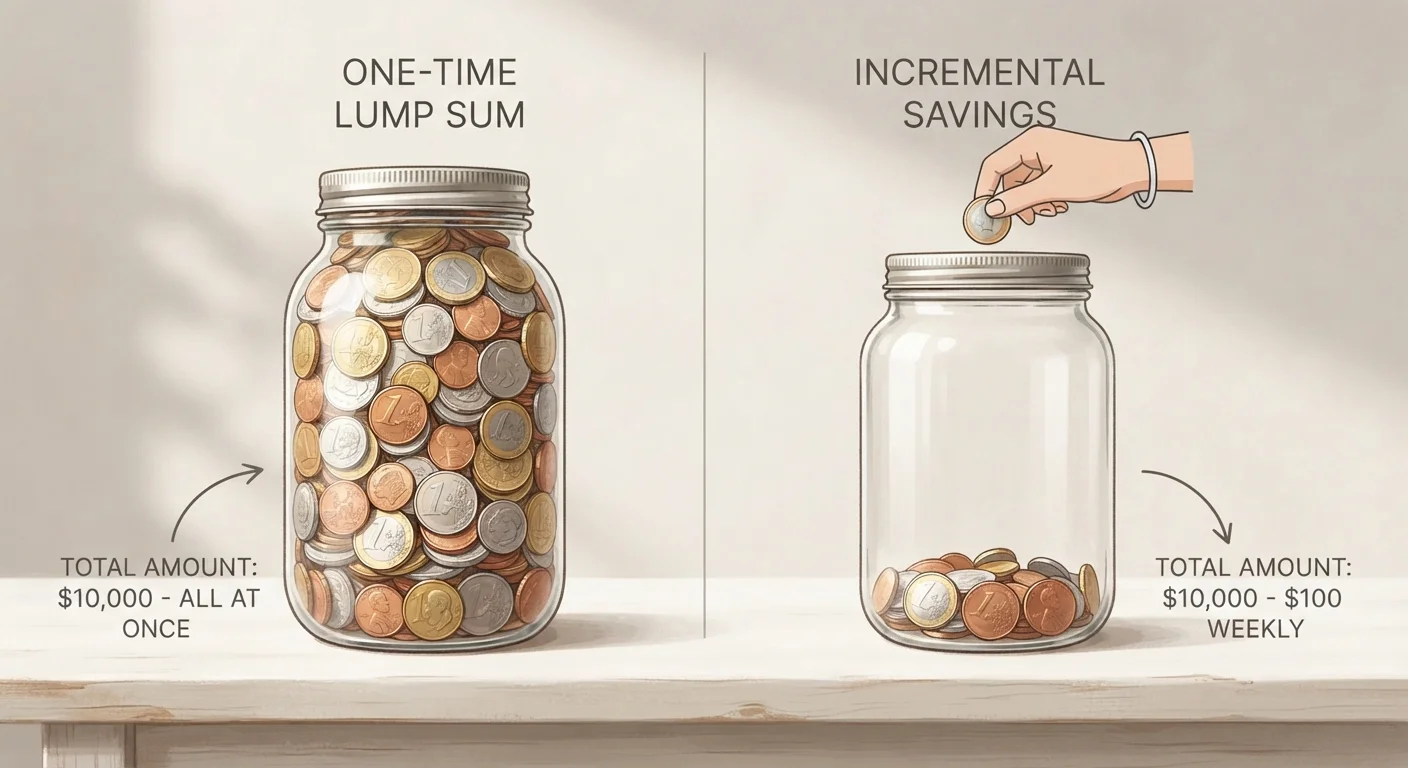

Why a Savings Plan Matters Before You Save a Dollar
Saving money without a plan is a bit like driving without a destination - you might move forward, but you're unlikely to end up where you want to be. A savings plan is simply a framework that defines what you're saving for, how much you need, and how you'll get there. It doesn't need to be complicated.
Before diving in, it's worth doing a basic financial review. That means understanding your monthly income, your regular expenses, and whether any high-interest debt should factor into your priorities. The personal finance readiness checklist is a useful starting point for this kind of honest assessment. Similarly, the Budgeting Basics hub offers frameworks for mapping your income and spending before committing to a savings strategy.
Once you have a general picture of where your money goes, you're ready to set a direction.
Setting Goals That Are Specific and Realistic
Vague intentions like "save more money" rarely lead to results. Goals that work tend to share a few qualities: they're tied to a specific purpose, they have a dollar target, and they have a rough timeline.
For example, "save $1,200 for an emergency fund over 12 months" is a plan. "Save more" is a wish. The difference is measurability - you know when you've succeeded, and you can track your progress along the way.
Emergency fund
A dedicated pool of savings set aside to cover unexpected expenses - like a job loss or medical bill - without needing to borrow money or disrupt other financial goals.
Savings rate
The percentage of your income that you save rather than spend. For example, saving $200 of a $2,000 monthly income is a 10% savings rate.
Sinking fund
A separate savings pool earmarked for a known future expense - such as annual car insurance, holiday gifts, or a planned vacation - funded gradually over time.
FDIC insurance
A U.S. government-backed protection that insures deposits at member banks up to specified limits, so your savings are protected even if the bank fails.
Pay yourself first
A saving approach where you move money into savings at the start of each pay period before spending on anything else, making saving a priority rather than an afterthought.
Lifestyle creep
The tendency for spending to increase as income grows, often without a conscious decision, leaving little additional room for saving even when earnings improve.
It also helps to separate your goals by time horizon. An emergency fund, a vacation fund, and a down payment on a home all require different approaches. Our article on short-term vs. long-term savings goals explains how purpose and timeline should shape your strategy. For predictable future costs - like annual insurance premiums or holiday spending - sinking funds are a practical tool worth understanding early.
Where to Keep Your Savings
Not all savings accounts are the same, and where you keep your money affects both its growth and your temptation to spend it. Here are the most common options for everyday savers:
- Basic savings accounts - Offered by most banks and credit unions. They're FDIC-insured (up to applicable limits), low-risk, and easy to open. Interest rates vary widely by institution.
- High-yield savings accounts - Similar to standard savings accounts but typically offered by online banks at higher interest rates. They're worth understanding, though rates fluctuate with broader economic conditions.
- Money market accounts - A hybrid between checking and savings, often with slightly higher yields and limited check-writing ability. Usually requires a higher minimum balance.
- Certificates of Deposit (CDs) - Fixed-term accounts that lock in your money for a set period in exchange for a fixed interest rate. Useful for funds you won't need soon, but early withdrawal usually triggers a penalty.
For most first-time savers, a dedicated savings account - kept separate from your checking account - is the simplest and most effective starting point. The separation itself reduces the friction of spending money you meant to save.
Open a Separate Account for Each Goal
Many banks allow you to open multiple savings accounts under one login and label each one by purpose - "Emergency Fund," "Vacation," "Car Repair." Keeping goals visually separate makes it easier to track progress and harder to accidentally spend money meant for one purpose on another.
Building a Habit That Sticks
Consistency is the ingredient that separates savers who make progress from those who intend to. The most reliable way to build consistency is to remove decision-making from the equation entirely.
This is the core idea behind the pay-yourself-first principle: treat your savings contribution like a non-negotiable bill that gets paid at the start of each pay period, before you spend on anything else. When saving happens automatically, it doesn't compete with other spending decisions.
Automating your transfers is the practical implementation of this idea. Most banks let you schedule recurring transfers from checking to savings on a specific date - ideally the same day your paycheck clears. For a detailed walkthrough of how to set this up and what to watch for, see our guide on automating your savings.
If automation isn't immediately possible, a manual transfer on a fixed schedule works too - the key is routine.
Common Pitfalls and How to Avoid Them
Even well-intentioned savings plans can stall. A few patterns show up repeatedly among people who struggle to reach their goals:
- Goals that are too vague. Without a clear target, there's no way to measure progress - and no moment of success to reinforce the habit.
- Lifestyle creep. As income rises, spending tends to rise with it, leaving the savings rate unchanged. Periodic check-ins on your plan help catch this drift early.
- Raiding the fund. Using savings for non-emergency purchases undermines the plan. Keeping savings in a separate account - ideally at a different institution from your checking - adds a useful layer of friction.
- All-or-nothing thinking. Missing a month's contribution doesn't mean the plan has failed. Resuming promptly matters more than perfection.
For a broader look at why savings goals commonly fall short, our article on savings goal failure covers these patterns in depth.
Interest Rates Change Over Time
The interest rate on a savings account or CD reflects current economic conditions and can change. When comparing account types, it's worth checking current rates from multiple institutions rather than relying on historical figures. Even small differences in yield compound meaningfully over time.
This article is for general informational and educational purposes only and does not constitute personalized financial advice. For guidance specific to your financial situation, consult a qualified, licensed financial professional.