
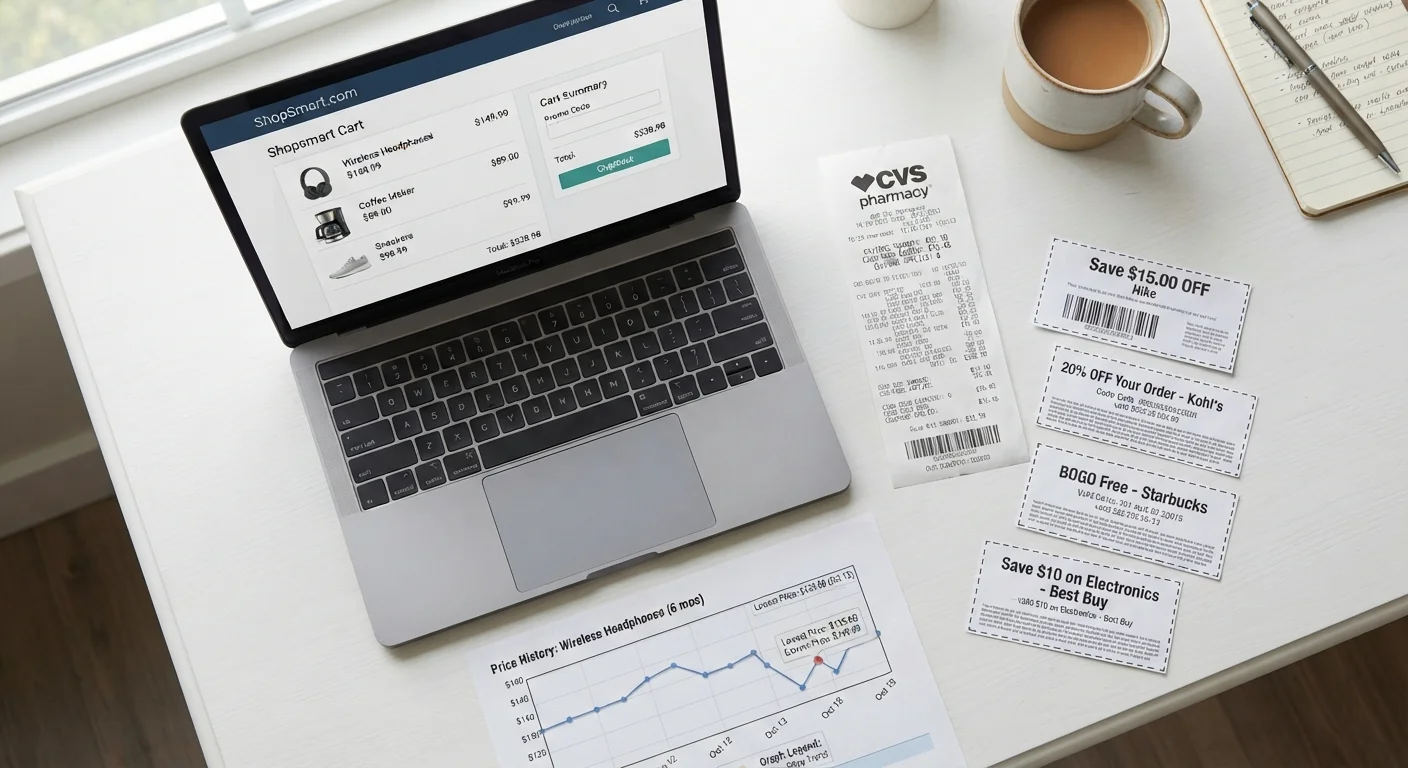
What Each Method Actually Does
Understanding how each tool works individually is the prerequisite to combining them effectively.
Coupon codes are alphanumeric strings entered at checkout that trigger a price reduction - either a flat dollar amount off, a percentage discount, or a conditional benefit such as free shipping. They are retailer-issued and time-limited, and terms vary widely. Some apply only to specific categories or minimum order values.
Cashback works differently: rather than reducing what you pay upfront, it returns a percentage of the purchase price to your account after the transaction is confirmed. Cashback is typically offered through browser extensions, dedicated platforms, or credit card rewards programs. The payout often arrives days or weeks after purchase and may exclude certain product categories or orders that used promotional codes.
Price tracking is not a discount mechanism at all - it is an information tool. Browser extensions and standalone sites log the historical price of a product over time, allowing you to see whether today's listed price is genuinely lower than usual or merely presented as a deal. Without this context, evaluating coupon codes or cashback offers is guesswork. For a broader look at identifying genuine markdowns, see this complete guide to real online discounts.
| Coupon Codes | Cashback | Price Tracking | |
|---|---|---|---|
| When savings are applied | At checkout, immediately | After purchase confirmation | No direct saving - informs timing |
| Effort required | Low to moderate (code search) | Low (activate before purchase) | Low (automated via extension) |
| Reliability of benefit | Conditional on code validity | Conditional on terms and retailer | Informational - always useful |
| Risk of misleading framing | High (inflated base prices) | Low | None - reveals actual history |
| Works best for | Reducing visible checkout cost | Passive post-purchase recovery | Confirming genuine price lows |
| Stackable with others | Sometimes (check terms) | Sometimes (may exclude codes) | Always (information only) |
Where Each Method Falls Short Alone
Each tool has a distinct blind spot that the others can address.
Coupon codes can create a false sense of savings when the baseline price has been inflated. A 20% off code on an item marked up 25% above its typical price is not a deal - it is a net loss of value dressed in discount language. Without price history, you cannot detect this pattern.
Cashback programs are valuable but passive. They do nothing to tell you whether you are paying a fair price, and they can evaporate silently: some platforms exclude certain retailers, categories, or orders using coupon codes. Reading the terms before assuming cashback will apply is essential. Loyalty programs and cashback arrangements share this trait - the value is real but conditional.
Price tracking, meanwhile, is purely diagnostic. It tells you when to buy but offers no mechanism to reduce your cost. Used alone, it might confirm that today is a low price point - but it won't actually lower the number you pay at checkout.
Inflated Base Prices Can Make All Three Misleading
A coupon code, cashback offer, and price tracking chart only reflect real value if the baseline price is legitimate. Some sellers temporarily raise prices before applying a discount, which distorts both percentage-off claims and the price history graph. Cross-reference multiple sources and look at 90-day or longer price histories rather than relying on a single data point.
How to Stack Them Strategically
Combining all three follows a logical sequence: track first, then discount, then recover.
- Verify the price is genuinely low. Before applying any code or activating cashback, check the price history using a tracking tool. If the current price is at or near a documented low, the purchase is worth pursuing. If the price was recently higher only to manufacture a discount, step back.
- Apply a coupon code if one is available and terms permit. Search for active codes, but be realistic - not every product category has one, and expired codes waste time. Confirm the code applies to your specific item and order size before counting on it.
- Activate cashback before completing checkout. Whether through a browser extension or a dedicated portal, cashback must typically be activated before the transaction. Completing the purchase and then trying to claim cashback retroactively rarely works. Verify whether the retailer and product category are eligible, and check whether your coupon code will affect cashback eligibility.
This sequence keeps you from relying on any single signal and reduces the risk of discovering post-purchase that one layer cancelled another.
Check Cashback Terms Before Applying a Code
Many cashback platforms explicitly exclude orders where a coupon code has been used, or reduce the earning rate for promotional purchases. Before combining a code with cashback, confirm both policies - retailer and cashback platform - allow it. A few minutes of reading terms can prevent a cashback claim from being denied.
For a longer view on making this process repeatable, building a consistent savings habit outlines practical routines that don't require constant effort.
Knowing When Stacking Isn't Worth the Effort
Combining three tools on every purchase is not always practical or proportionate. On low-cost items, the time cost of researching price history, hunting a coupon code, and activating cashback can exceed the financial benefit. A reasonable threshold is to apply the full process to purchases where the potential combined saving is meaningful relative to your time.
It is also worth recognizing that some purchases are time-sensitive and price tracking history is limited or unavailable for newer products. In those cases, focus on cashback alone as a straightforward baseline and verify the code terms carefully before applying anything that might void it.
For time-limited promotions, the calculus shifts again - flash sales vs. evergreen discount programs explores whether urgency-driven events actually deliver better value than standing offers. And for any transaction involving account creation or financial data sharing through cashback platforms, applying safe browsing practices remains important - the safe online buying hub covers the essentials.
The goal is informed, proportionate effort - not compulsive optimization. Used selectively, these three methods give consumers a structured way to evaluate whether a price is real and capture savings when it genuinely is.