Why Most 'Deals' Aren't What They Seem
Not every item labeled 'sale' or 'X% off' represents a genuine reduction. Retailers routinely use a practice called reference pricing - displaying an inflated 'original' or 'was' price beside a lower current price to create the impression of savings that may not exist. The Federal Trade Commission has long cautioned that a reference price must reflect a genuine former selling price to be considered honest, yet enforcement is inconsistent and consumers rarely have the historical data to challenge it.
Understanding the mechanics behind common discount displays is the first step toward protecting your wallet. Our guide to reference pricing and drip pricing breaks down the most common retailer strategies in plain language, from anchor prices to urgency nudges. Recognizing these patterns lets you approach any sale page with appropriate skepticism rather than reflexive excitement.
~97%
Online shoppers who encounter drip pricing
A 2022 OECD consumer study found that nearly all online shoppers have experienced drip pricing, where fees are added progressively through checkout.
76%
Shoppers influenced by urgency cues
Multiple behavioral economics studies indicate that a strong majority of consumers alter their purchasing decisions in response to artificial scarcity or countdown timers.
15-20%
Typical cashback portal rate range
Cashback rates vary widely by retailer and category; high-margin categories like travel or financial products often yield the highest percentages.
How to Verify a Price Is Actually Lower
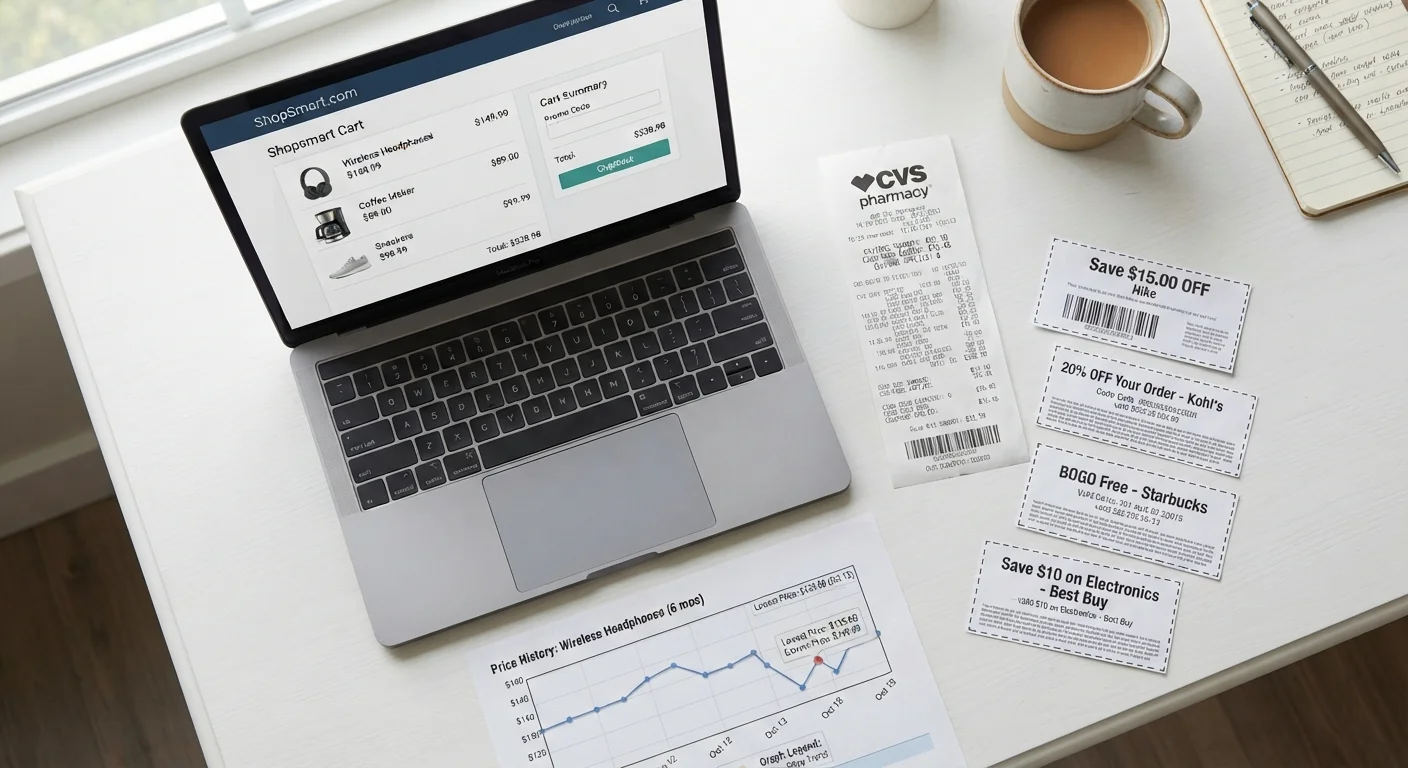
The most reliable way to evaluate any discount is to check the item's price history - the record of what it actually sold for over time. Several browser extensions and web services track historical pricing data for major retail platforms, displaying a chart that shows whether today's 'sale' price is a genuine low or simply the item's everyday cost relabeled.
Beyond price history, cross-retailer comparison is essential. Searching the same product model number across multiple storefronts takes only a few minutes and frequently reveals that the 'discounted' price at one retailer matches or exceeds the standard price elsewhere. Don't overlook total cost: shipping fees, handling charges, and sales tax all affect what you actually pay. These hidden additions - sometimes called drip pricing - can erase apparent savings entirely by the time you reach checkout.
Paste the product's full model number - not its marketing name - into your price comparison search. Retailers often sell near-identical products under different names to obscure direct comparisons.
Marketing names frequently differ between retailers for the same SKU, making side-by-side comparison harder. The model number is standardized and ensures you're evaluating the same item.
Set your price-tracking alert 10-15% below the current listed price, not at the current price. That threshold filters out minor fluctuations and signals a meaningfully better deal.
Alerts set at the current price trigger constantly and train you to ignore them. A meaningful gap ensures the notification actually represents a worthwhile drop.
For a structured approach to evaluating products before you commit to any price, the Product Research hub covers how to compare specifications, read reviews critically, and avoid common research shortcuts that lead to overpaying.
Stacking Savings Methods That Actually Work
Three distinct mechanisms can reduce what you pay online: coupon codes, cashback portals, and price-tracking alerts. Each operates differently, and combining them - where a retailer's terms permit - can produce meaningful reductions beyond what any single method achieves alone.
- Coupon codes apply a percentage or flat discount at checkout. They're widely available through retailer email lists, browser extensions that auto-test codes, and dedicated aggregator sites. Not all codes are current, so verify terms before relying on one.
- Cashback portals redirect you to a retailer's site through a third-party link that earns a commission, a portion of which is passed back to you as cashback. Rates vary by retailer and product category and can change without notice.
- Price-tracking alerts notify you when an item drops to a target price you set. This approach removes the temptation to buy impulsively and lets the market come to you.
Our article on coupon codes, cashback, and price tracking explains the interaction between these methods and where stacking is typically allowed.
Read cashback portal terms before clicking
Cashback eligibility can be voided if you use a coupon code the portal doesn't recognize, navigate away from the retailer site mid-session, or use a browser extension simultaneously. Check the portal's terms for each retailer before starting your session to avoid disqualifying your earnings.
Retailer Tactics Designed to Rush You
Urgency is the enemy of rational price evaluation. Countdown timers, 'only 3 left in stock' notices, and flash-sale banners are explicitly designed to compress your decision window and discourage comparison shopping. Research in consumer behavior consistently shows that artificial scarcity and time pressure increase purchase likelihood regardless of whether a deal is genuine.
Countdown Timers Are Often Decorative
Many retailer countdown timers reset automatically when they expire or apply to a rolling sale window rather than a fixed end point. Treating a timer as definitive evidence of scarcity is rarely justified. Verify whether the deal genuinely ends by checking the retailer's sale terms or revisiting the page after the timer expires.
If you feel rushed at any point during an online purchase, treat that feeling as a signal to pause rather than proceed. Close the tab, set a price alert, and revisit the item in 24 hours. In most cases, the 'limited time' price persists, or a comparable price appears elsewhere without the pressure. The habits that lead to overpaying online - including trusting sale badges at face value - are well-documented and easy to correct once you recognize them.
Beware of 'deal' sites with no price history
Aggregator sites that list deals without linking to verifiable price history can amplify misleading discounts just as readily as individual retailers. Always verify the claim independently using a price-tracking tool rather than accepting a deal badge at face value.
Building a Repeatable Deal-Finding Process
Chasing individual flash sales is less effective than building a consistent, low-effort process you apply to every significant purchase. A practical framework looks like this:
- Research before you shop. Identify the specific product - model number, key specs - so you're comparing identical items across retailers.
- Check price history. Use a tracking tool to confirm whether the current price is genuinely low relative to the item's recent history.
- Compare total cost. Add shipping, taxes, and any mandatory add-ons before declaring one retailer cheaper than another.
- Layer applicable savings. Check whether a cashback portal is active for that retailer, and test available coupon codes at checkout.
- Set an alert if the price isn't right yet. Patience is a leverage point most shoppers underuse.
If you're newer to structured deal-hunting, the beginner's roadmap to smart savings provides an accessible starting point covering price comparison and coupon stacking from the ground up. For shoppers concerned about security when using extensions or cashback portals, the Safe Online Buying hub outlines essential practices for staying protected while pursuing savings.
Browser Extensions and Privacy
Price-comparison and coupon-testing extensions require access to your browsing activity to function. Before installing any extension, review its privacy policy and the permissions it requests. Stick to extensions with clear data practices and a strong public reputation, and remove any you no longer use.