
Why the Information Environment Has Gotten Harder to Navigate
Product research used to mean asking a knowledgeable friend or reading a printed consumer magazine. Today it means navigating a landscape where sponsored content, affiliate-driven rankings, algorithm-optimized listicles, and influencer promotions compete for the same visual space as genuinely independent analysis. The volume of available content has increased dramatically; the proportion that is independent has not kept pace.
Three structural forces drive this: the economics of content production favor volume over depth; search and social algorithms reward engagement rather than accuracy; and disclosure requirements, while real, are often buried in fine print that most readers never reach. Understanding these forces is the first step toward working around them - not by avoiding the internet entirely, but by applying a consistent filter to what you read.
See our guide to recognizing trustworthy product reviews for a deeper look at how to read between the lines of any review you encounter.
Recognizing the Four Main Categories of Noise
Not all unreliable information looks the same. Grouping it into categories makes it easier to spot quickly:
- Affiliate-driven content: Articles structured around product roundups where every recommendation links to a retailer paying a commission. The selection criteria often reflect commission rates more than product merit.
- Sponsored editorial: Content that reads like journalism but is funded by the brand being covered. FTC rules require disclosure, but placement and prominence of those disclosures vary widely.
- Fake and incentivized reviews: Seller-solicited reviews, review exchanges, and outright fabricated ratings artificially inflate average scores on major retail platforms. These are common enough to warrant systematic skepticism.
- Algorithm-amplified opinion: Social media surfaces content based on engagement signals, not accuracy. A confident-sounding product claim spreads faster than a careful, hedged one - regardless of which is better supported.
High Search Rankings Don't Signal Credibility
A page ranking in the top three results for a product query has often earned that position through SEO investment, not editorial quality. Search algorithms reward signals like click-through rates and backlink volume - neither of which correlates with accuracy. Treat ranking as a discovery tool, not a credibility shortcut.
Our companion article on user reviews vs. expert reviews explains the specific blind spots each type carries and how to account for them.
42%
Online reviews estimated to be unreliable or fake
According to a 2023 analysis by the World Economic Forum citing multiple e-commerce platform studies on review authenticity.
~15%
Search results that are clearly commercially motivated
Research on search engine result pages consistently finds a significant share of top organic results tied to affiliate or sponsored content.
3x
More likely to trust reviews with verified purchases
Consumer surveys repeatedly show shoppers place higher trust in reviews flagged as verified purchases compared to anonymous submissions.
Where Reliable Signal Actually Comes From
Reliable product information tends to share a common structure: the source has no financial stake in which product you choose, the methodology is described rather than implied, and negative findings are reported alongside positive ones.
Practically, this points toward a few categories of sources worth prioritizing:
- Independent lab testing organizations: Groups that purchase products at retail, test against defined criteria, and publish results including failures. Their funding comes from subscriptions or public grants, not from the brands they evaluate.
- Standards-body certifications: When a certification comes from an organization like ASTM, UL, or ENERGY STAR, it reflects defined, repeatable criteria rather than editorial judgment. These are verifiable through the certifying body's own database - a step worth taking before trusting a product page's claims.
- Detailed user communities: Enthusiast forums, subreddits, and hobbyist communities often contain granular, real-world experience that neither lab tests nor professional reviews capture. The signal quality varies, but long-form threads discussing failure modes and workarounds are generally more useful than star ratings.
Before reading any review site, search the site name alongside the word 'affiliate' or 'how we make money' to understand its revenue model before trusting its rankings.
A site's business model directly shapes which products get visibility; knowing it upfront prevents you from mistaking commercial curation for independent research.
When evaluating a product claim, ask specifically what was measured, by whom, and under what conditions - not just what conclusion was drawn.
Marketers routinely cite real data out of context. Checking methodology exposes whether a statistic applies to your actual use case.
For a broader map of consistently useful source types, see information sources worth bookmarking for ongoing product research.
Affiliate Disclosure Doesn't Mean Worthless
A site that earns affiliate commissions is not automatically unreliable. Many credible publishers use affiliate links while maintaining genuine editorial independence. What matters is whether the methodology is transparent, whether negative findings are reported, and whether product selection is driven by testing criteria rather than commission rates.
A Practical Framework for Evaluating Any Source
Rather than memorizing a list of approved sources, a more durable approach is applying the same three questions to any source you encounter:
- Who funds this? Look for a revenue disclosure page. If the answer is affiliate commissions or direct brand partnerships, that doesn't make the content worthless, but it sets the right priors.
- What was actually tested or observed? Reliable sources describe their methodology. Vague language like 'we researched extensively' with no specifics is a flag; a description of what was purchased, how it was evaluated, and what criteria were applied is a positive signal.
- Are failures reported? A source that never publishes negative findings is either extremely lucky or filtering results. Independent evaluators have no incentive to suppress poor performers; commercially motivated ones often do.
Start with the Funding Model
Before reading a single word of product analysis, locate the site's 'How We Make Money' or disclosure page. If no such page exists, treat every recommendation with extra skepticism. Legitimate independent publishers are transparent about revenue sources; the absence of that transparency is itself useful information.
Certification Claims Require Verification
Product listings frequently display certification logos - safety seals, energy ratings, material standards - without those claims being independently verified on the listing itself. Always confirm certifications directly through the certifying body's public database rather than trusting the logo on a product page or retailer listing.
These same questions apply when evaluating individual product claims. Our article on questions worth asking before trusting any product claim walks through this in more detail.
Applying the Framework: A Quick Research Workflow
A structured workflow prevents the common mistake of over-indexing on the first convincing source you find. A practical sequence for most product research:
- Start with the product's own specifications. Understand what the manufacturer claims before reading any third-party assessment. Our guide to decoding product specifications can help you interpret technical details.
- Check for relevant certifications through the issuing body's database - not through the product listing itself.
- Find at least one source using objective testing methodology, and at least one source representing sustained real-world use (a forum thread, a long-term owner community).
- Apply the three-question framework to each source before drawing conclusions.
- If the sources conflict, treat the discrepancy as a signal worth investigating rather than choosing the answer you prefer.
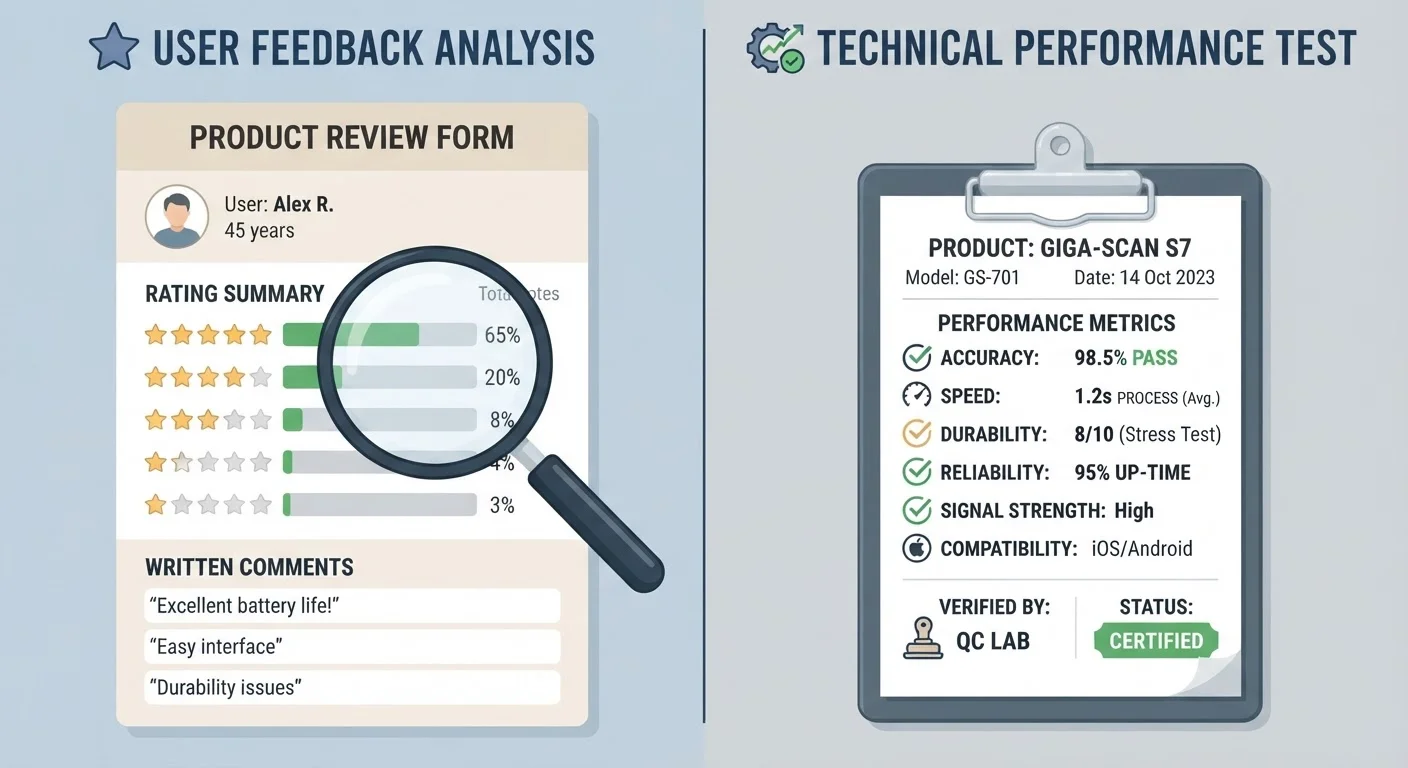
For a direct comparison of how crowd-sourced feedback and lab testing differ in what they can reliably tell you, see crowd-sourced opinions vs. independent lab testing.
“The question is never whether a source has an opinion - every source does. The question is whether that opinion was shaped by evidence or by incentives.”
— Tim Harford, Economist and author of 'How to Make the World Add Up'
FTC Disclosures 101 for Consumers
The Federal Trade Commission publishes plain-language guidance explaining when and how influencers, bloggers, and reviewers are required to disclose paid relationships - useful context for reading any sponsored content.
Standards Body Databases
Organizations such as UL Solutions, ASTM International, and ANSI maintain searchable public databases where consumers can verify whether a product's claimed certification is legitimate and current.
Consumer Product Safety Commission Search
The CPSC's public recall database allows shoppers to check whether a product category has active safety recalls before purchasing - a step most shoppers skip entirely.
No single source eliminates uncertainty - that's not the goal. The goal is reducing the influence of financial incentives on what you believe about a product, and increasing the weight given to evidence that was gathered without a stake in the outcome.