What Each Review Type Is Actually Measuring
Before deciding which source to lean on, it helps to understand what each is genuinely built to evaluate.
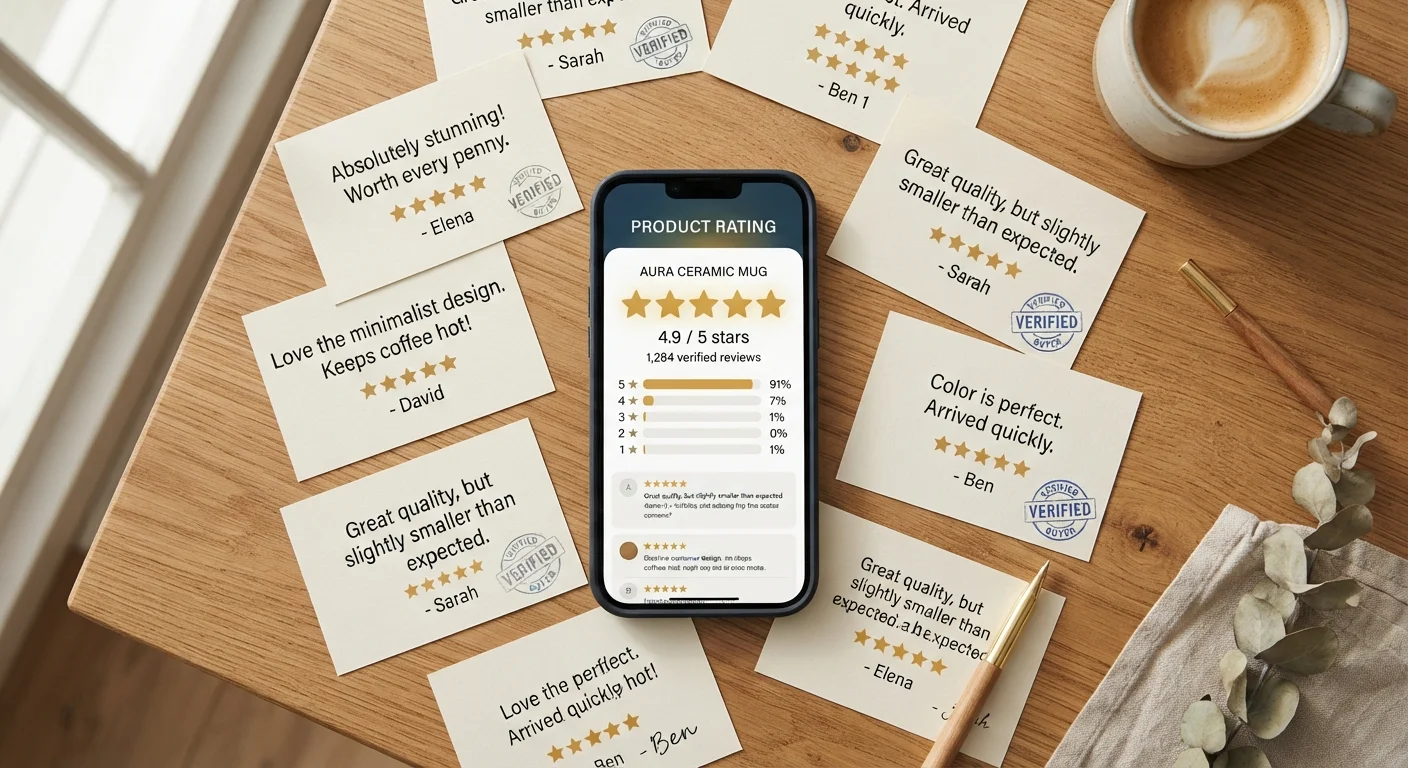
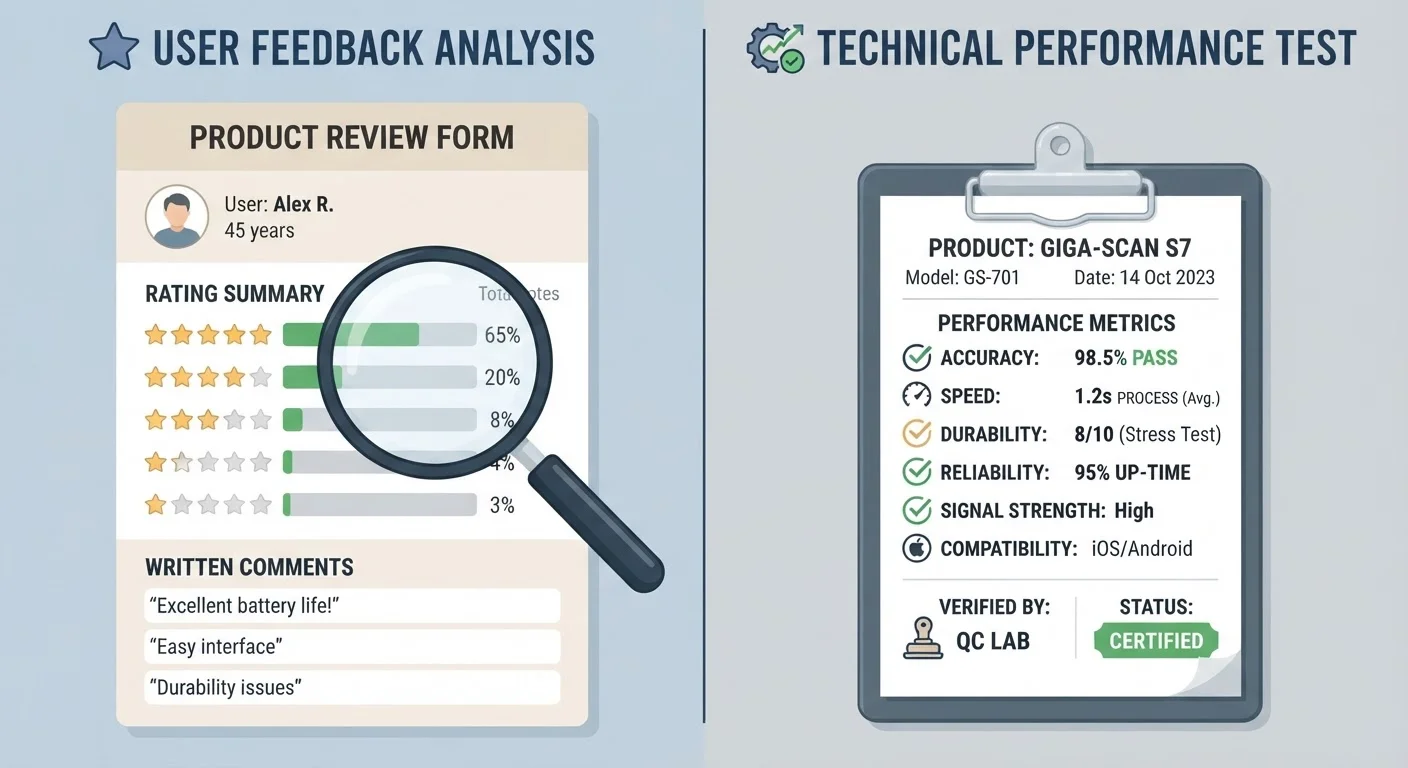
User reviews aggregate the experiences of people who purchased and used a product in real conditions - their own kitchens, commutes, bodies, and budgets. The value here is volume and variety. Patterns that emerge across hundreds of independent reviewers tend to be meaningful, even when individual reviews are unreliable. The anatomy of a trustworthy product review matters here: a verified purchase attached to a detailed, specific account carries more weight than a vague five-star entry with no context.
Expert reviews, by contrast, are structured evaluations conducted under controlled or semi-controlled conditions. A reviewer with domain knowledge applies consistent criteria across multiple products, producing comparative data. Their findings reflect methodological rigor - but they reflect a narrow slice of real-world use.
| Criterion | User Reviews | Expert Reviews |
|---|---|---|
| Sample size | Potentially thousands of buyers | Single reviewer or small team |
| Testing conditions | Varied, real-world environments | Controlled or standardized settings |
| Long-term durability data | Often available from owners | Rarely - short review windows |
| Technical benchmark comparisons | Unreliable without expertise | Core strength of expert testing |
| Manipulation risk | High - incentivized and fake reviews common | Lower, but funding bias possible |
| Reflects diverse use cases | Yes - broad demographic range | Limited - reflects reviewer's context |
| Transparency of methodology | Rarely disclosed | Should be explicitly stated |
Where Each Source Falls Short
Both review types have structural weaknesses that are easy to overlook when you're mid-research and want a clear answer.
User reviews are vulnerable to manipulation. Incentivized reviews, fake accounts, and review gating (the practice of only soliciting feedback from satisfied customers) can skew aggregate scores in ways that aren't visible to shoppers. As the red flags in seller reviews article explores, these distortions are more common than most shoppers assume. Selection bias is another issue: people with extreme experiences - very positive or very negative - are disproportionately motivated to leave feedback.
Expert reviews carry different risks. Funding source matters enormously. Publications that rely on advertiser revenue or affiliate commissions have structural incentives that can color their conclusions, even subtly. Testing conditions may not reflect how a product performs in a typical household. And experts often review products shortly after launch, missing quality changes that occur months later in production runs.
A Note on 'Verified Purchase' Labels
Platforms use verified purchase flags to signal that a reviewer actually bought the product - but this doesn't guarantee neutrality. Incentivized reviews can still carry the verified label if the reviewer received a discount rather than a free item. Treat verification as one quality signal among several, not a definitive mark of trustworthiness.
The reasons highly rated products sometimes disappoint often trace back to exactly these dynamics - average scores masking a polarized review distribution.
How to Use Both Sources Together
The most reliable approach treats user and expert reviews as complementary signals, not competing authorities.
Start with expert reviews to establish a baseline: what does objective testing say about performance, build quality, and safety? Then use user reviews to stress-test those findings against real-world conditions. Do owners confirm what the lab found? Are there recurring complaints the expert review didn't surface?
42%
Online reviews estimated to be fake or unreliable
Analysis by Fakespot, a review-analysis platform, has consistently found that a substantial share of reviews on major retail sites show markers of inauthenticity or manipulation.
1-star & 5-star
Ratings most likely to be extreme outliers
Research into review distribution patterns consistently shows that ratings cluster at the extremes, driven by motivated reviewers rather than the typical customer experience.
Pay attention to patterns in user feedback rather than scores. A product with a 4.2-star average built on consistent praise for comfort and scattered complaints about a specific component tells you something precise. A 4.2 built on wildly polarized reviews tells you something else entirely - and is worth investigating further, as our guide on crowd-sourced opinions vs. independent lab testing examines in depth.
Finally, check the source of any expert review before trusting it. Look for disclosed methodology, independent funding, and transparency about how products were obtained and tested. For a broader framework on filtering credible information from sponsored noise, see how to find reliable information in a crowded marketplace.