Where the Sidewalk Ends and the Trail Begins
Most American cities require travelers to rent a car, board a shuttle, or commit to a significant drive before reaching anything resembling a serious trail. A smaller group of cities are different - places where the urban core and genuine wilderness are genuinely adjacent, sometimes separated by nothing more than a residential street and a trailhead sign. For travelers who want their city amenities and their backcountry access in the same trip, these destinations offer a genuinely efficient travel proposition.
This isn't about manicured urban greenways, though those have their place. This is about cities where you can lace up real hiking boots, walk out of a downtown hotel, and within a reasonable transit or rideshare trip be climbing through forest, desert, or mountain terrain that demands attention and rewards effort. If you're weighing whether an urban base or a nature-focused itinerary suits your travel style, our guide on city breaks versus nature escapes covers the broader decision framework well.
Pack for Both Environments
Urban trailhead hikes mean you may move quickly from city streets to exposed ridgelines. Layer clothing for temperature shifts, carry more water than you think you need, and bring a physical map or downloaded offline route - cell service often drops within minutes of leaving the urban edge. Sturdy footwear appropriate to the terrain makes a genuine difference even on shorter trails.
Six Cities Where Downtown and the Trailhead Are Practically Neighbors
Denver, Colorado
Denver earns its reputation as a gateway city honestly. The trailhead for Chautauqua Park in Boulder is a short drive from downtown, but Denver itself connects directly to the Front Range via the William Frederick Hayden Park trail network and South Table Mountain - accessible without leaving city limits. Red Rocks Amphitheatre, just 15 miles west, sits inside a preserved open-space area with its own trail system weaving through dramatic sandstone formations. Elevation matters here: Denver sits at 5,280 feet, so visitors coming from sea level should pace themselves on any first-day hike.
Denver's city limits already touch genuine Front Range trail systems - no car rental required.
Seattle, Washington
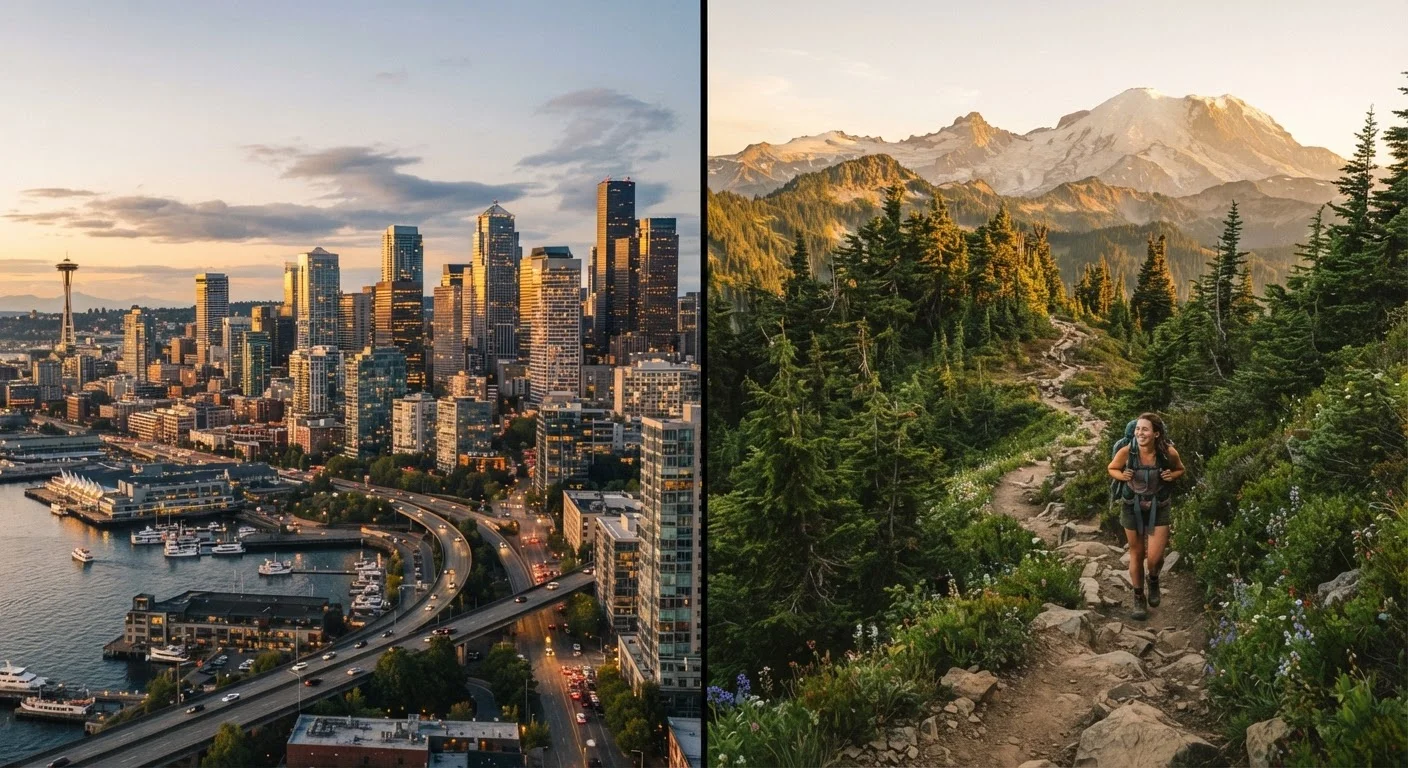
Seattle's urban trail scene punches well above its weight. The Tiger Mountain State Forest, part of the Issaquah Alps, is reachable by public transit from downtown - a genuine rarity among American cities. Closer in, Cougar Mountain Regional Wildland Park offers over 36 miles of trails starting just outside the city's southeastern edge. Even within Seattle proper, forested corridors like Seward Park and the Interurban Trail system let hikers log meaningful mileage. The Pacific Northwest's famous rain means trails stay green year-round, though traction gear helps on muddy winter routes.
Tiger Mountain State Forest is reachable from downtown Seattle by public transit alone.
Tucson, Arizona
Tucson may be the most underrated urban hiking city in the country. Saguaro National Park wraps around two sides of the metro area - the Rincon Mountain District to the east and the Tucson Mountain District to the west - placing genuine desert wilderness within a 20-minute drive of downtown. Sabino Canyon, managed by the US Forest Service, offers a free shuttle service into the canyon and trails ranging from easy streamside walks to serious scrambles up Mount Lemmon. The high Sonoran Desert's saguaro-studded landscape offers something visually unlike any other American hiking destination. Heat is the primary safety consideration; early morning starts are strongly advisable in summer months.
Saguaro National Park wraps around two sides of Tucson, placing wilderness minutes from downtown.
Pittsburgh, Pennsylvania
Pittsburgh surprises most first-time visitors. The city's rugged river valley topography - the source of its famous hills - translates directly into an accessible urban trail network. Frick Park, the largest municipal park in the city, contains over nine miles of natural surface trails with genuine elevation change. The Allegheny Front Trail and surrounding Forbes State Forest are reachable within an hour. Within the city itself, the Three Rivers Heritage Trail stitches together 24 miles of riverfront walking. Pittsburgh's trail infrastructure is quietly impressive, and the city's food and arts scene means evenings after a long day on the trail are genuinely rewarding.
Pittsburgh's rugged river valley geography translates directly into surprisingly serious urban trails.
Albuquerque, New Mexico
The Sandia Mountains rise to over 10,600 feet immediately east of Albuquerque, making this one of the most dramatic urban-to-wilderness transitions in the continental US. The Embudo Trail begins at the edge of residential neighborhoods and climbs into the Cibola National Forest within minutes. For those who prefer a gentler approach, the Paseo del Bosque Trail follows the Rio Grande through protected cottonwood forest right through the city. Albuquerque's high-desert altitude and dry climate mean trails are generally accessible well into autumn, though afternoon thunderstorms are common in summer - known locally as monsoon season - and should factor into any hiking plan.
Sandia Mountain trailheads begin at the edge of Albuquerque's neighborhoods, climbing over 10,000 feet.
Honolulu, Hawaii
Honolulu gets framed primarily as a beach destination, but its mountain access is exceptional. The Ko'olau Range rises sharply behind the city, and trails like the Manoa Falls Trail and the Wa'ahila Ridge Trail begin within neighborhoods that are a short bus ride from Waikiki. The Makapu'u Lighthouse Trail on the eastern tip offers spectacular coastal views with minimal elevation gain. More ambitious hikers tackle the Koko Crater Trail, a steep former military railway line that delivers panoramic views of O'ahu from its summit. Trail conditions can change rapidly after rainfall; the Hawaii Department of Land and Natural Resources maintains updated trail status information.
Honolulu's Ko'olau mountain trails begin in residential neighborhoods reachable by city bus from Waikiki.
Check Conditions Before You Go
Trail access, parking availability, and permit requirements can change seasonally or following weather events. Always verify current conditions with the relevant managing agency - whether that's a city parks department, US Forest Service district, or National Park Service unit - before heading out. Some urban-adjacent wilderness areas now require advance reservations during peak seasons.
Planning Your Urban Hiking Trip
The cities above span every major US region and represent a range of terrain types - high desert, Pacific Northwest forest, Rocky Mountain Front Range, humid Appalachian foothills, Hawaiian ridge systems. That variety means there's a genuine urban hiking destination suited to most travel windows, whether you're visiting in winter or midsummer.
A few universal considerations apply. Transit access varies significantly; Seattle's public transit reach into trail country is unusual and not something every city replicates. For most of these destinations, having some form of local transportation - even a single rideshare to the trailhead - simplifies logistics considerably. If your broader trip involves exploring other parts of the country, our end-to-end domestic travel planning resource can help you think through the full logistics picture. And if wilderness access is your primary draw rather than the city itself, the regional breakdown of America's national parks may help you think about whether a park-focused trip better fits your goals.