Why Domestic Travel Deserves Serious Planning
It's easy to assume domestic travel is simple - no passport, no currency exchange, no language barrier. But the United States is a vast, geographically and culturally diverse country spanning roughly 3.8 million square miles. A trip from Miami to Seattle involves as much climate difference as crossing multiple European countries.
Thoughtful planning makes the difference between a stressful scramble and a smooth, memorable trip. Whether you're heading to a national park, a coastal city, a mountain resort, or a small-town cultural destination, the fundamentals - timing, transport, accommodation, and budget - all reward early attention. For comparison, planning international travel adds layers like visas and foreign currency, but domestic trips have their own unique logistics worth respecting.
63
Designated US National Parks
According to the National Park Service, the US has 63 designated national parks, with hundreds of additional monuments, recreation areas, and historic sites.
6
Time Zones Spanning the Continental US and Territories
The US spans six standard time zones, from Eastern to Hawaii-Aleutian, underscoring the country's geographic scale.
500M+
Annual Domestic Leisure Trips
The US Travel Association has consistently reported that Americans take hundreds of millions of domestic leisure trips each year, making it one of the world's largest internal travel markets.
Choosing Your Destination
Start by matching the destination to your goals. Are you chasing outdoor adventure, culinary exploration, historical immersion, or beach relaxation? The US offers all of these within its borders - often at extremes.
- National Parks: From the geothermal wonders of Yellowstone to the red rock canyons of Zion, America's 63 national parks are world-class destinations. Reservations for popular parks like Yosemite often fill months in advance.
- Urban escapes: New Orleans, Chicago, New York, San Antonio, and Portland each offer distinct food scenes, neighborhoods, and histories worth deep exploration.
- Coastal and island destinations: Hawaii, Cape Cod, the Outer Banks, and the Florida Keys reward visitors with very different seaside experiences.
- Mountain and wilderness regions: Appalachia, the Rockies, and the Pacific Northwest offer everything from mild hikes to serious backcountry expeditions.
Seasonality shapes every destination. Visiting the desert Southwest in July or New England in mud season requires preparation and realistic expectations. For broader trip-planning frameworks, the Trip Planning hub covers budgeting, packing, and organizing any trip from start to finish.
Book campsite or lodging reservations for high-demand national parks (Yosemite, Zion, Glacier) at least three to six months ahead - many reservation windows open exactly six months before arrival dates.
Competition for limited park accommodations is fierce in peak seasons, and last-minute availability is rare at the most popular sites.
For road trips, build in at least one unplanned day per week of driving - spontaneous stops are where memorable travel moments happen.
Over-scheduling a road trip turns it into a logistics exercise rather than an adventure; flexibility is the real value of driving over flying.
Getting There: Transportation Options
How you get there shapes the entire trip experience. Each mode of transport comes with real tradeoffs.
Flying
For distances over roughly 500 miles, flying is usually the most time-efficient option. The US has an extensive domestic air network connecting hundreds of airports. Factor in security wait times, airport transfers, and baggage logistics when comparing total journey time.
Road Trips
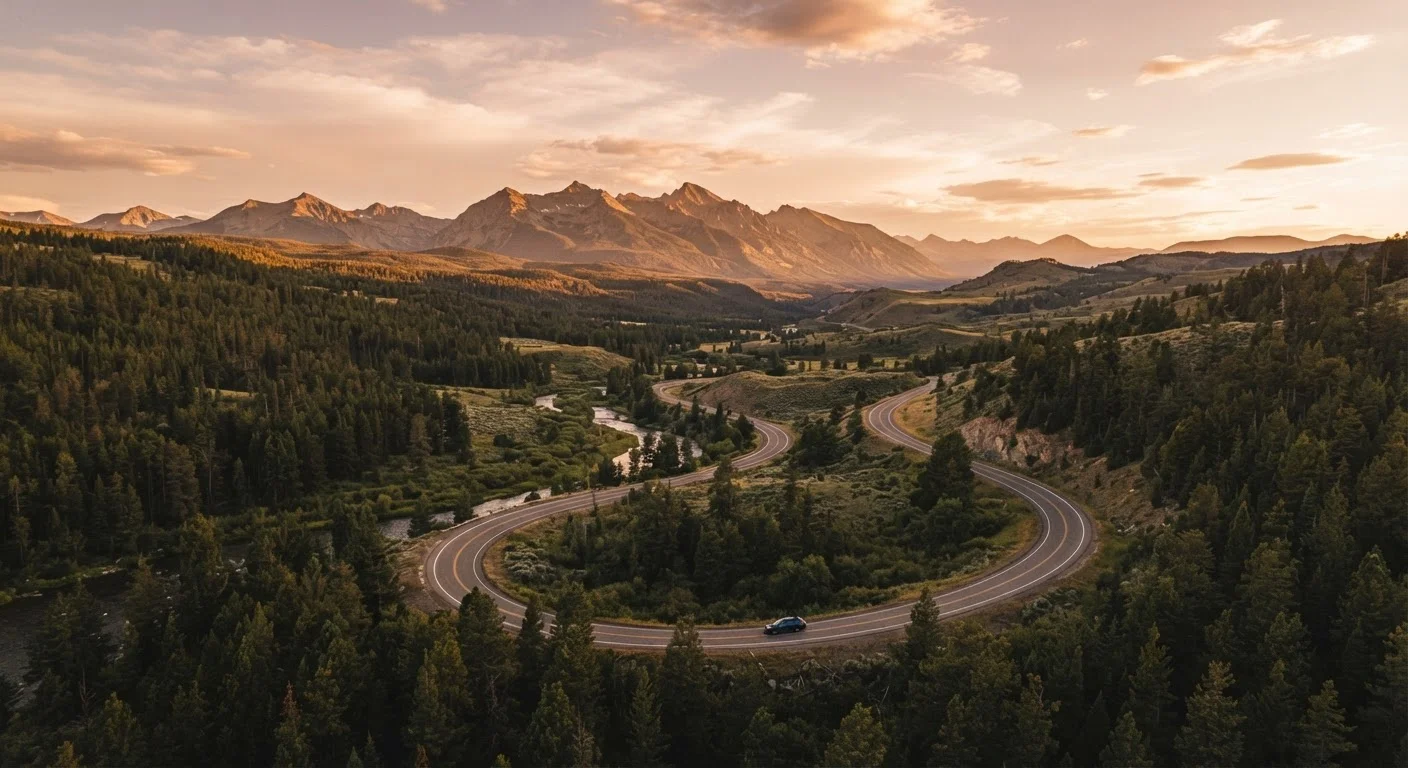
Driving remains one of the most flexible and rewarding ways to experience American geography. Interstate highways are well-maintained, and gas stations, rest stops, and roadside towns add texture to any journey. Plan your route with realistic daily mileage - eight hours of driving a day is a grind, not a vacation.
Amtrak Rail
Amtrak connects most major cities and offers scenic routes like the California Zephyr and the Coast Starlight that are experiences in themselves. Rail travel is slower than flying but more relaxed, and some routes offer sleeper cars for overnight journeys. This contrasts notably with international rail systems - if you're curious how US rail compares, see reading a foreign train system.
Bus Travel
Intercity bus services connect hundreds of smaller cities not served by rail or direct flights. Travel times are long, but fares can be very affordable for budget-conscious travelers.
Combine Transportation Modes for Flexibility
Consider flying one-way and returning by train or driving back via a different route. One-way car rentals between cities open up loop-free itineraries that let you cover more ground without retracing steps. This strategy is especially effective on the West Coast, where driving south to north (or vice versa) along scenic coastal routes adds genuine value to the trip.
Regional Norms and Cultural Considerations
The United States is not culturally monolithic. Traveling from the Deep South to the Pacific Northwest, or from rural Appalachia to urban Los Angeles, means encountering meaningfully different social norms, dining customs, pace of life, and community values.
- Tipping culture: Tipping is expected across most of the country at restaurants, hotels, and for many service providers. Standard restaurant tipping ranges from 18-20% in most regions.
- Pace and formality: Southern hospitality is a real phenomenon - interactions tend to be warmer and more leisurely. Urban centers like New York move at a faster, more transactional pace. Neither is wrong; adjusting your expectations reduces friction.
- Outdoor and public space etiquette: Leave No Trace principles apply in wilderness areas. Respect local rules around alcohol in public, noise ordinances, and wildlife interaction - these vary significantly by state and municipality.
- Tribal lands: Many destinations - especially in the Southwest - include or adjoin sovereign tribal lands. Research and respect specific rules, photography policies, and access protocols for each nation.
State Laws Vary Significantly
The US is a patchwork of state and local regulations. Laws around recreational cannabis, open-container alcohol, concealed carry, helmet requirements, and even jaywalking differ by state - and sometimes by county or city. If any of these areas are relevant to your trip, research the specific rules for each state you'll visit before you go.
Packing Smart for Any US Trip
Unlike international travel, domestic trips don't require adapters, currency, or visas - but smart packing still matters enormously based on destination and season.
Build your packing list around terrain and activity, not just duration. A four-day camping trip in the Smoky Mountains requires very different gear than four days in Miami. Key categories to consider:
- Layering systems: Mountain and coastal environments can see dramatic temperature swings within a single day. Versatile layering beats packing bulky single-purpose items.
- Footwear: Invest in appropriate shoes for your primary activities - quality hiking boots for trails, comfortable walking shoes for urban exploration.
- Medications and health supplies: Rural areas and national parks can be hours from the nearest pharmacy. Pack sufficient personal medications and a solid first-aid kit.
- Tech and connectivity: Cell service is unreliable in many wilderness areas. Download offline maps (apps like Google Maps support this) and consider a portable battery pack.
Don't Rely on Cell Service in Remote Areas
Large swaths of the American West, Appalachia, and rural regions have minimal to no cell coverage. Navigating entirely by smartphone can leave you stranded. Download offline maps before departure, carry a paper backup for complex routes, and let someone know your itinerary if venturing into backcountry areas.
Budgeting and Logistics
Domestic travel costs vary enormously based on destination, season, and travel style. A week in Hawaii or New York City carries a very different price tag than a road trip through rural Montana or the Mississippi Delta.
Key budget categories to plan around:
- Accommodation
- Hotels, vacation rentals, hostels, campgrounds, and RV parks all serve different needs and price points. Booking early - especially for peak seasons and popular parks - is strongly advisable.
- Transportation
- Beyond getting there, local transit, parking, ride-shares, and car rentals add up. Research local options before arrival.
- Food and dining
- Eating local is one of travel's great pleasures, but dining out for every meal in expensive cities can strain budgets. A mix of restaurants and self-catering keeps costs manageable.
- Activities and entry fees
- National park passes, museum admissions, guided tours, and recreation fees are easy to underestimate. The America the Beautiful annual pass offers broad national park and federal lands access and is worth evaluating if you plan multiple park visits.
For travelers who also want to compare domestic planning against what international trips entail, the international trip planning reference provides a useful contrast on scope and complexity.
“Travel makes one modest. You see what a tiny place you occupy in the world.”
— Gustave Flaubert, 19th-century French novelist
This article is for general informational purposes only. Prices, availability, park access rules, and local regulations change frequently - always verify current details with official sources before traveling.