Why Simple Is the Right Starting Point
If you've gone years without a skincare routine, the good news is that your skin has been managing on its own - and it doesn't need a 10-step overhaul to catch up. In fact, jumping straight into a complex regimen is one of the fastest ways to trigger irritation, breakouts, or confusion about what's actually helping.
The goal here is to build a foundation: three reliable steps that protect and support your skin barrier without overwhelming it. Once that foundation feels effortless - usually after four to six weeks - you can layer in optional extras if you choose. For a deeper look at how product layering works once you're ready, see our guide to layering skincare products.
Before you buy anything, take a quick inventory of how your skin typically behaves. Does it feel tight or flaky after washing? You likely have drier skin. Does it look shiny or feel greasy by midday? That points toward oilier skin. Combination skin shows both - usually an oily T-zone with drier cheeks. Sensitive skin reacts easily to new products. None of these is better or worse; they just guide your formula choices.
What you will need
Your Three-Step Starter Routine
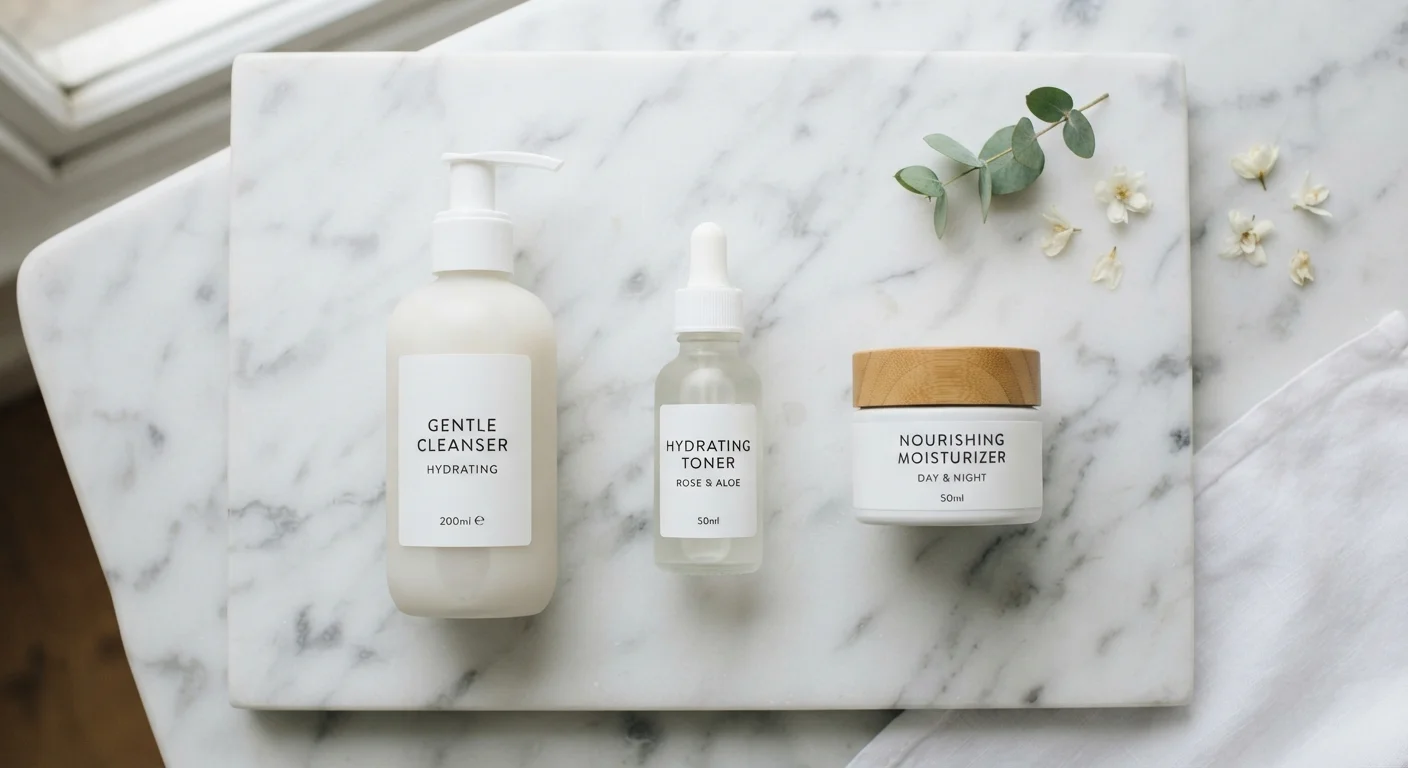
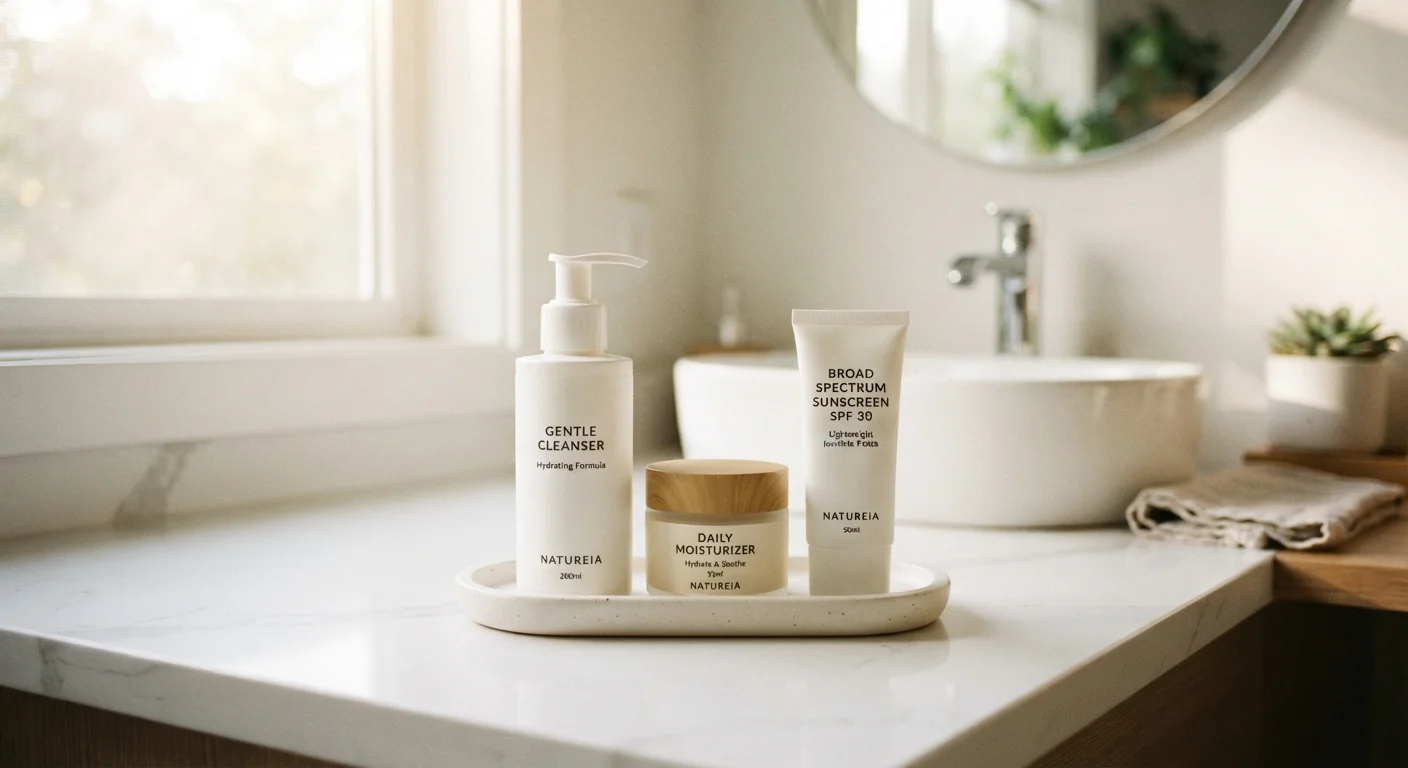
Every effective routine - from the minimalist to the elaborate - is built on the same three pillars: cleansing, moisturizing, and sun protection. Here's how to approach each one as a complete beginner.
Choose a gentle cleanser
A cleanser removes dirt, oil, and environmental buildup without disrupting your skin's natural barrier. Look for descriptors like gentle, fragrance-free, or non-stripping on the label. Cream or gel cleansers tend to work well for drier and normal skin; foaming or gel formulas suit oilier skin types. Use lukewarm water - hot water can strip moisture - and pat your face dry rather than rubbing.
Apply a basic moisturizer
Moisturizer helps the skin retain water and keeps the barrier intact. Apply it while your skin is still slightly damp for better absorption. For oily skin, a lightweight lotion or gel moisturizer works well and won't feel heavy. For dry skin, a richer cream provides more lasting hydration. Sensitive skin benefits most from fragrance-free, minimal-ingredient formulas. Apply morning and night - yes, even if your skin feels oily.
Add a broad-spectrum SPF (mornings only)
Sunscreen is the most evidence-supported skincare step for maintaining long-term skin health. A broad-spectrum SPF 30 or higher applied every morning protects against both UVA and UVB rays. Apply it as the last step of your morning routine, after moisturizer. Chemical and mineral formulas both work - choose whichever texture you'll actually wear daily. If you dislike the feel of traditional sunscreen, try a moisturizer with built-in SPF to streamline the step.
The Best Time to Build a Routine
Tying your new routine to an existing habit - like brushing your teeth - dramatically improves consistency. Morning and night dental routines are a natural anchor. You're already in the bathroom; the products are within reach. Habit-stacking takes the decision-making out of the equation entirely.
Once your three-step routine feels like second nature, you may want to understand the reasoning behind each step more deeply. Learn what each skincare step is actually doing so you can make smarter choices going forward.
Common Beginner Mistakes to Avoid
Starting a routine is straightforward, but a few common missteps can slow your progress or lead to unnecessary frustration.
- Over-washing: Washing your face more than twice a day strips the skin barrier and often makes oiliness worse, not better. Morning and evening is enough.
- Using too many new products at once: If you introduce several products simultaneously and your skin reacts, you won't know what caused it. One new product at a time, with at least a week between additions. How to introduce a new skincare product safely walks through patch testing and timelines in detail.
- Skipping sunscreen on cloudy days: UV rays penetrate cloud cover. Daily application matters year-round.
- Expecting overnight results: Skin cell turnover takes roughly four to six weeks. Give any new routine at least that long before assessing whether it's working.
When to Pause and Consult a Dermatologist
If your skin develops persistent redness, swelling, burning, or a rash after starting a new product, stop using it immediately. These can be signs of an allergic reaction or contact dermatitis. Over-the-counter skincare is generally safe for most people, but a dermatologist is your best resource for ongoing skin concerns, unusual reactions, or conditions like rosacea, eczema, or acne that may need targeted treatment.
When your routine is solid and your skin has stabilized, it's worth revisiting your product choices seasonally. Temperature and humidity shifts can change what your skin needs. A seasonal skincare audit can help you adjust without starting over.
This article is for general informational purposes only and is not a substitute for advice from a qualified dermatologist or healthcare provider. If you experience persistent irritation, allergic reactions, or skin concerns, consult a professional.