What Makes a Protein 'Complete'?
Protein is made up of amino acids - small building blocks your body uses to repair tissue, produce enzymes, and support immune function. Of the 20 amino acids, nine are considered essential, meaning your body cannot make them and must obtain them from food.
A protein source is called complete when it contains all nine essential amino acids in adequate proportions. Animal proteins - including meat, poultry, fish, eggs, and dairy - are almost universally complete. Plant proteins, with a few exceptions like soy and quinoa, tend to be incomplete, meaning they are low in one or more essential amino acids.
This doesn't mean plant proteins are inadequate. The key insight from nutrition research is that amino acid needs can be met across the full day, not necessarily in one sitting. Eating a variety of plant proteins - say, rice and beans, or whole grain bread with nut butter - covers the spectrum of essential amino acids reliably. This approach is sometimes called protein complementing, and it doesn't require precise meal-by-meal planning.
| Criterion | Plant-Based Protein | Animal Protein |
|---|---|---|
| Amino acid completeness | Usually incomplete (soy and quinoa are exceptions) | Complete in almost all sources |
| Digestibility (DIAAS) | Generally lower; improves with cooking | Generally higher across most sources |
| Dietary fiber | High in legumes and whole grains | None |
| Saturated fat | Typically low | Varies; higher in red meat and full-fat dairy |
| Key micronutrients | Folate, magnesium, iron (non-heme) | B12, zinc, heme iron, omega-3s (fish) |
| Environmental footprint | Generally lower land and water use | Generally higher, especially red meat |
| Cost and accessibility | Legumes and grains are often affordable | Varies widely; eggs and dairy are often budget-friendly |
Digestibility: How Much Protein Does Your Body Actually Use?
Eating protein and absorbing it are two different things. Digestibility refers to how efficiently your body breaks down and uses the protein you consume. Nutrition scientists use a measure called the Digestible Indispensable Amino Acid Score (DIAAS) to evaluate this - it accounts for both amino acid content and how well the body absorbs each one.
By this measure, animal proteins - especially eggs, dairy, and meat - tend to score higher than most plant proteins. Fiber, phytic acid, and other compounds found naturally in plant foods can slow or partially limit amino acid absorption. That said, processing and cooking improve plant protein digestibility considerably. Cooked lentils, tofu, and edamame are meaningfully more digestible than raw or unprocessed plant sources.
~20%
Lower protein digestibility in some plant foods
Research published in nutrition journals suggests certain raw or minimally processed plant proteins may be absorbed roughly 10-20% less efficiently than animal proteins, depending on the source and preparation method.
18g
Protein per half-cup of cooked lentils
According to USDA nutrient data, cooked lentils provide approximately 18 grams of protein per cooked cup, making them one of the most protein-dense plant foods by weight.
6g
Complete protein per large egg
The USDA reports a single large egg contains about 6 grams of protein with a high digestibility score, making eggs one of the most efficient single-serving protein sources.
The practical takeaway: if you rely primarily on plant proteins, eating slightly more total protein than the general recommendation may help account for lower absorption rates. A registered dietitian can help you assess whether your intake is on track for your individual needs.
Practical Sources and What They Bring to Your Diet
Understanding where each type of protein comes from - and what else it delivers - helps you make smarter daily choices.
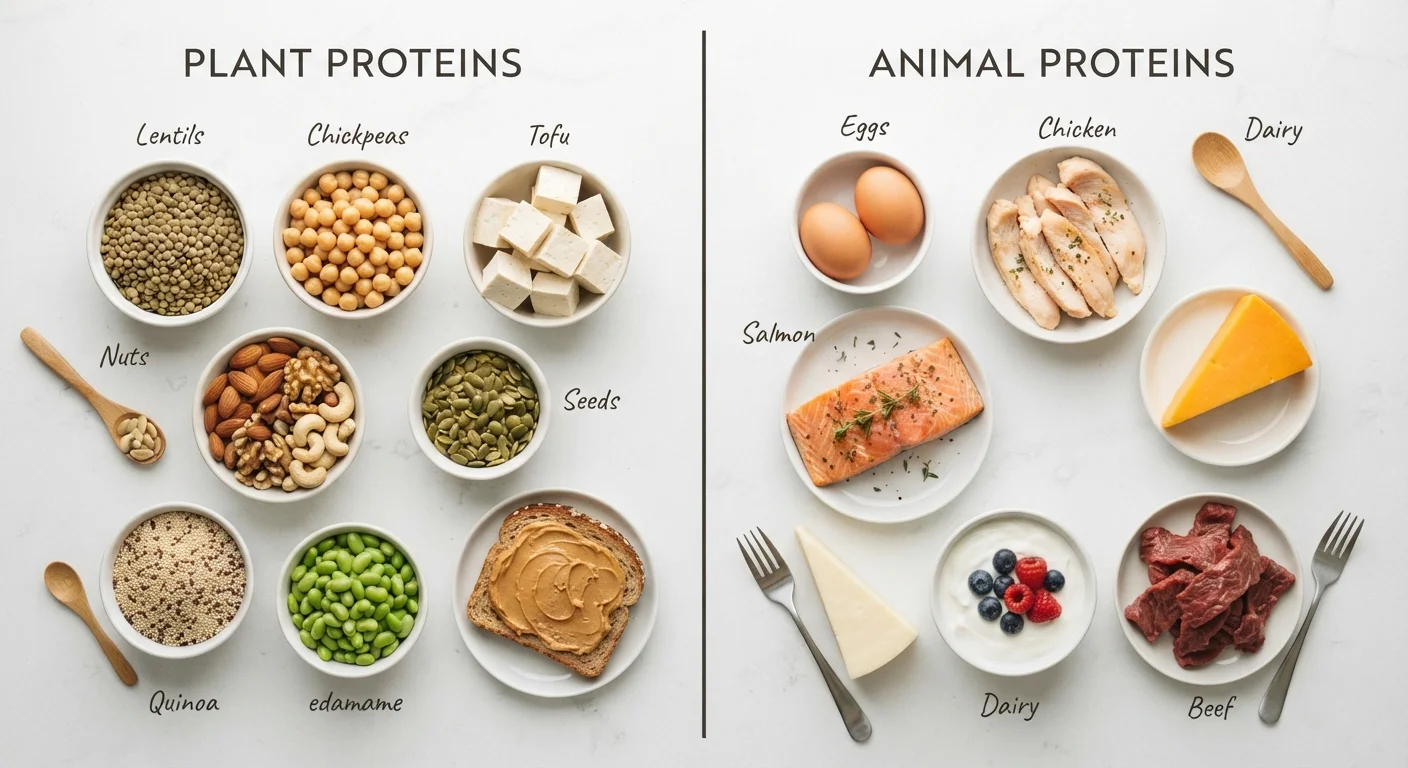
Animal Protein Sources
- Eggs: One of the most bioavailable proteins, plus choline and B vitamins.
- Fish and seafood: Complete protein alongside omega-3 fatty acids, especially in fatty fish like salmon and sardines.
- Poultry: Lean, versatile, and high in B vitamins.
- Dairy (Greek yogurt, cottage cheese): Protein-dense, with calcium and probiotics in fermented options.
- Red meat: Complete protein with iron and zinc, though dietary guidelines generally suggest moderating saturated fat intake.
Plant Protein Sources
- Legumes (lentils, black beans, chickpeas): Protein plus fiber, folate, and iron.
- Soy foods (tofu, edamame, tempeh): Among the most complete plant proteins available.
- Whole grains (quinoa, farro): Moderate protein with complex carbohydrates.
- Nuts and seeds (hemp seeds, pumpkin seeds, almonds): Protein with healthy fats, though typically lower in total protein per serving.
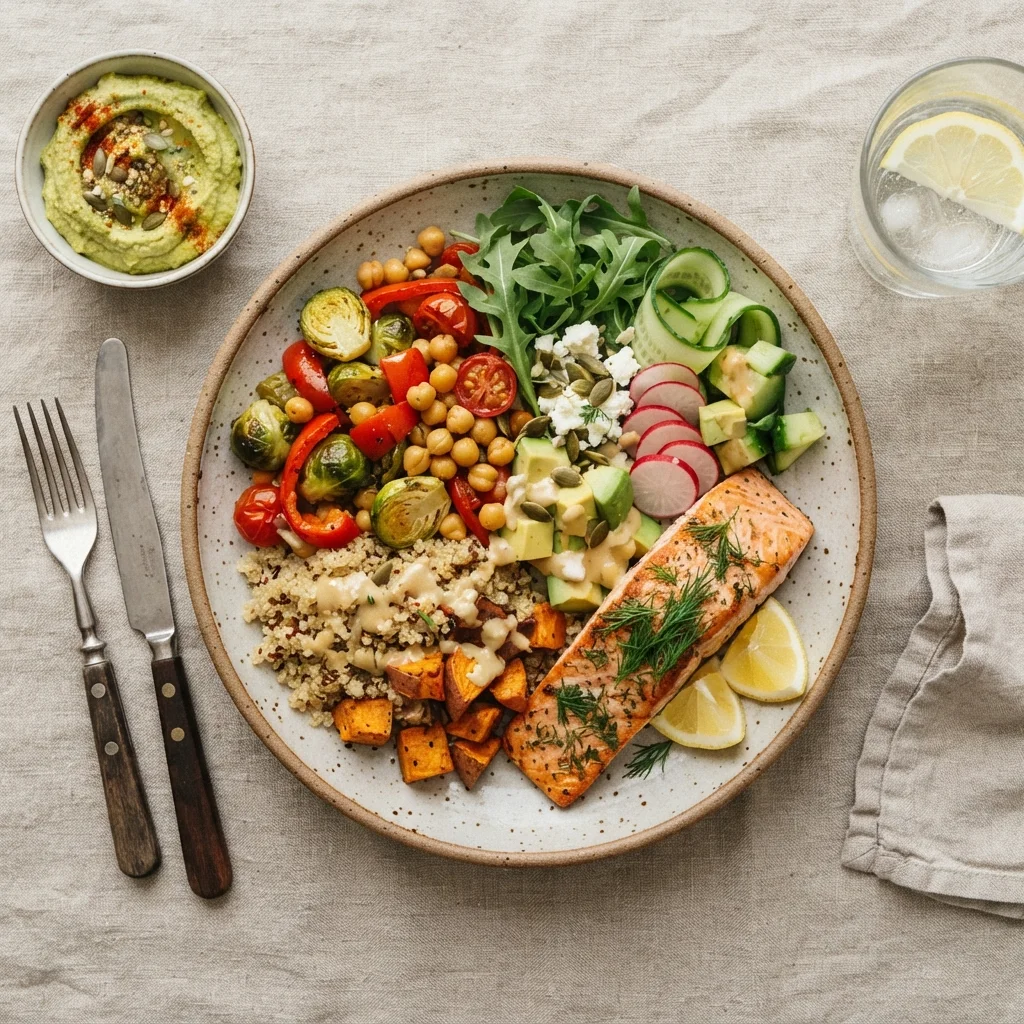
When building meals, consider what the protein source brings beyond amino acids. Fiber, micronutrients, and fat composition all matter. See our guide to building a balanced plate for a framework that applies regardless of your dietary pattern.
Choosing What Works for Your Eating Pattern
Neither protein type is universally superior - both can anchor a nutritionally sound diet depending on how thoughtfully you apply them. The most important variable is variety. Diets that draw protein from multiple sources, plant and animal or exclusively plant-based, tend to cover nutritional bases more completely than those relying on a narrow range of foods.
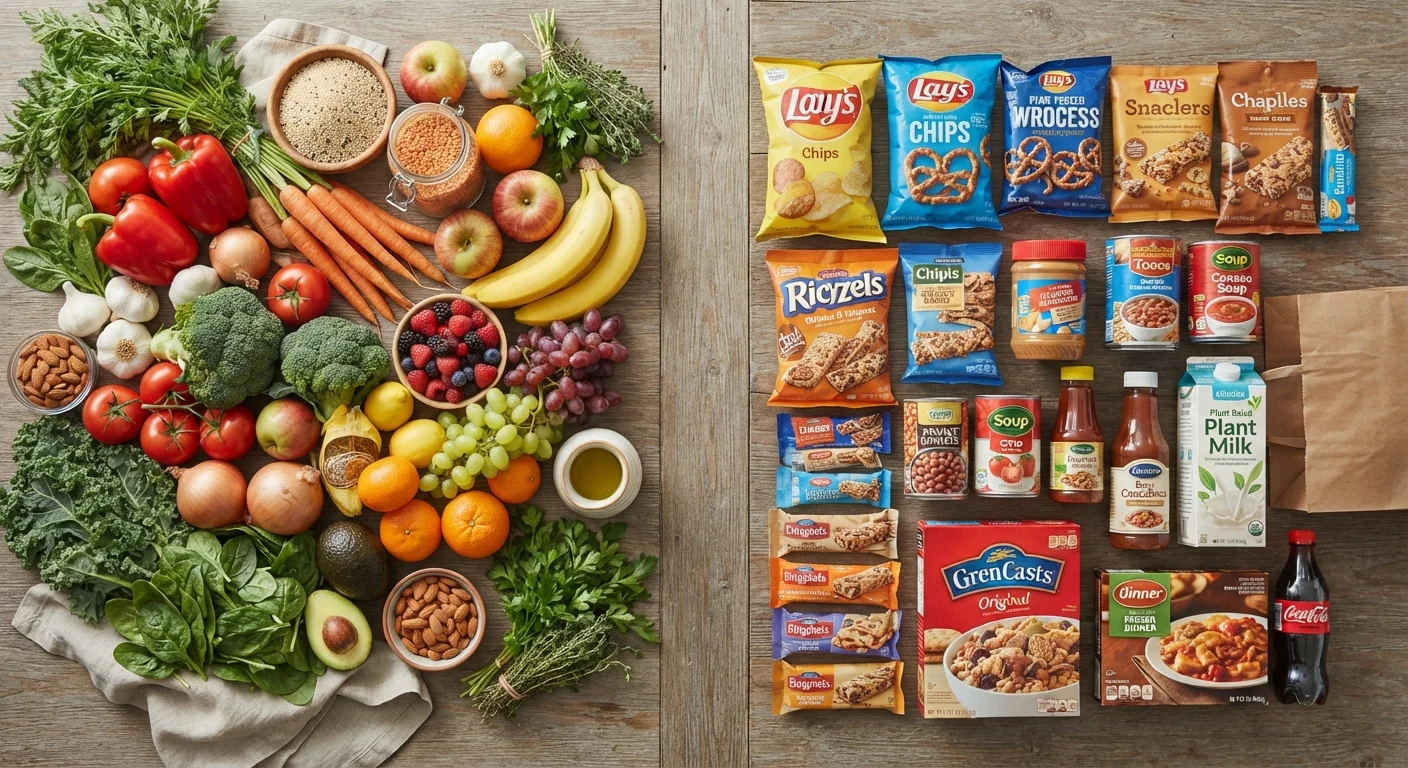
If you're curious whether your current diet is hitting its protein targets, our weekly nutrition habits audit offers a practical checklist to identify gaps. And if you're thinking about the broader context of food quality - not just macronutrients - our comparison of whole and processed foods explains why the form of your protein source matters alongside its amino acid profile.
Vitamin B12: A Key Gap for Plant-Based Eaters
Vitamin B12 is found almost exclusively in animal-derived foods. People following a fully plant-based diet are generally advised to supplement B12 or consume B12-fortified foods regularly to avoid deficiency. This is one of the most clinically significant nutritional differences between plant-only and omnivore diets. If you eat little or no animal protein, discuss B12 monitoring with your healthcare provider.
This article is for general informational and educational purposes only and is not a substitute for professional medical or nutritional advice. Individual protein needs vary based on age, health status, activity level, and other factors. Please consult a registered dietitian or qualified healthcare provider for guidance specific to your situation.