Defining the Terms: More Than a Binary Choice
The words "whole" and "processed" are thrown around constantly in nutrition conversations, but they rarely come with a clear definition. A whole food is generally understood as one that remains close to its natural form - think an apple, a handful of walnuts, or a fillet of salmon. Processing, at its most basic level, means any human alteration: washing, cutting, cooking, canning, freezing, or adding preservatives.
That definition makes nearly everything processed to some degree. Frozen peas are processed. Pasteurized milk is processed. Even plain rolled oats have been steamed and flattened. The more useful framework comes from researchers who categorize food by degree of processing. The NOVA classification system, developed by nutrition researchers at the University of São Paulo, groups foods into four categories: unprocessed or minimally processed, processed culinary ingredients (like olive oil or salt), processed foods (canned fish, cheese), and ultra-processed foods - industrial formulations with many additives, little whole-food content, and engineered flavors.
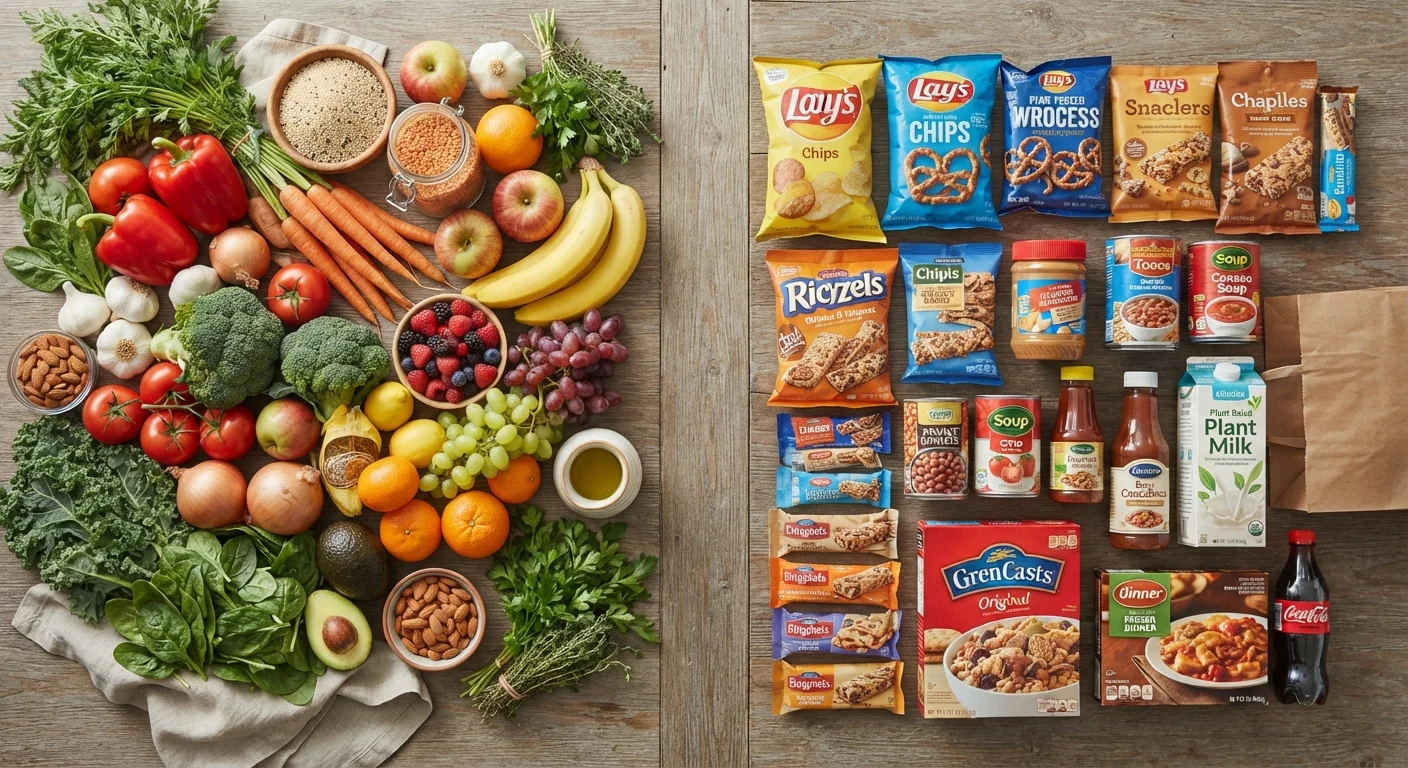
Ultra-processed foods are where most of the documented health concerns concentrate. Think packaged snack cakes, sugary breakfast cereals, fast food, and many flavored chips. These differ meaningfully from a can of chickpeas or a bag of frozen spinach.
The NOVA Classification Is a Research Tool, Not a Rule
NOVA is widely used in nutrition research to study diet patterns and health outcomes, but it wasn't designed as a consumer shopping guide. Some foods that fall into its "processed" categories - like plain yogurt or cheese - can absolutely be part of a healthy diet. Use the framework to understand broad patterns rather than to judge individual foods in isolation.
What the Nutritional Differences Actually Look Like
When researchers compare whole and ultra-processed diets, several consistent patterns emerge. Whole food-dominant diets tend to be higher in fiber, potassium, magnesium, and antioxidants. Ultra-processed diets tend to be higher in added sugars, refined carbohydrates, sodium, and saturated fat - while being lower in nutrients that support long-term health.
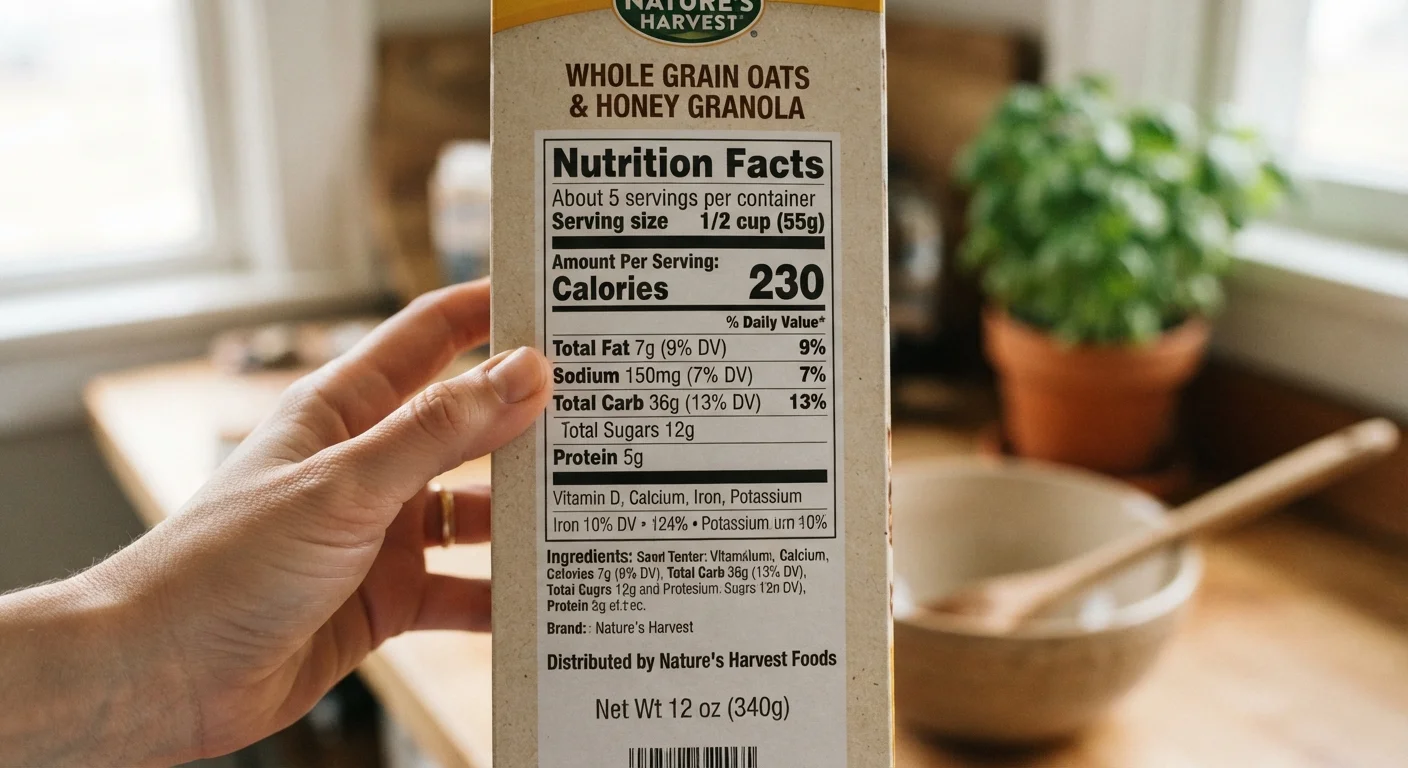
Fiber is a particularly telling marker. Most Americans consume far less than the recommended daily amount, and ultra-processed foods are a primary reason. Processing typically strips grains of their bran and germ - where the fiber and many micronutrients live. A slice of white bread made from refined flour offers a fraction of the fiber found in a slice made from whole grain flour. For a deeper look at how to evaluate these differences on packaging, reading a Nutrition Facts label can help you quickly identify fiber content, added sugars, and sodium levels.
| Criterion | Whole Foods | Ultra-Processed Foods |
|---|---|---|
| Fiber content | Generally high | Often very low |
| Added sugar | None or naturally occurring | Frequently added in large amounts |
| Sodium levels | Naturally low | Often high for palatability/preservation |
| Micronutrient density | High - vitamins, minerals intact | Often stripped, sometimes re-fortified |
| Satiety per calorie | High due to fiber and water content | Lower - engineered for overconsumption |
| Shelf life | Short for most perishables | Long due to preservatives and packaging |
| Convenience | Requires preparation | Ready-to-eat or quick to prepare |
| Cost | Variable; fresh can be expensive | Often lower cost per calorie |
One often-overlooked factor is calorie density versus satiety. Whole foods - especially those high in fiber and water - tend to produce a stronger feeling of fullness relative to calories consumed. Ultra-processed foods are frequently engineered to be highly palatable and easy to overeat, a phenomenon some food scientists call "hyper-palatability."
The Gray Zone: Minimally Processed Foods You Shouldn't Avoid
A blanket "avoid all processed foods" rule would eliminate some genuinely nutritious staples. Canned tomatoes, frozen broccoli, plain Greek yogurt, and canned salmon are all technically processed - but they retain strong nutritional profiles and make balanced eating accessible for people with limited time or budgets. In many cases, frozen vegetables are harvested and frozen at peak ripeness, preserving nutrients that fresh produce can lose during transport and storage.
The same logic applies to fortified foods. Iodized salt and vitamin D-fortified milk are processed, but they address widespread nutrient gaps. Evaluating a processed food by its full nutritional profile - fiber, protein, sodium, added sugars - is more informative than judging it by the processing category alone.
Added sugar is one of the clearest signals when assessing processed foods. Understanding the difference between added and natural sugar helps you interpret ingredient lists and identify products where sweeteners are used heavily to compensate for lost flavor from processing.
57%
Share of US calories from ultra-processed foods
Research published in BMJ Open estimated that ultra-processed foods account for over half of the average American adult's daily calorie intake.
~17g
Average daily fiber intake for US adults
The Dietary Guidelines for Americans recommend 25-38g of fiber daily; most Americans fall significantly short, largely due to low whole food consumption.
4x
More additives in ultra-processed vs. processed foods
Studies using the NOVA classification found ultra-processed foods contain on average four times more food additive types than simply processed products.
Practical Steps for Shifting Your Diet Toward Whole Foods
You don't need to overhaul your pantry overnight. Small, consistent shifts tend to stick better than dramatic changes. A few evidence-informed approaches worth considering:
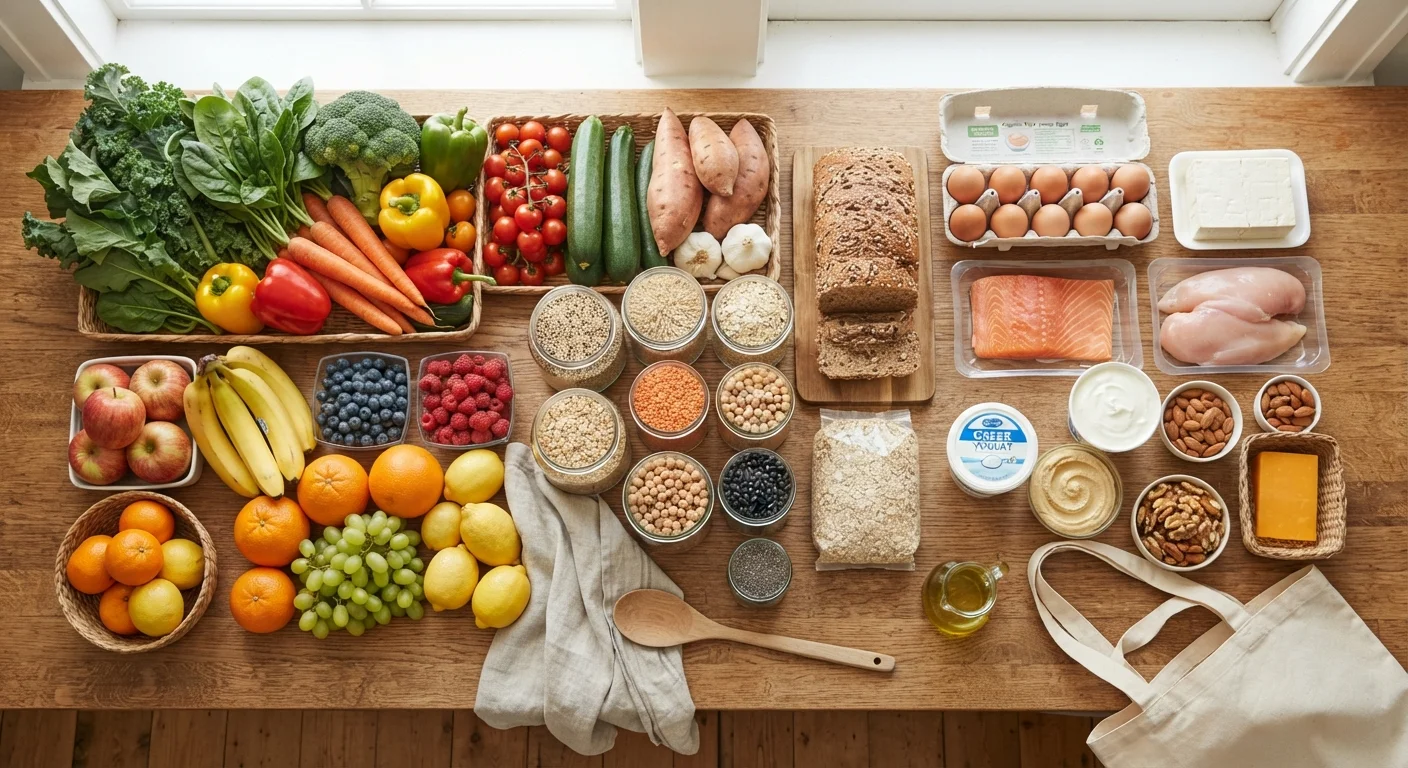
- Use whole foods as your foundation. Build meals around vegetables, legumes, whole grains, and unprocessed proteins, then fill in with minimally processed items where needed.
- Read ingredient lists, not just labels. A shorter ingredient list with recognizable items is generally a good sign. Watch for added sugars listed under multiple names, and high-sodium counts in savory items.
- Choose minimally processed swaps. Plain oats instead of flavored instant packets. Unsalted nuts instead of flavored crackers. Water or plain sparkling water instead of sweetened drinks.
- Don't let perfect be the enemy of good. A diet that includes frozen vegetables, canned beans, and whole grain bread alongside fresh produce is substantively different - and nutritionally far better - than one built around fast food and packaged snack foods.
If you want a structured way to evaluate your current habits, a weekly eating habits audit can help you spot gaps in protein variety, vegetable intake, and hydration patterns before they compound.
This article is for general informational and educational purposes only and is not a substitute for professional medical or nutritional advice. Consult a qualified healthcare provider or registered dietitian for guidance specific to your health needs.