Why the Nutrition Facts Label Exists
The Nutrition Facts label is a federally regulated panel required on most packaged foods sold in the United States. The U.S. Food and Drug Administration (FDA) standardizes its format so that every label - regardless of brand or product - presents the same categories in the same order. The current label design, updated in 2020, made several meaningful changes: serving sizes were revised to reflect amounts people actually eat, added sugars got their own line, and Vitamin D and potassium replaced vitamins A and C as mandatory disclosures based on public health data.
The label is not a diet plan. It is a reference tool. Understanding its structure helps you compare foods, spot marketing claims that don't hold up to the numbers, and make choices that align with your own health priorities - without needing a nutrition degree. If you've encountered persistent myths about what these numbers mean, nutrition myths debunked is a useful companion read.
What you will need
How to Read the Label, Step by Step
Work through the label from top to bottom - the structure is intentional. Each section builds on the one before it. The steps below walk you through exactly what to look for and what to do with each piece of information.
Start With Serving Size and Servings Per Container
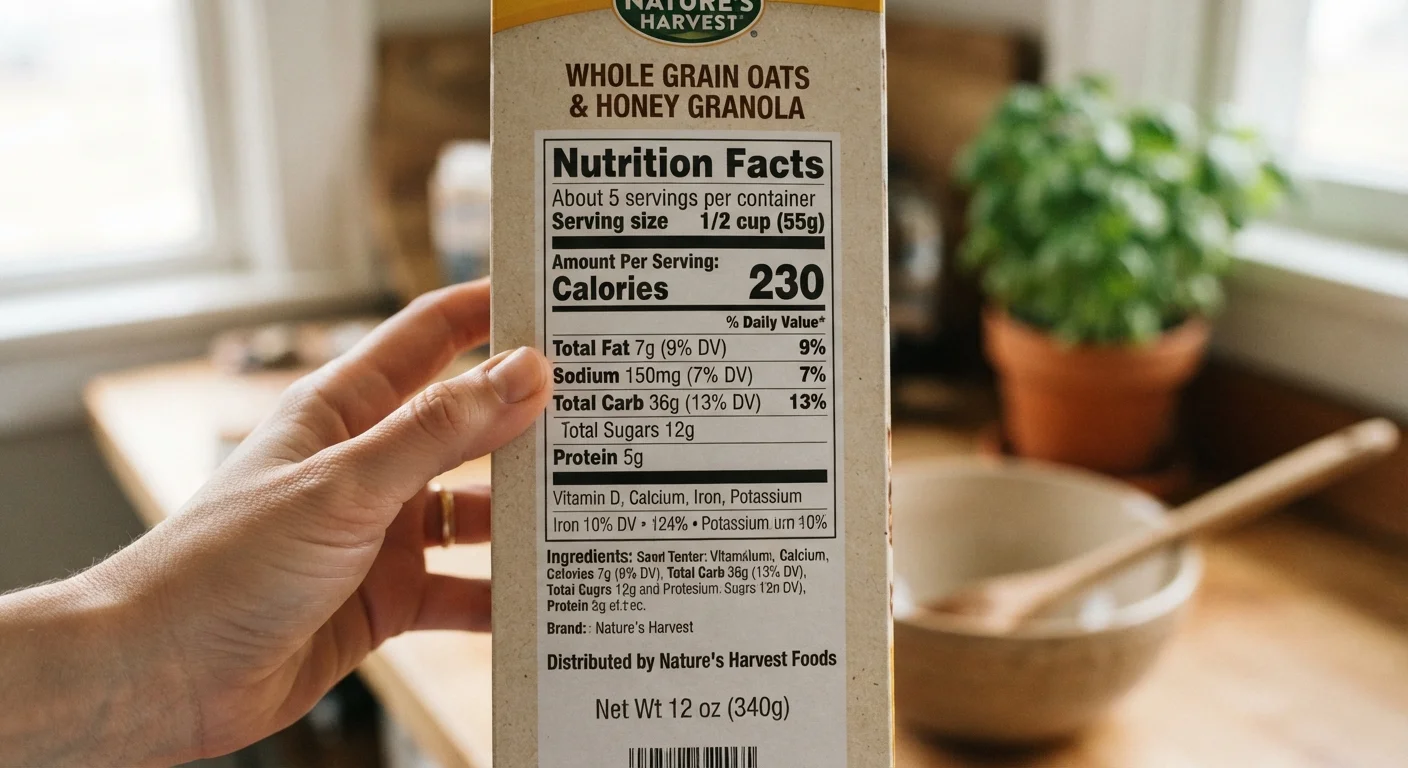
Every number on the Nutrition Facts label is calculated per serving - not per package. Before reading anything else, locate Serving Size (the measured amount, such as "2 crackers" or "1 cup") and Servings Per Container. If the container holds 2.5 servings and you eat the whole thing, multiply every nutrient value by 2.5. This single step prevents the most common label-reading mistake.
Read the Calorie Count in Context
Calories measure the total energy one serving provides. The label displays this number prominently. Rather than judging a food solely by its calorie count, consider it alongside the nutrients it delivers. A food high in calories may still offer substantial fiber, protein, or micronutrients. Calorie counts on labels are based on rounded values, so treat them as useful estimates rather than precise figures.
Scan the 'Limit These' Nutrients
The label groups certain nutrients under an implicit "limit these" category: saturated fat, trans fat, cholesterol, and sodium. U.S. dietary guidelines generally recommend keeping saturated fat and sodium below 20% DV per serving. Trans fat has no established safe level, so even small amounts listed are worth noting. Consistently high sodium intake, for example, is associated with elevated blood pressure in some individuals - though individual responses vary.
Identify the 'Get Enough Of' Nutrients
Below the limiting nutrients, the label lists dietary fiber, total sugars, added sugars, protein, and key vitamins and minerals - including Vitamin D, calcium, iron, and potassium. Most Americans fall short on fiber and potassium. A %DV of 20% or more per serving is generally considered high for these nutrients, meaning the food is a good source. For a deeper look at fiber specifically, see our guide to dietary fiber.
Understand the Percent Daily Value Column
Percent Daily Value (%DV) tells you how much of a nutrient one serving contributes toward the daily intake reference for a 2,000-calorie diet. It does not mean you personally need exactly 2,000 calories - it is a standardized benchmark used to make labels comparable across products. A quick rule: 5% DV or less is low; 20% DV or more is high. Use %DV to compare products side by side rather than trying to memorize grams. Our household nutrition reference has plain-English definitions for every term on the panel.
Check Added Sugars Separately From Total Sugars
Total sugars includes both naturally occurring sugars (such as those in milk or fruit) and sugars added during processing. The Added Sugars line - indented beneath total sugars - isolates only the sugars that were put in during manufacturing. Dietary guidelines recommend keeping added sugars below 10% of daily calories. Understanding this distinction helps you make more informed choices. For more on why this separation matters, see added sugar vs. natural sugar.
Glance at the Ingredient List for Full Context
The ingredient list appears below the Nutrition Facts panel and is ordered by weight - the first ingredient is present in the largest amount. This list reveals what the numbers alone cannot: the form of ingredients used, the presence of additives, and whether whole foods or refined components dominate. The label and the ingredient list together give the most complete picture of what you are eating. Pair this habit with a weekly eating habits audit to spot patterns across your whole diet.
Use %DV as a Quick Comparison Tool
When comparing two similar products, look at the %DV column rather than grams - it instantly tells you which item has more or less of a given nutrient relative to a standard daily intake. This approach works especially well for sodium, fiber, and saturated fat.
Serving Size Is Not a Recommendation
The serving size on a label reflects how the manufacturer defines a typical portion - it is not a suggestion of how much you should eat. A package that looks single-serving may contain two or three servings, effectively doubling or tripling all listed nutrient values if consumed entirely.
This article is for informational purposes only and is not a substitute for personalized dietary or medical advice. Consult a qualified healthcare professional for guidance specific to your health needs.