
What Eating Intentionally Actually Means
Eating intentionally doesn't mean following a rigid diet, eliminating food groups, or tracking every gram of what you consume. It means shifting from eating on autopilot - grabbing whatever is convenient without much thought - to making food choices with some awareness of why and what you're eating.
Think of it less like a renovation and more like turning on a light. You're not rebuilding your kitchen; you're simply seeing it more clearly. That might look like noticing when you eat out of boredom versus hunger, choosing a meal with vegetables more often than not, or drinking water before reaching for a snack.
This approach pairs naturally with other habit-building areas of life. Just as building a savings habit starts with awareness of where your money goes, eating intentionally starts with awareness of what you're actually consuming and why.
This article provides general nutrition education and is not a substitute for personalized advice from a qualified healthcare professional.
Core Nutrition Concepts Worth Knowing
You don't need a nutrition degree to eat well, but a few foundational concepts help you make sense of food labels, meal choices, and general health guidance.
Macronutrients
The three main categories of nutrients your body needs in relatively large amounts: protein, carbohydrates, and fat. Each serves distinct functions - protein supports tissue repair, carbohydrates provide energy, and fat supports hormone production and nutrient absorption.
Fiber
A type of carbohydrate found in plants that your body can't fully digest. It supports digestive health, helps you feel full, and is associated with stable blood sugar levels. Most Americans consume less than the generally recommended amount.
Whole foods
Foods that are minimally processed and close to their natural form - vegetables, fruits, legumes, whole grains, eggs, and unprocessed meats. They tend to retain more nutrients than heavily processed alternatives.
Ultra-processed foods
Manufactured products that contain ingredients rarely found in a home kitchen - artificial flavors, emulsifiers, stabilizers. Examples include many packaged snack foods, fast food, and sugar-sweetened beverages. High intake is associated with several health concerns in observational research.
Nutrient density
A measure of how many nutrients a food provides relative to the energy (calories) it contains. Foods like leafy greens and legumes are considered nutrient-dense because they deliver vitamins, minerals, and fiber with relatively few calories.
Beyond macronutrients, micronutrients - vitamins and minerals like iron, calcium, and vitamin D - support functions ranging from bone health to immune response. Getting a wide variety of foods, especially vegetables of different colors, is one of the most reliable ways to cover micronutrient needs without overcomplicating things.
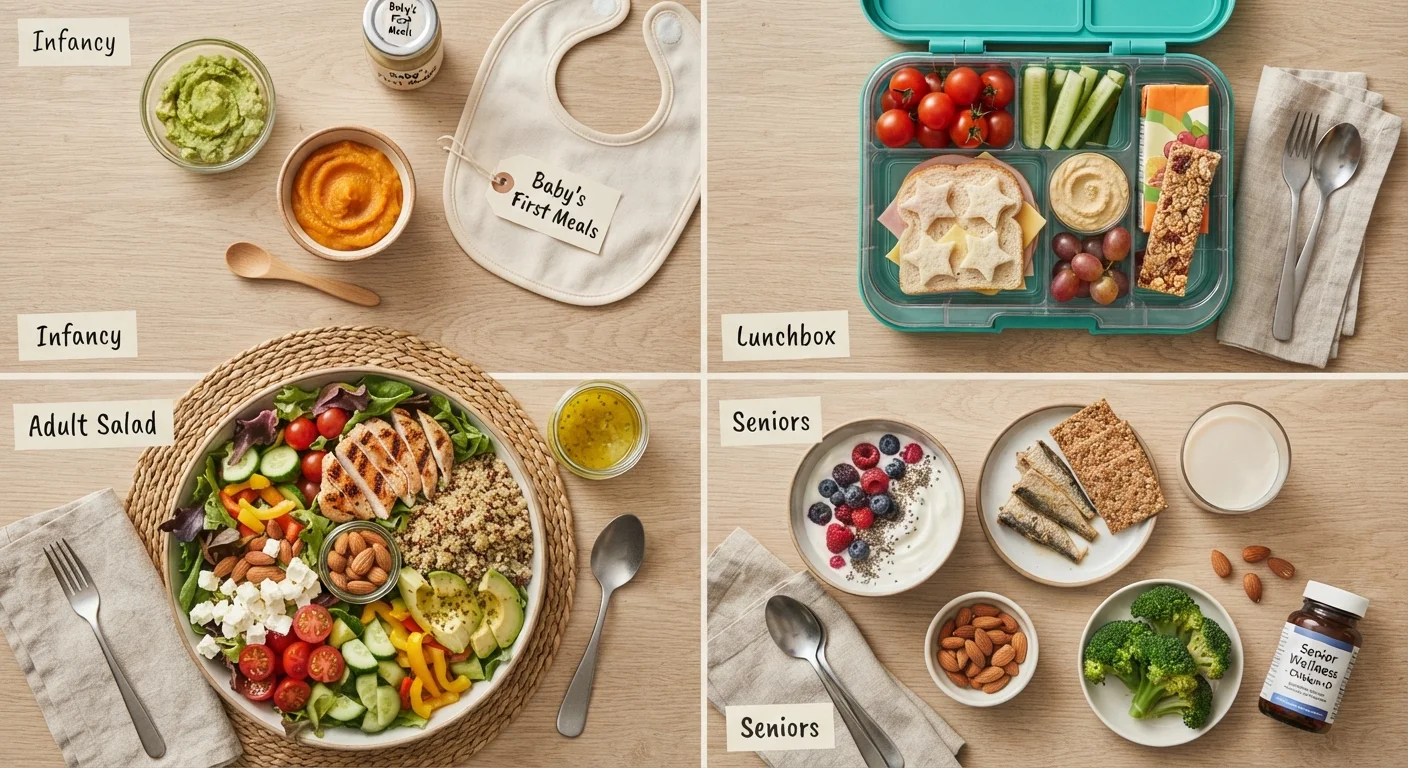
Nutritional needs also shift throughout life. How dietary needs evolve from childhood through older age is worth understanding as your starting context - what applies to a 25-year-old athlete differs from what's appropriate for a 65-year-old with a chronic condition.
Simple Daily Habits to Start This Week
Rather than overhauling everything at once, focus on a handful of habits that build a nutritional foundation. These are broadly supported by nutrition research and practical enough to act on immediately.
- Add a vegetable to one meal each day. This single shift, applied consistently, increases fiber, micronutrient variety, and satiety without requiring a complete menu change.
- Eat protein at most meals. Protein supports muscle maintenance, keeps you fuller longer, and stabilizes energy levels. Sources include eggs, legumes, poultry, fish, dairy, tofu, and more.
- Drink water consistently throughout the day. Mild dehydration is often misread as hunger. Keeping water accessible and drinking it regularly is one of the most underrated nutrition habits.
- Slow down while eating. Eating quickly tends to reduce awareness of fullness cues. Even modest changes - putting your fork down between bites, not eating in front of a screen - can help.
- Notice ultra-processed foods in your routine. You don't need to eliminate them entirely, but becoming aware of how often heavily processed foods appear is a useful first step.
Start With Subtraction-Free Changes
When building early nutrition habits, adding is usually more sustainable than removing. Focus first on what you can include - more vegetables, more water, more protein - rather than what you're eliminating. Restriction-first thinking tends to increase cravings and reduce long-term adherence.
For a more structured way to evaluate your current patterns after your first week, a weekly eating habits audit can help you spot gaps across protein variety, vegetable range, and hydration.
Building a Sustainable Foundation
The most common early mistake is trying to change everything simultaneously. A week of perfect eating followed by burnout produces far less long-term benefit than gradual, maintained improvement over months.
Start by anchoring one or two of the habits above until they feel automatic, then layer in others. Think of this as building a platform, not reaching a finish line. Nutrition is not a problem you solve once - it's a set of ongoing decisions that become easier and more intuitive with practice.
When you feel ready to think more deliberately about how your meals are composed, plate-building principles that work across different eating styles offer a practical next step - whether you eat meat, follow a plant-based diet, or something in between.
Nutrition also interacts directly with how your body moves and recovers. Pairing these habits with even light regular movement compounds the benefit - the Fitness & Movement offers accessible guidance for all activity levels.
Individual Needs Vary Significantly
General nutrition principles provide a useful starting framework, but factors like age, health conditions, activity level, medications, and personal food history all affect what's appropriate for you. If you have a specific health goal or condition, working with a registered dietitian gives you guidance tailored to your actual situation rather than population averages.
This article is for general informational and educational purposes only. It is not medical or dietary advice. Please consult a registered dietitian or qualified healthcare professional for guidance tailored to your individual health needs.