What's Actually Inside Each Floor
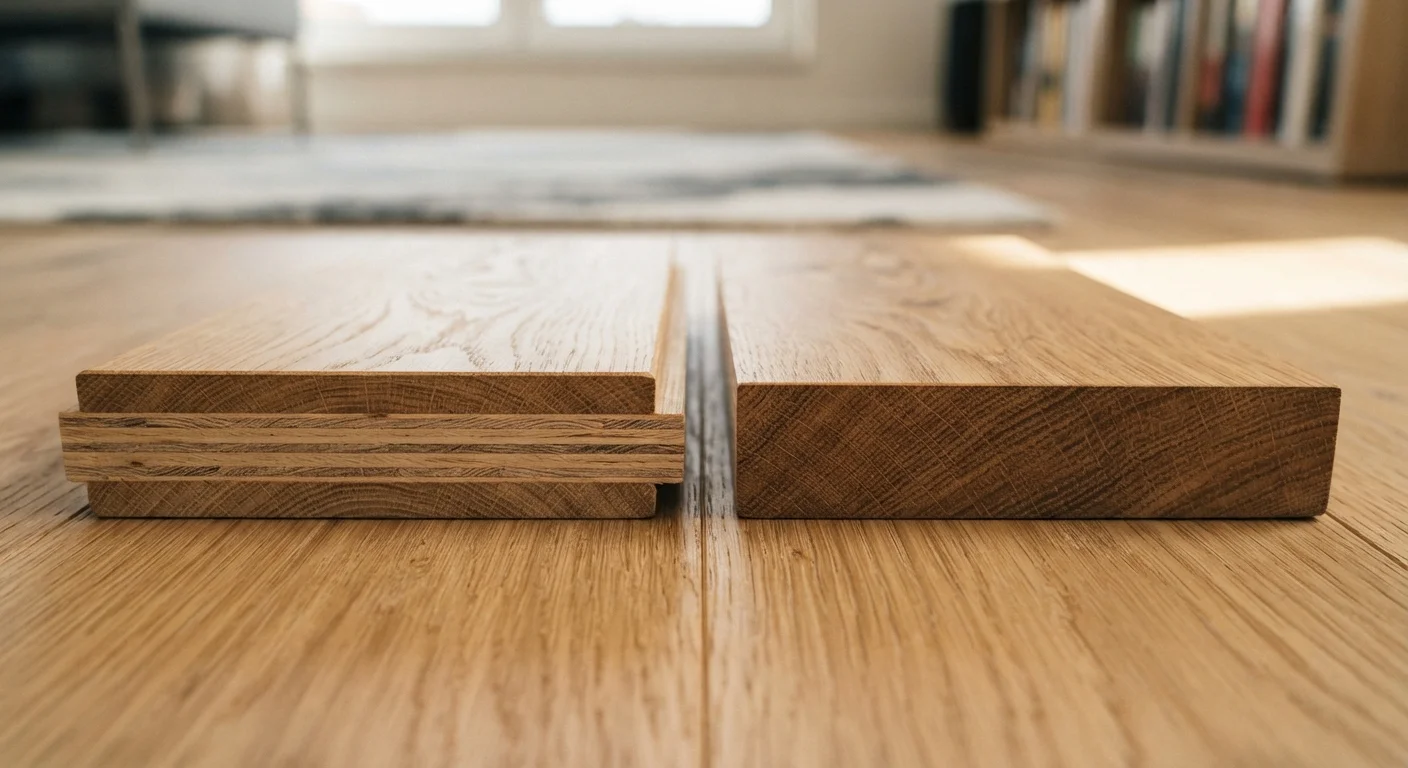
The most important difference between engineered and solid hardwood isn't what you see - it's what's underneath the surface. Solid hardwood is exactly that: a single piece of wood milled from top to bottom, typically 3/4 inch thick. Every plank is uniform, one species, all the way through.
Engineered hardwood, by contrast, is a layered product. A thin veneer of real hardwood - usually 1/12 to 1/6 of an inch - sits on top of a core made from multiple plywood layers arranged in alternating grain directions. That cross-ply construction is what gives engineered wood its key performance advantage: dimensional stability. Wood naturally expands and contracts as humidity changes, but those alternating layers work against each other, limiting overall movement significantly.
Both products use genuine wood and can be finished with the same stains and surface treatments. To the eye once installed, they're often indistinguishable. The real differences show up in how they behave over time.
| Criterion | Engineered Hardwood | Solid Hardwood |
|---|---|---|
| Core construction | Real wood veneer over cross-ply plywood | Single solid wood plank, full thickness |
| Moisture resistance | High - resists expansion and contraction | Low - prone to warping in humid conditions |
| Suitable installation levels | Above, on, or below grade | Above grade only |
| Refinishing potential | 1-2 times (veneer-dependent) | 4-6 times over floor's life |
| Typical plank thickness | 3/8 to 3/4 inch total | 3/4 inch standard |
| Over radiant heat | Generally approved (check product specs) | Generally not recommended |
| Installation over concrete | Yes, with moisture barrier | Not recommended |
Where Each Type Performs Best
Installation location is the most practical filter for this decision. Solid hardwood should be installed only above grade - meaning on main floors or upper levels - and only over a wood subfloor. It should never go directly over concrete, because concrete holds residual moisture that solid wood will absorb, leading to warping, cupping, or buckling over time.
Engineered hardwood is more flexible. It can be installed above, on, or below grade. Many products are approved for floating installation over radiant heat systems and directly on concrete with appropriate moisture barriers. If you're finishing a basement, adding a living room over a slab, or working in a region with high year-round humidity, engineered hardwood is the structurally appropriate choice.
For above-grade main-floor rooms in stable climates - particularly in older homes where solid hardwood is already present - solid hardwood remains a straightforward choice and integrates cleanly with existing floors. For guidance on caring for either type once it's installed, see our wood floor maintenance guide.
Acclimation Matters for Both Types
Before installation, both engineered and solid hardwood should acclimate to the room's temperature and humidity for at least 48 to 72 hours - sometimes longer in very dry or humid climates. Skipping this step is a leading cause of post-installation gapping or buckling. Always follow the manufacturer's specific acclimation instructions, which can vary by product and region.
Refinishing, Lifespan, and Long-Term Value
One of the most practical long-term questions is: how many times can you refinish it? With solid hardwood, the answer is typically four to six times across a floor's life, depending on thickness and how aggressively each sanding is done. That means you can sand away scratches, change the stain color, or restore a worn surface every decade or so for 50 to 80 years before the wood is too thin to sand safely.
Engineered hardwood's refinishing capacity depends almost entirely on veneer thickness. Thinner veneers (1/12 inch) may tolerate one light refinish at most, while thicker veneers (1/6 inch) may allow two. If you plan to refinish frequently or change the look of your floor over time, solid hardwood offers a clear advantage.
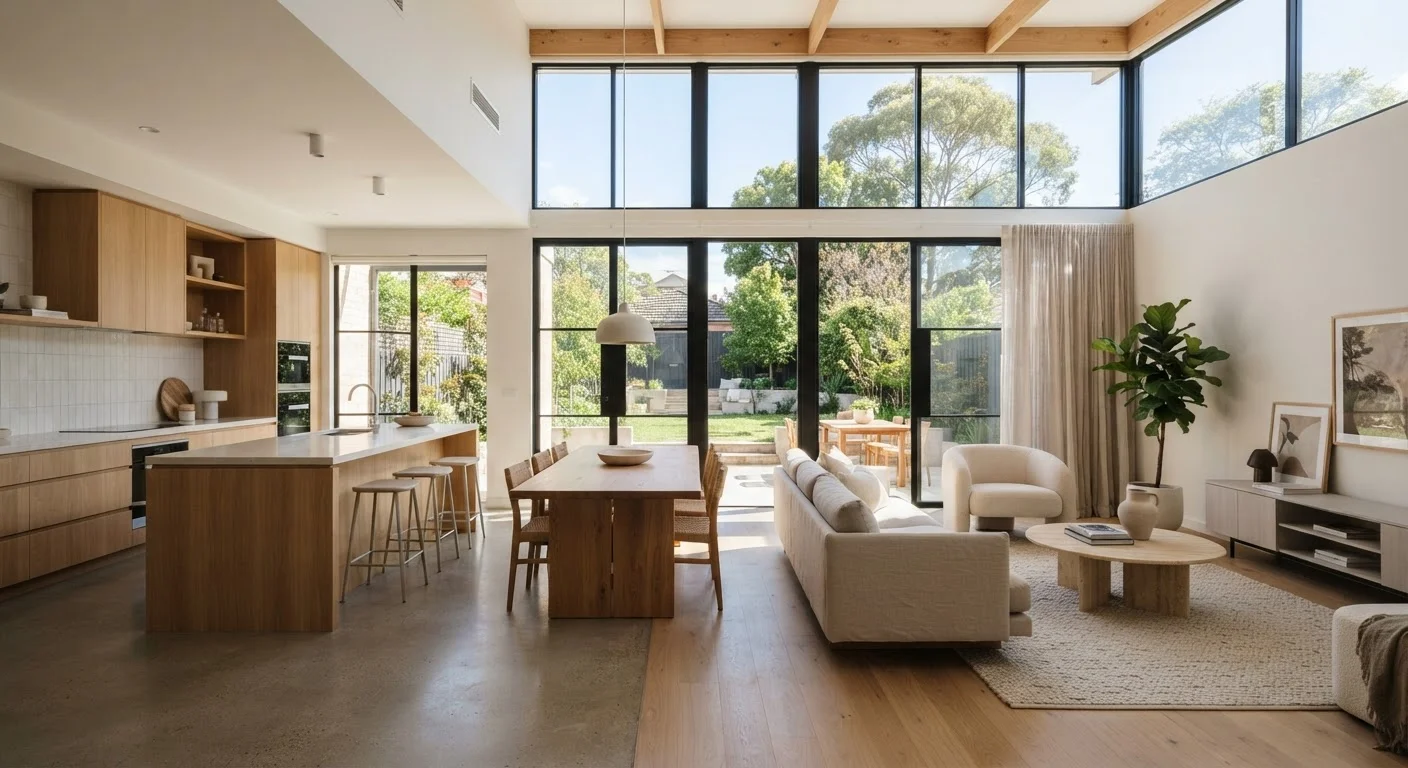
That said, engineered hardwood products have improved considerably in veneer thickness and durability. High-quality engineered planks with thick veneers can serve a household for 25 to 30 years without refinishing and still allow one refresh near end-of-life. Planning an open-plan renovation? Flooring continuity across the whole level - achievable with engineered hardwood over a slab - often matters more than refinishing potential.
3/4"
Standard solid hardwood plank thickness
This thickness allows for multiple sanding cycles over decades, which is the basis for solid hardwood's long refinishing lifespan.
1/12"-1/6"
Typical engineered hardwood veneer range
Veneer thickness directly determines refinishing potential; thicker veneers approach solid wood performance in this regard.
25-30 yrs
Typical lifespan of quality engineered hardwood
High-quality engineered products with thick veneers can serve a household for decades before refinishing or replacement is needed.