Why the Distinction Matters
Blocking drafts and moisture is one of the most cost-effective home maintenance tasks you can do, but the outcome depends heavily on using the right material in the right place. Caulk and weatherstripping are often discussed together - and for good reason, since they're frequently used on the same window or door - but they solve different problems.
Applying caulk where weatherstripping belongs is one of the most common DIY sealing mistakes. Because caulk cures into a semi-rigid bead, it can't handle repeated compression and release. Place it along a door's closing edge and it will crack within a season. Conversely, foam tape weatherstripping pressed into a fixed corner joint won't form a lasting bond - it simply isn't designed to adhere to static surfaces under long-term pressure.
Understanding the distinction saves you from redoing the job. For a broader overview of sealing your home ahead of cold weather, see our pre-winter weatherproofing guide.
How Caulk Works - and Where It Belongs
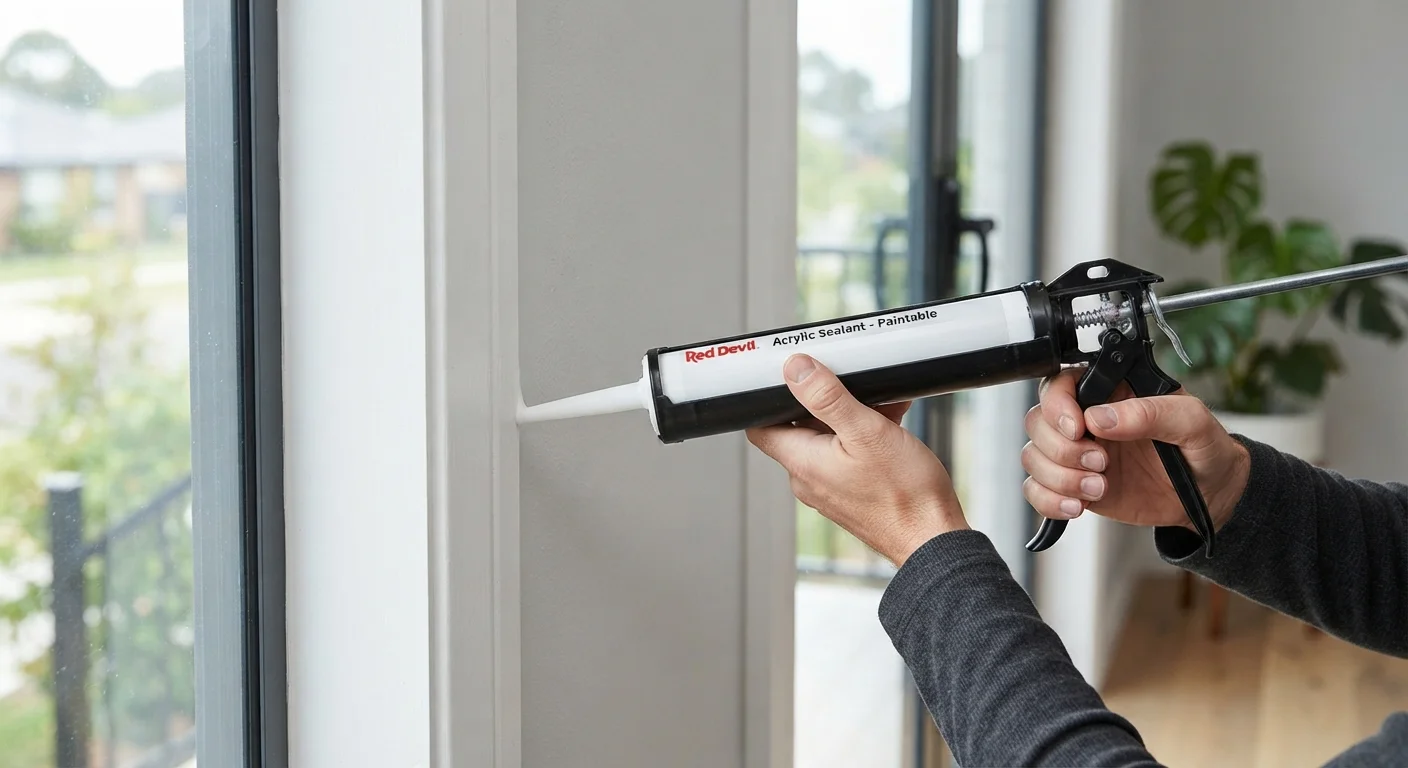
Caulk is a flexible sealant that you apply to stationary gaps - meaning surfaces that don't move relative to each other after the caulk cures. Common locations include the joint between a window frame and exterior siding, the gap between door trim and a wall, around pipe penetrations, and along baseboards. Once cured, quality caulk can last years without attention.
The right caulk type varies by surface. Silicone caulk handles moisture-prone areas like exterior joints and bathrooms. Paintable latex caulk is ideal for interior trim. Butyl rubber caulk is used for masonry and roofing joints. Choosing the correct formulation matters as much as placement. For a full breakdown of caulk types and application technique, see our Caulking 101 guide.
| Criterion | Caulk | Weatherstripping |
|---|---|---|
| Best surface type | Stationary, non-moving joints | Moving parts (doors, operable windows) |
| Handles repeated movement | No - will crack over time | Yes - designed for compression cycles |
| Common materials | Silicone, latex, butyl rubber | Foam, rubber, vinyl, felt, metal V-strip |
| Typical lifespan | 5-10+ years if surface is stable | 1-5 years depending on material and use |
| Skill level required | Moderate (technique affects finish) | Low to moderate (varies by type) |
| Where on a door | Exterior trim-to-siding joint | Door stop, door bottom sweep |
How Weatherstripping Works - and Where It Belongs
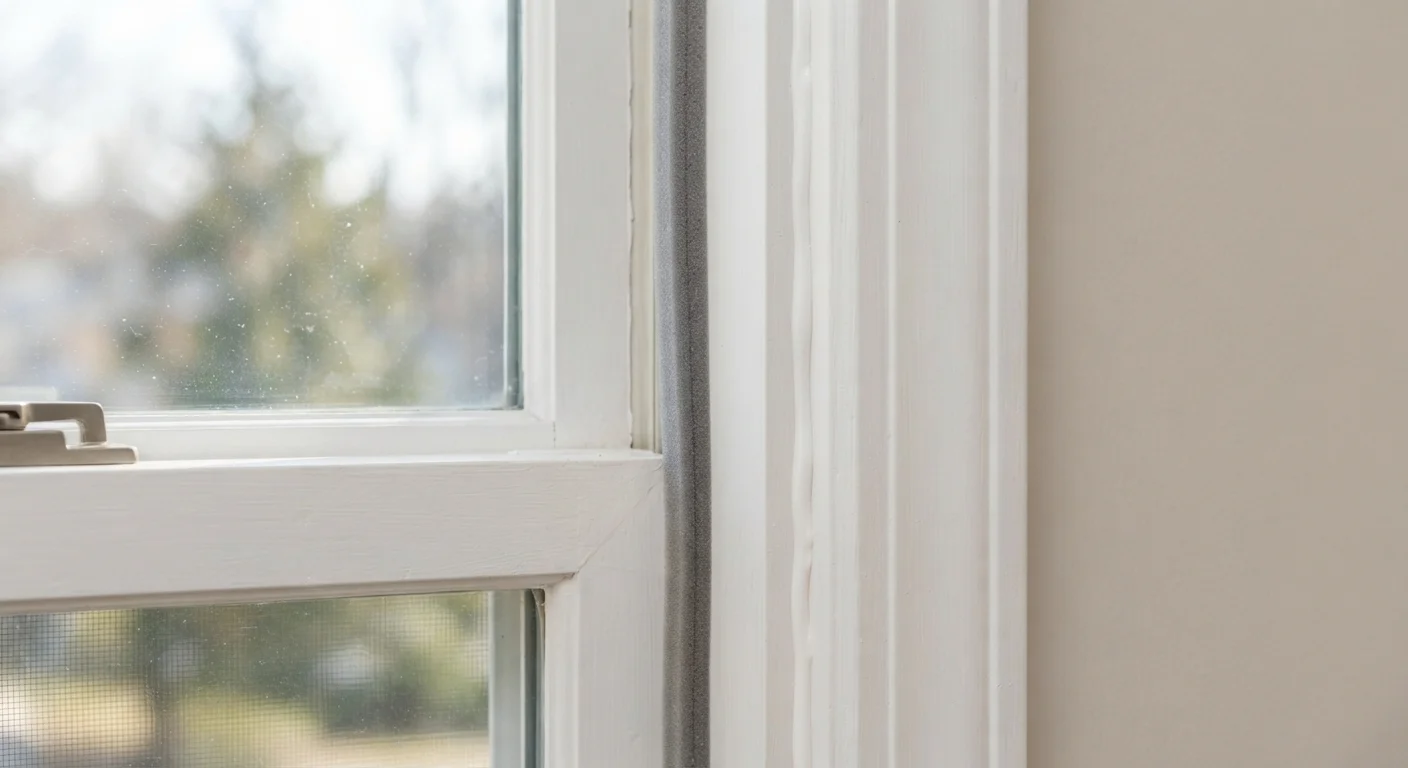
Weatherstripping is a compressible material - foam, rubber, felt, vinyl, or metal - that forms a seal when a door or window presses against it during closing. Because it's designed to be compressed and released thousands of times, it handles movement that would destroy caulk.
Common weatherstripping types include self-adhesive foam tape (easiest to install, shorter lifespan), V-strip or tension seal (durable, suited to sliding or hinged windows and door sides), door sweeps (for the gap between the bottom of a door and the threshold), and door-stop-mounted bulb seals (for the top and sides of entry doors). The material you choose should match the gap width and how often that door or window is used.
~30%
Home heat loss through air leaks
The U.S. Department of Energy estimates that air leaks can account for roughly 25-30% of heating and cooling energy use in a typical home.
~$10-$30
Typical weatherstripping cost per door
General home improvement sources estimate that materials to re-weatherstrip a standard exterior door run between $10 and $30, not including labor.
Signs that weatherstripping needs replacing include visible daylight around a closed door, a door that doesn't latch snugly, or drafts even after applying caulk to the surrounding frame.
Reading the Gap: A Practical Decision Framework
Before reaching for either product, ask one question: does this gap open and close? If the answer is yes, weatherstripping is your starting point. If the surfaces on either side never move relative to each other, caulk is the right call.
On a standard exterior door, caulk belongs on the exterior trim-to-siding joint and around any threshold anchoring points, while weatherstripping belongs on the door stop (the raised strip the door closes against) and the door bottom. Both materials serve the same door - just in entirely different zones.
Using Both on the Same Door or Window
It's entirely normal - and often correct - to use both caulk and weatherstripping on a single door or window. Caulk seals the fixed frame against the wall or siding; weatherstripping seals the door or sash against the frame when closed. They work in different zones and don't interfere with each other. If you're doing a full seal job, address both.
Gap size also informs your choice. Caulk can bridge gaps up to about half an inch reliably; beyond that, you may need backer rod foam to fill the void first. Weatherstripping comes in varying thicknesses to match different gap widths, so measure the gap when the door is fully latched to select the right profile.