What Gross and Net Income Actually Mean
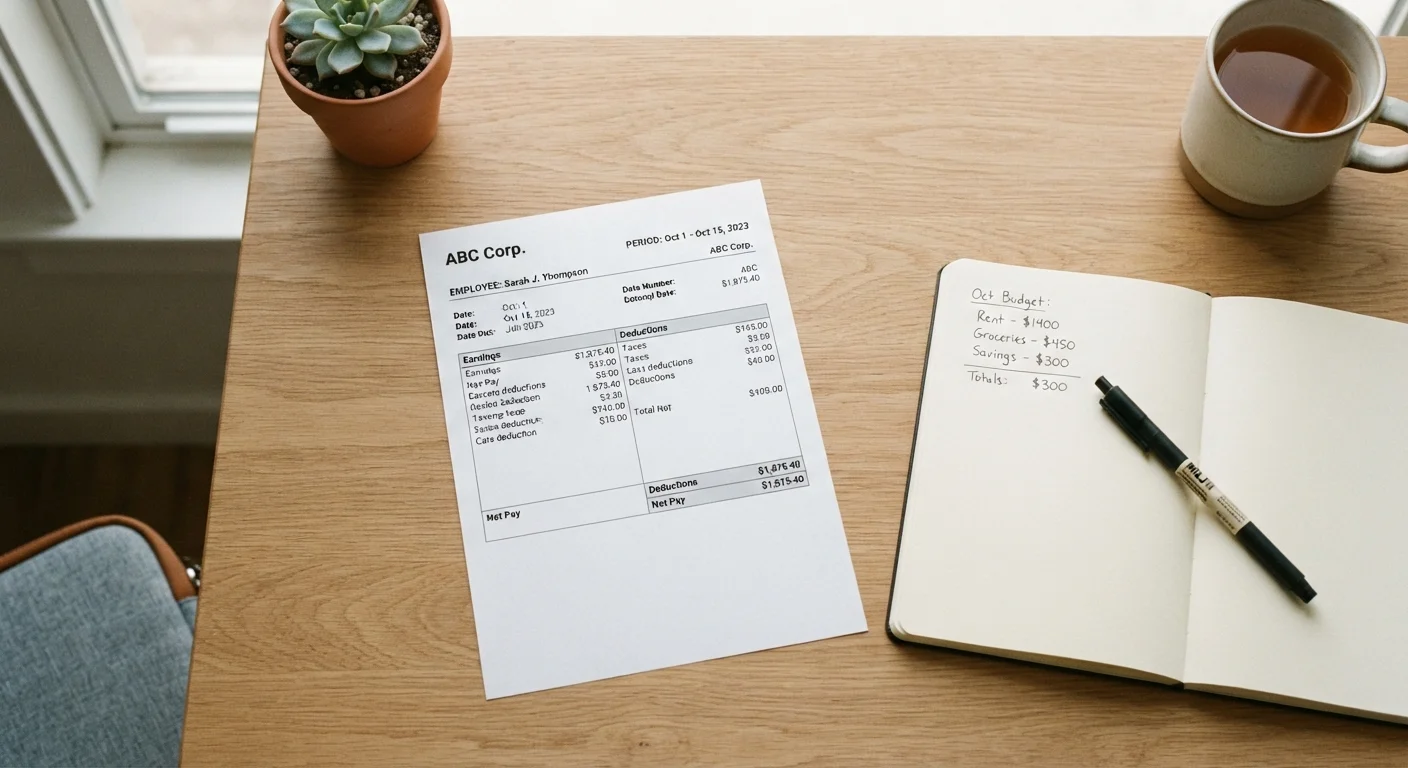
When an employer quotes your salary - say, $55,000 a year - that figure is your gross income: the total amount earned before any deductions are applied. It's the number on your offer letter, the figure you report on most loan applications, and the starting point on every pay stub.
Net income (often called take-home pay) is what remains after your employer withholds federal and state income taxes, Social Security and Medicare taxes (together called FICA), and any voluntary deductions you've elected - such as health insurance premiums, a 401(k) contribution, or a flexible spending account. For most full-time employees, net income is meaningfully lower than gross income, sometimes by 20-35% or more depending on your tax bracket, state of residence, and benefit elections.
For example, someone earning $55,000 gross annually might take home closer to $40,000-$44,000 after typical deductions - a gap of over $10,000 a year. Budgeting from the larger number without accounting for that gap is one of the most common early mistakes new budgeters make.
| Criterion | Gross Income | Net Income |
|---|---|---|
| Definition | Total earnings before any deductions | Take-home pay after all deductions |
| Includes taxes? | Yes - taxes not yet removed | No - taxes already withheld |
| Use for budgeting? | No - overstates available funds | Yes - reflects spendable money |
| Use for loan applications? | Yes - lenders use gross figures | Sometimes - varies by lender |
| Visible on pay stub? | Yes - listed at top | Yes - listed as net pay |
| Relevant for salary talks? | Yes - standard comparison metric | Less common in negotiations |
Why Net Income Is the Right Budget Foundation
Your budget is a plan for money you can actually use. Because gross income includes dollars already claimed by the government and your benefit elections before your paycheck is even printed, it has no practical role in daily spending decisions.
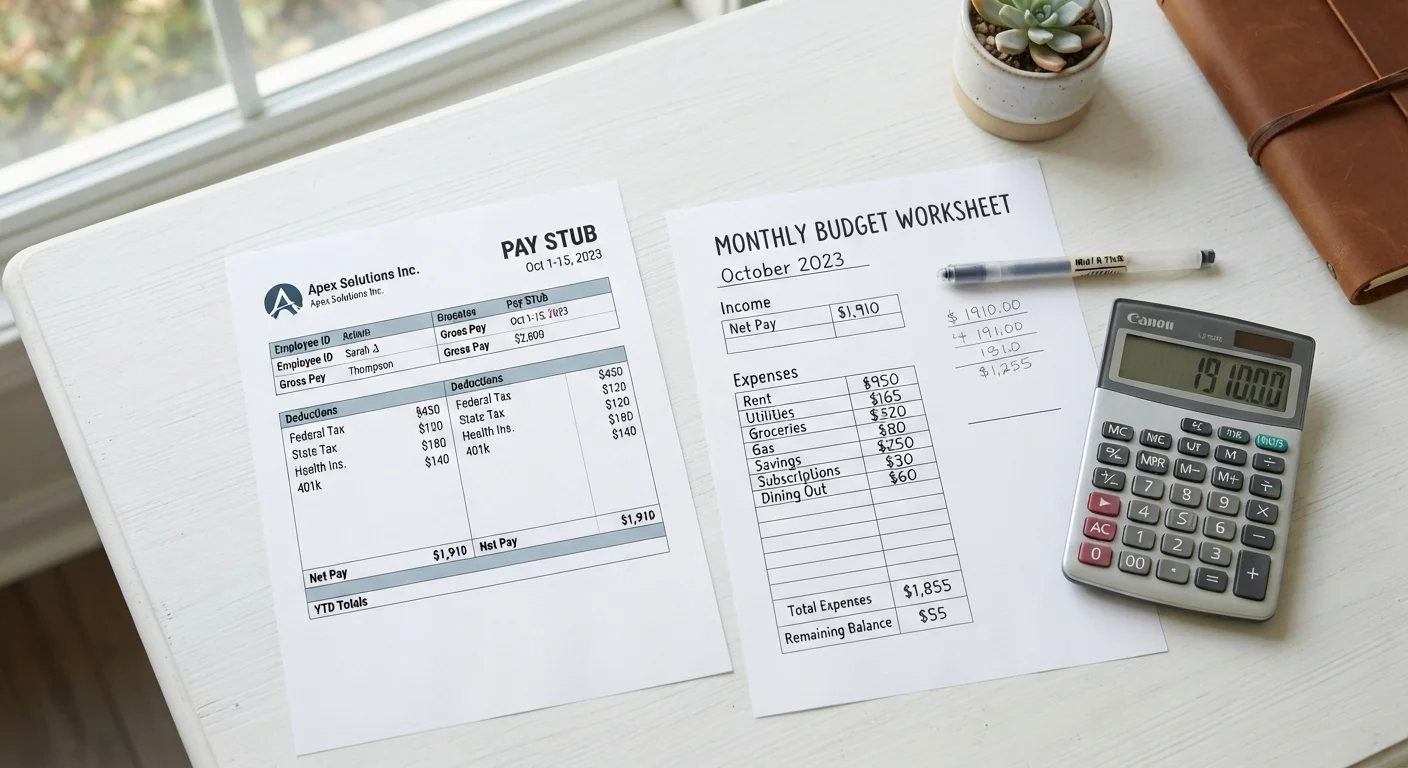
When you sit down to plan rent, groceries, utilities, and savings, the only figure that matters is what hits your bank account. Using net income as your baseline ensures your spending categories stay within what's genuinely available - not a number that sounds bigger but isn't fully accessible.
20-35%
Typical gap between gross and net pay
The difference varies based on tax bracket, state taxes, and elected benefit deductions such as health insurance and retirement contributions.
15.3%
Self-employment tax rate on net earnings
Per IRS guidelines, self-employed individuals pay both the employee and employer portions of Social Security and Medicare taxes.
If you're just getting started, a single pay stub is enough to identify your net income and begin allocating it. The step-by-step guide to building a budget from one pay stub walks through exactly how to do that. You'll also want to watch for irregular expenses - annual subscriptions, registration fees, and medical copays - that first-time budgeters often leave out, which are covered in the article on expenses people forget when building a budget.
A Special Case: Self-Employment and Variable Income
For employees, an employer handles withholding automatically, so net income is straightforward to identify on a pay stub. For self-employed workers, freelancers, and gig workers, the math is more involved - and ignoring it is risky.
When no employer withholds taxes on your behalf, your gross earnings land in your account in full. That doesn't mean it's all spendable. Self-employed individuals typically owe both the employee and employer portions of FICA taxes (totaling 15.3% on net self-employment income), plus federal and state income taxes. Setting aside a percentage of each payment received - commonly estimated at 25-30% for federal obligations alone, though individual situations vary - before budgeting the rest is a widely recommended approach.
The result: a self-employed person's functional net income must be calculated, not just read off a deposit. Those whose paychecks vary month to month face an added layer of complexity; the article on budgeting on an irregular income outlines approaches tailored to unpredictable cash flow.
Estimating Taxes When You're Self-Employed
Because tax obligations for self-employed individuals depend on total income, deductible business expenses, and filing status, the percentage to set aside varies from person to person. The IRS provides Form 1040-ES and an estimated tax worksheet to help calculate quarterly payments. A tax professional can give you a more accurate estimate based on your specific situation.
Once you know your net income - whether from a pay stub or your own calculation - the monthly budget setup checklist provides a structured process for putting that number to work.
This article is for general informational and educational purposes only and does not constitute personalized financial or tax advice. Please consult a qualified financial professional or tax adviser for guidance specific to your situation.