
Why New Budgets Miss So Much
Building a first budget usually starts the same way: list the rent, utilities, car payment, and groceries, then subtract from take-home pay. The math looks clean. Then October arrives and the car registration is due, or December hits and gift spending doubles, and suddenly the plan unravels.
The culprit is almost never overspending on coffee. It's the legitimate, predictable expenses that simply didn't make it onto the original list. Most of these aren't random surprises - they're costs that happen every year on roughly the same schedule. The problem is that a monthly budget template, focused on what comes out of your account each month, naturally filters them out.
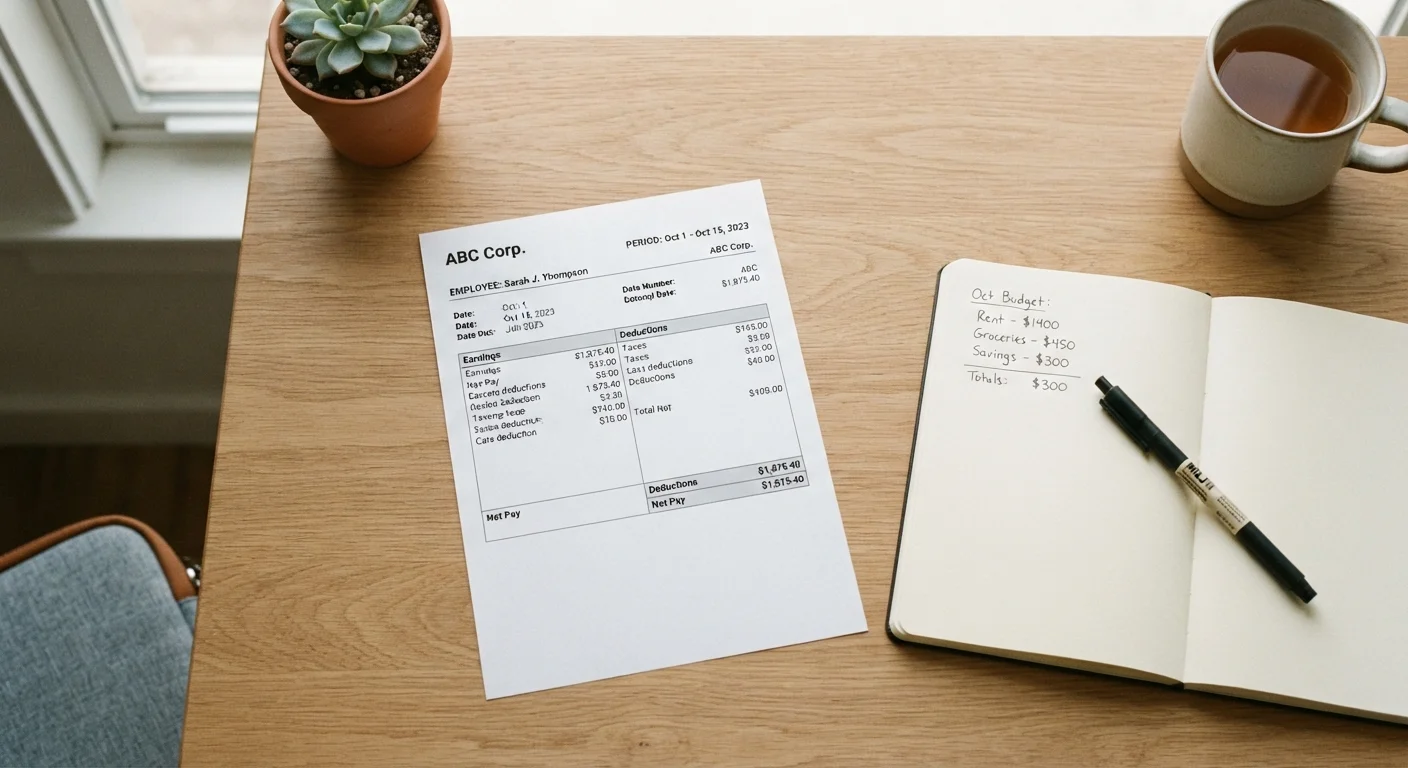
Understanding which categories get dropped most often is one of the fastest ways to build a budget that actually holds. The patterns that derail new budgets are well-documented - and most of them come down to forgotten categories, not lack of willpower. If you're just getting started, a walkthrough from a single pay stub can help you catch these gaps before they cost you.
Start With a 12-Month Statement Review
Before finalizing any budget, pull 12 months of bank and credit card statements and scan for charges that appeared only once or twice. Annual fees, one-time registrations, and irregular healthcare costs all show up here. This single step catches most of the categories new budgeters miss.
Expenses Most First-Time Budgeters Leave Out
Annual and semi-annual insurance premiums
Many auto, renters, and homeowners insurance policies offer discounts for paying every six or twelve months. People take the deal - then forget the lump sum isn't in their monthly plan. A $900 annual premium doesn't feel expensive spread out, but it stings when the bill arrives and no money has been set aside. Divide the total by 12 and add it to your monthly budget as a fixed contribution.
A $900 annual premium doesn't feel expensive spread out - until the bill arrives with no savings to cover it.
Vehicle registration and inspection fees
Car registration fees vary significantly by state but are due on a predictable annual or biennial schedule. Add state inspection costs where applicable, and the total can range from under $50 to several hundred dollars depending on where you live and what you drive. Because this expense isn't monthly, it's easy to overlook when building an initial budget - but it shows up reliably every year. For a fuller picture of what vehicle ownership actually costs, expenses that catch new car owners off guard is worth reviewing.
Car registration isn't optional, and its annual schedule makes it easy to leave off a monthly budget.
Medical and dental copays and deductibles
Even with insurance, healthcare costs can be unpredictable month to month. Annual physicals, dental cleanings, prescription refills, and unexpected sick visits all carry out-of-pocket costs that don't appear on a monthly bill. A budget that doesn't include a healthcare line - even a modest one - will be short every time a copay or deductible payment comes through. Consider looking at your explanation of benefits statements from the previous year to estimate a realistic monthly figure.
A budget without a healthcare line will run short every time a copay or deductible hits unexpectedly.
Gift and holiday spending
Birthdays, holidays, weddings, baby showers, and graduations come around every year - and gift spending adds up faster than most people anticipate. The American holiday season alone represents a significant and predictable spending spike for most households. Rather than absorbing these costs as they arrive, estimating annual gift spending and dividing by 12 converts a stressful variable into a manageable monthly contribution. This is one of the most consistent gaps in first budgets.
Gift spending is predictable on an annual scale - the mistake is treating it as a monthly variable expense.
Subscription services and memberships
Monthly subscriptions are easy to track. Annual ones are not. Streaming services, software licenses, news subscriptions, gym memberships billed yearly, and warehouse club memberships often get charged once a year with little warning. Over time, these accumulate quietly. It helps to keep a running list of every recurring charge - monthly and annual - and confirm it still reflects something you actively use. First-time budgeters often discover services they forgot they signed up for when they dig into this category.
Annual subscriptions are easy to forget - and they often keep billing long after you've stopped noticing them.
Pet expenses beyond routine food
Anyone with a pet budgets for food. Fewer budget for annual vet visits, vaccinations, flea and tick prevention, grooming, boarding or pet-sitting during travel, and the occasional unexpected illness or injury. Veterinary care in particular can be significant and is difficult to predict precisely. Pet owners benefit from including both a routine care estimate and a small emergency buffer in their budget rather than treating vet bills as purely unforeseen events.
Pet owners budget for food but often overlook vet visits, boarding, and preventive care costs.
Home and car maintenance
Neither homes nor cars run indefinitely without upkeep. Oil changes, tire rotations, new wiper blades, and brake pads are routine car costs that aren't tied to a fixed monthly schedule. On the home side, HVAC filters, pest control, appliance maintenance, and seasonal costs like gutter cleaning recur on their own timelines. A common rule of thumb is to set aside a small percentage of home value annually for maintenance - though actual costs vary considerably based on property age and condition. Estimating true yearly vehicle costs can help quantify the car side of this equation.
Routine maintenance for homes and cars happens on its own schedule - not a monthly one your budget can easily track.
The Hidden Cost of 'Once a Year' Thinking
Expenses that arrive once a year don't feel like budget problems - until they arrive. The practical solution is to treat every predictable annual or semi-annual cost as a monthly savings target, even in months when no payment is due. Over time, this approach eliminates most of the cash-flow surprises that cause people to abandon their budgets. The concepts behind saving and goal-setting apply directly here.
Building a Budget That Accounts for All of It
The fix for most of these gaps is the same: divide the annual cost by 12 and treat it as a monthly line item, even when no bill is due that month. This approach - sometimes called sinking funds - means you're quietly setting aside money for car registration in March so you're ready when the bill arrives in October. It removes the "surprise" from expenses that were never really surprising.
Reviewing 12 months of bank and credit card statements is the most reliable way to uncover forgotten categories. Look for anything that hit once or twice during the year and calculate what monthly contribution would have covered it. The monthly budget setup checklist includes prompts specifically designed to surface these irregular costs before they fall through the cracks.
For a deeper look at how spending categories are structured, understanding fixed, variable, and discretionary spending lays out why the distinction matters and how it applies to real-life budgeting. And if your income varies month to month, the challenge is compounded - budgeting on an irregular income covers approaches tailored to that situation.
This article is for general informational and educational purposes only and does not constitute personalized financial advice. Consider consulting a qualified financial professional for guidance specific to your situation.