The Core Idea: A Plan, Not a Prison
When most people hear the word "budget," they picture restriction - a list of things they're no longer allowed to do. That framing is almost entirely wrong, and it's one of the main reasons so many people avoid budgeting altogether. If that sounds familiar, you're not alone. See our overview of common budgeting misconceptions for a fuller look at what holds people back.
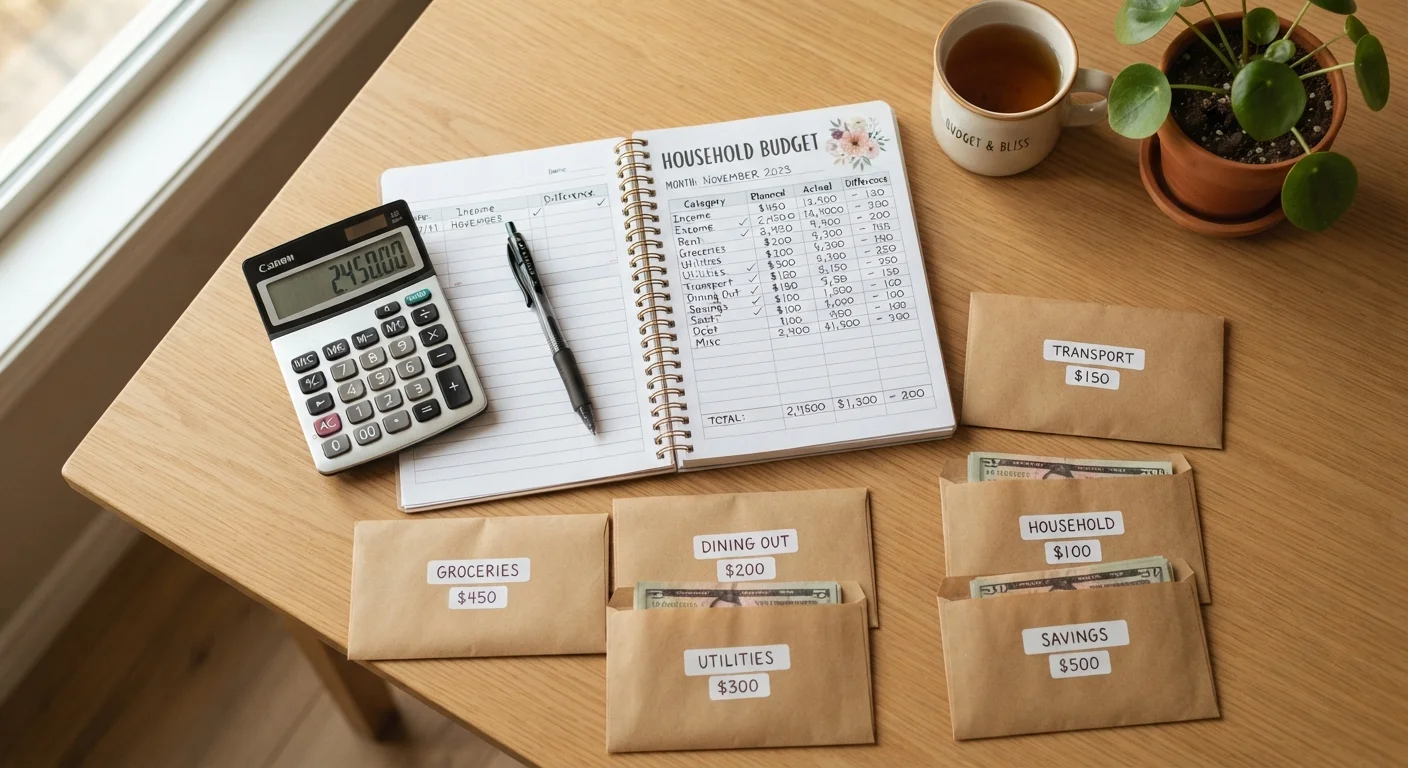
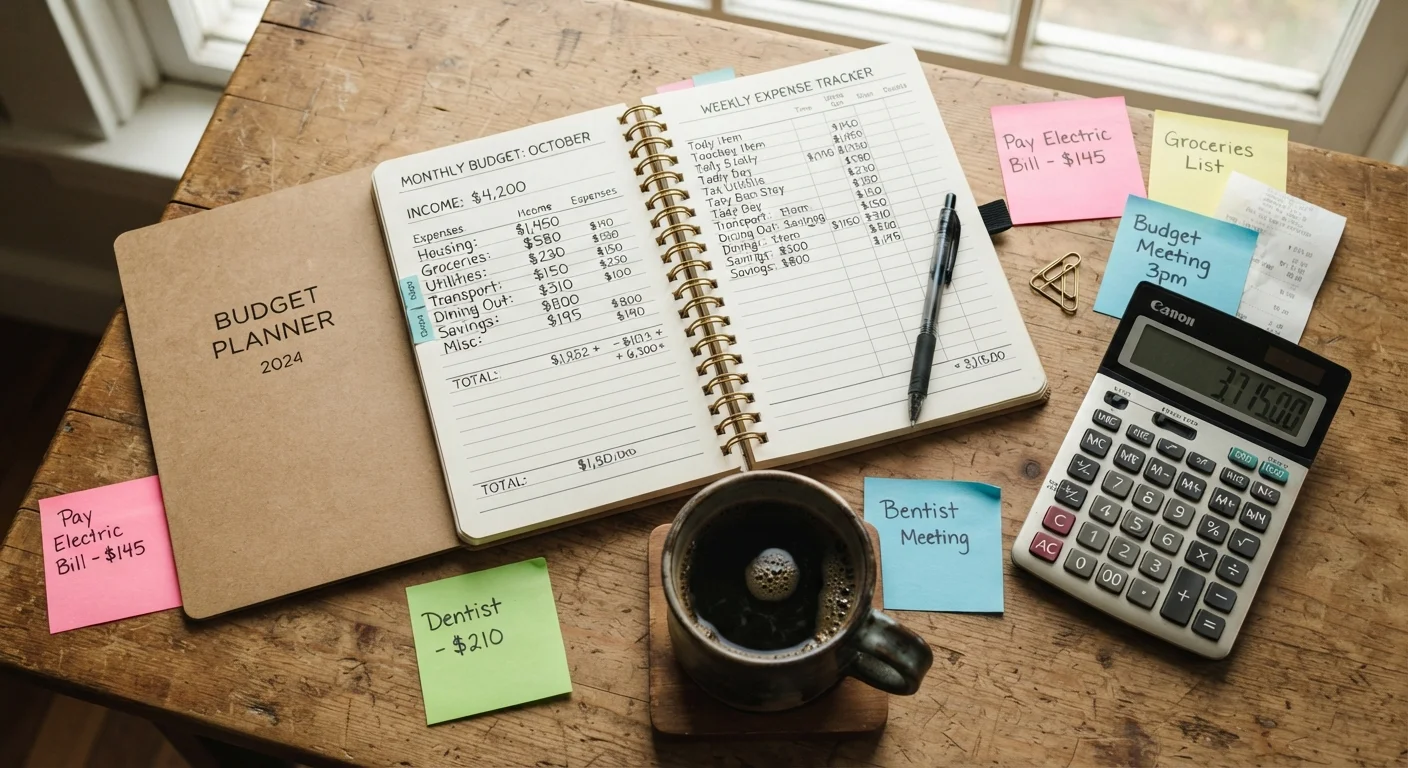
A personal budget is simply a written plan that answers two questions: How much money do I have coming in? And where do I want it to go? That's it. The plan can live in a notebook, a spreadsheet, or an app - the format is secondary to the act of making deliberate decisions about your own money.
The key word is plan. You're deciding in advance, not accounting for everything after the fact. That shift - from reactive to intentional - is what makes a budget genuinely useful.
Start With One Month of Real Numbers
Before building a budget from scratch, spend a few minutes reviewing last month's bank or credit card statements. Real spending data - even imperfect - gives you a much more accurate starting point than estimates alone. You may be surprised by categories that are larger than you expected.
What a Budget Actually Includes
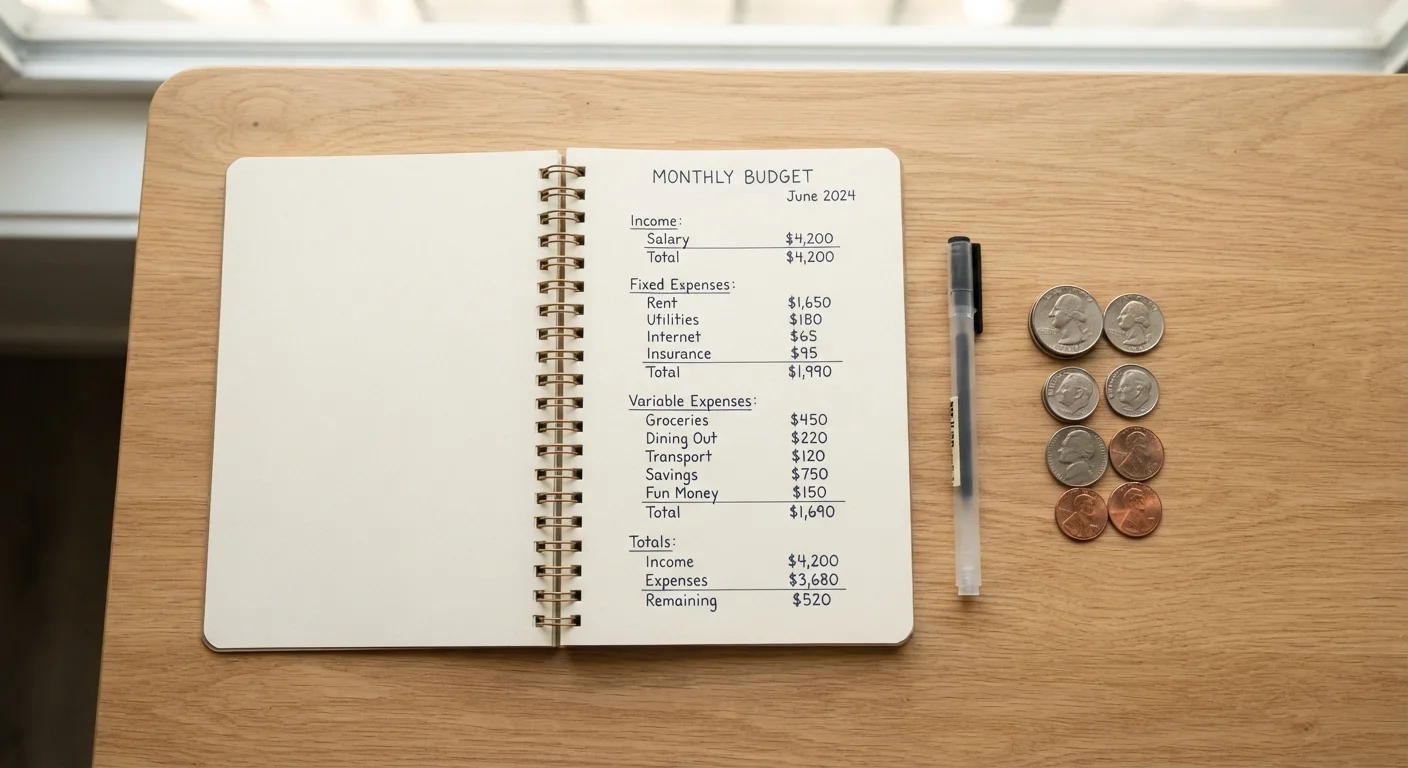
A complete personal budget has two sides: income and expenses. Income is every dollar that comes in - wages, freelance payments, side income, benefits. Expenses are everything you spend or plan to spend, including amounts you set aside for savings.
On the expense side, it helps to think in categories. Most budgets distinguish between expenses that stay the same every month (like rent or a car payment), expenses that vary (like groceries or gas), and expenses that are purely optional (like dining out or streaming subscriptions). Understanding those differences makes building a budget much more manageable. Our field guide to fixed, variable, and discretionary spending breaks each type down in detail.
Savings belong in the expense column too. Treating a savings contribution as a line item - something planned for, not leftover - is one of the most consistent habits among people who actually build savings over time.
~33%
Americans with a detailed household budget
Gallup polling has consistently found that fewer than one in three Americans report maintaining a detailed monthly budget, despite widespread acknowledgment that budgeting is beneficial.
78%
Workers living paycheck to paycheck at some point
Multiple workforce surveys over recent years have found that a substantial majority of American workers report regularly spending most or all of their monthly income, regardless of income level.
What a Budget Is Not
A budget is not a moral judgment. Spending money on things you enjoy isn't irresponsible - it's part of a balanced financial life. A budget just makes that spending deliberate rather than accidental.
A budget is also not a one-size-fits-all document. There's no universally correct percentage to spend on food or housing. A budget reflects your specific income, your specific obligations, and your specific goals. Someone living in a high-cost city will have a very different budget from someone in a rural area, even at identical income levels.
Finally, a budget isn't a static document you set once and ignore. Life changes - income shifts, expenses appear, goals evolve. Revisiting and adjusting a budget regularly is part of the process, not a sign that something went wrong. First-time budgeters are often surprised by the expenses they overlooked initially; our look at commonly forgotten budget items covers the most frequent blind spots.
Budgets and Irregular Expenses
One of the most common reasons first budgets feel "wrong" is that they miss irregular expenses - things that don't happen every month but are entirely predictable, like annual insurance premiums, holiday gifts, or vehicle registration. These aren't surprises; they're just easy to forget when you're looking at one month at a time. Dividing annual costs by 12 and including that monthly amount as a budget line is one straightforward way to handle them.
Starting Without Overthinking It
The biggest obstacle to budgeting is usually the belief that you need to get it perfect before you start. You don't. An imperfect budget started today is more valuable than a perfect budget that never gets made.
A simple starting approach: list every source of income you expect this month, then list every expense you can think of - fixed obligations first, then estimates for variable categories. Subtract total expenses from total income. If the number is positive, you have room to save or spend intentionally. If it's negative, you've identified something worth addressing - and that awareness alone has value.
The format you use matters less than the consistency of the habit. Whether you prefer pen and paper, a spreadsheet, or a dedicated app, what counts is that you actually use it. Our comparison of budgeting methods can help you figure out which approach fits how you actually think and work.
This article is for general informational and educational purposes only and does not constitute personalized financial advice. For guidance specific to your situation, consider consulting a qualified financial professional.