
What Happens the Moment You Apply
The personal loan process starts before any money changes hands. When you submit a formal application, the lender typically pulls a hard inquiry from one or more credit bureaus. This inquiry is recorded on your credit report and can reduce your credit score by a small number of points - usually fewer than five - for a short period.
Multiple applications to different lenders in a short window may be treated as a single inquiry by some scoring models, depending on the loan type and model version, but this isn't guaranteed with all personal loan products the way it is with mortgage and auto loan shopping. Checking your own credit beforehand through a soft inquiry - such as a pre-qualification tool - does not affect your score.
Once approved, the loan appears as a new account on your credit report. This reduces the average age of your accounts, which can have a modest negative effect on credit scores. Both factors are temporary for most borrowers who manage repayment responsibly.
The Credit Upside: What Goes Right
Builds payment history with each on-time payment
Payment history is the most heavily weighted factor in major credit scoring models. Consistent, on-time payments on a personal loan create a positive track record that can strengthen your credit profile over time.
Adds installment credit to your credit mix
Credit scoring models reward a diverse mix of credit types. If your profile is dominated by revolving accounts, a personal loan adds variety that can modestly improve your score.
Can lower credit utilization when used strategically
Using a personal loan to pay off high-balance credit cards transfers the debt from revolving to installment credit, potentially reducing your utilization ratio and improving your credit score.
Fixed repayment schedule supports budgeting
Unlike revolving credit, a personal loan has a defined end date and fixed monthly payment. This predictability makes it easier to incorporate into a monthly budget without surprises.
Funds available as a lump sum without collateral
Most personal loans are unsecured, meaning no asset is required as collateral. The funds are disbursed upfront, making them useful for one-time expenses or consolidating multiple debts.
The most meaningful long-term credit benefit of a personal loan is the opportunity to build a consistent record of on-time payments. Payment history is the single largest factor in widely used credit scoring models, including FICO, typically accounting for around 35% of a score. Every on-time payment is a data point that works in your favor.
Personal loans also add installment credit to your profile. If your existing credit is mostly revolving accounts - like credit cards - adding an installment loan can improve your credit mix, which scoring models reward. Additionally, if you use a personal loan to pay down high-balance credit cards, your overall credit utilization ratio (the share of available revolving credit you're using) may drop, which can lift your score. See how debt consolidation works in practice for a fuller breakdown of that strategy.
The Credit Downside: What Can Go Wrong
Hard inquiry temporarily lowers credit score
Applying for a personal loan triggers a hard credit pull that can reduce your score by a few points. While usually short-lived, this can matter if you're applying for other major credit soon.
Missed payments cause significant credit damage
A payment reported 30 or more days late can noticeably harm your credit score and remain on your report for up to seven years, making it harder and more expensive to borrow in the future.
Raises your debt-to-income ratio
Adding a monthly loan payment increases your total debt obligations relative to income, which lenders weigh when evaluating future credit applications for mortgages or auto loans.
Origination fees add to the true cost of borrowing
Many personal loans carry origination fees ranging from 1% to 8% of the loan amount, reducing the net funds you receive and increasing the effective cost of the loan beyond the stated interest rate.
Prepayment penalties may apply
Some lenders charge a fee for paying off a personal loan ahead of schedule, which can offset the interest savings you'd otherwise gain from early repayment.
The risks with personal loans are concentrated in two areas: taking on more debt than your budget can absorb, and allowing payments to fall behind. A single missed payment can be reported to credit bureaus after 30 days, and the damage to a credit score can take months of on-time payments to recover from. Multiple late payments or a default can remain on your credit report for up to seven years.
Beyond credit, a personal loan increases your total monthly obligations. Lenders evaluating future credit applications - for a mortgage, auto loan, or other financing - will factor your existing loan payments into your debt-to-income (DTI) ratio. A higher DTI can reduce your eligibility or lead to less favorable terms on future borrowing. If you're planning a major purchase soon, it's worth understanding how an added installment payment affects that picture. For example, auto loan financing options may become more limited if your DTI rises before you apply.
Debt Payoff Strategies Worth Knowing
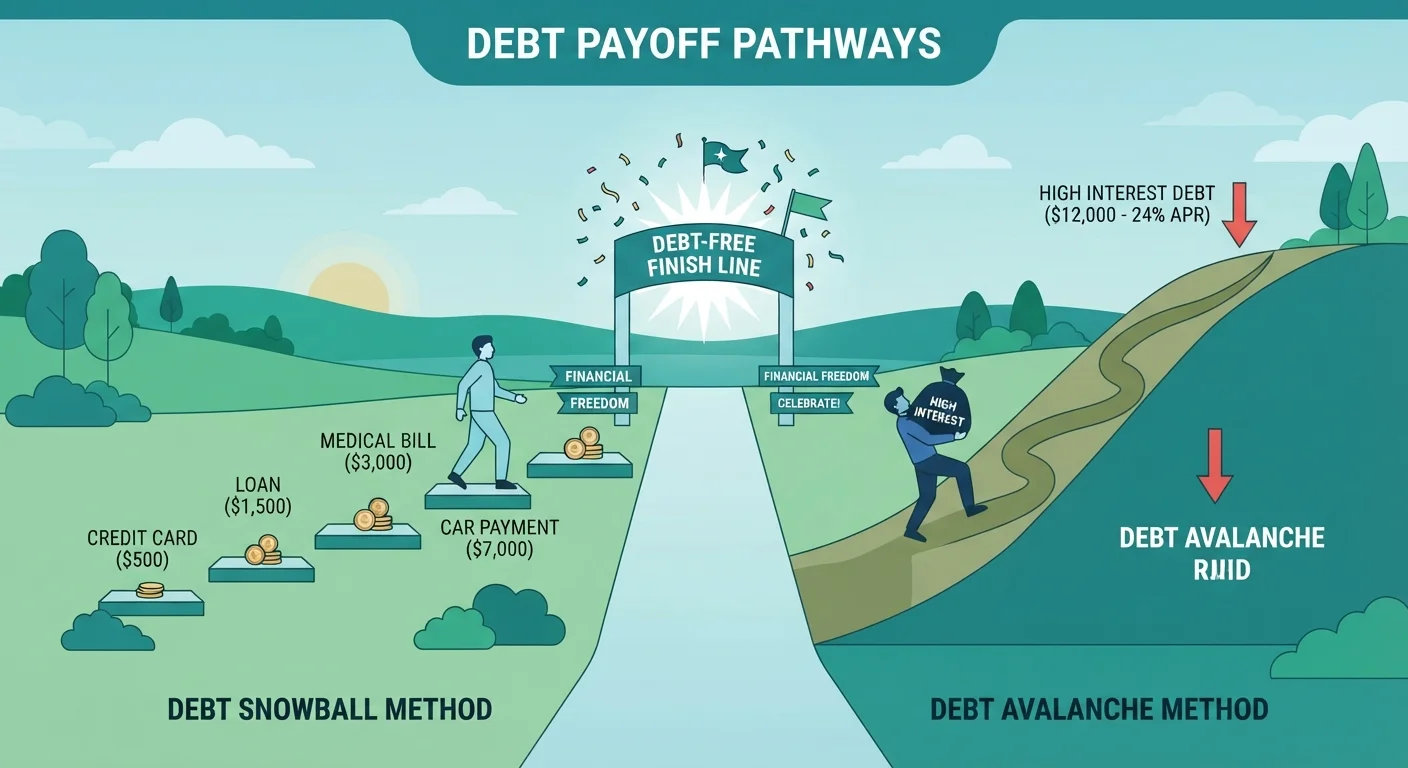
If you're carrying a personal loan alongside other debts, how you prioritize repayment can affect both the total interest you pay and your psychological momentum. The debt avalanche method targets the highest-interest balance first to minimize cost, while the debt snowball method starts with the smallest balance for faster early wins. See how each strategy works for a side-by-side explanation of both approaches.
Managing a Personal Loan Responsibly
Once a personal loan is in place, the variables within your control are limited but important. Setting up autopay, if the lender offers it, reduces the risk of accidentally missing a due date - and many lenders offer a small interest rate discount for enrolling. Reviewing your loan statements regularly helps you track your remaining balance and catch any billing errors early.
If your financial situation changes and you're worried about keeping up with payments, contacting your lender proactively is generally more effective than waiting. Some lenders offer hardship programs or payment deferrals that can provide short-term relief without an immediate credit impact - but these options vary widely and are not guaranteed.
Paying more than the minimum each month - or making extra payments - reduces the principal faster and lowers total interest paid over the loan's life. Before doing so, check whether your loan agreement includes a prepayment penalty, which some lenders charge when a loan is paid off ahead of schedule. Pairing disciplined loan repayment with a broader savings habit is also worth considering; the Saving & Goals hub covers practical frameworks for building financial cushion alongside debt obligations.
This article is for general informational and educational purposes only and does not constitute personalized financial or legal advice. Readers should consult a qualified financial professional before making decisions about borrowing or debt management.