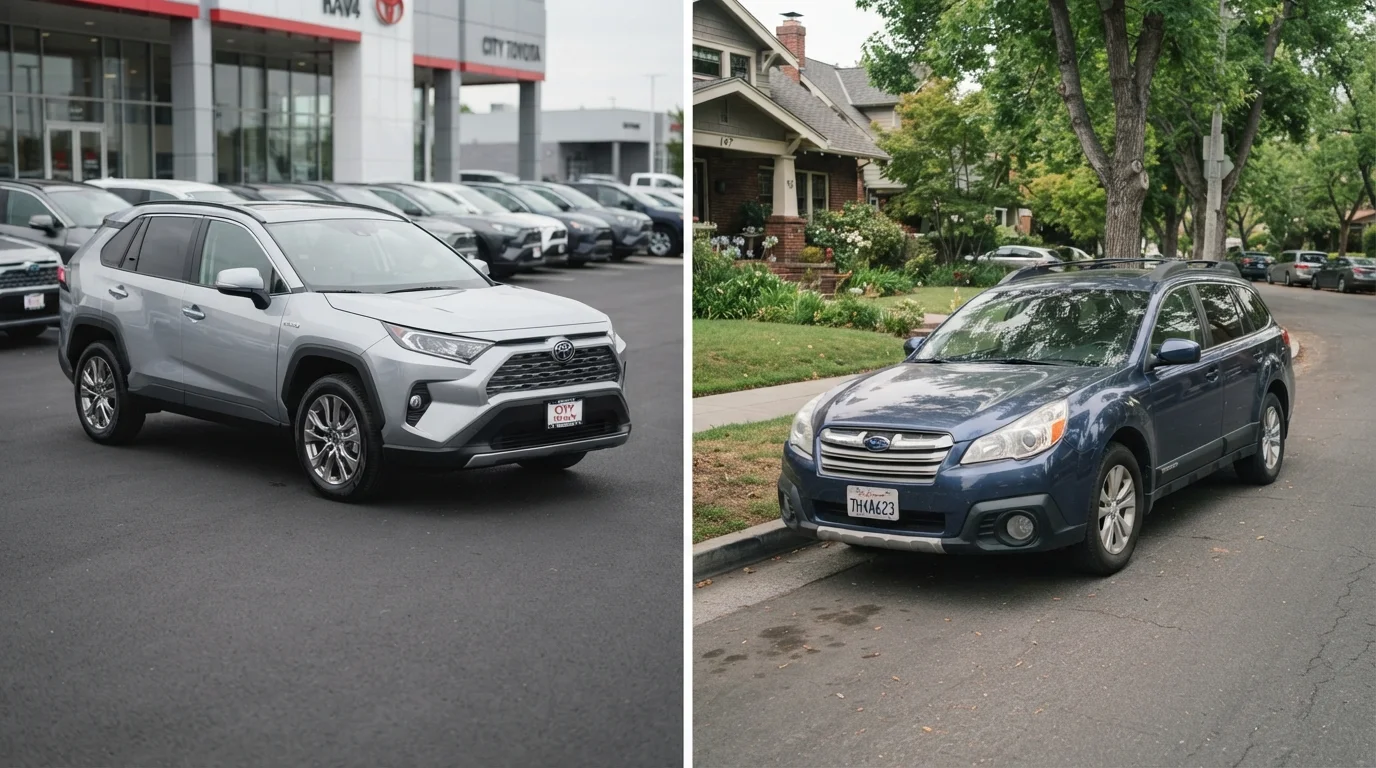

How Each Financing Route Works
When you finance a vehicle through a dealership, the dealer's finance-and-insurance (F&I) office submits your application to one or more lenders - often banks, captive finance arms (lenders owned by automakers), or specialty auto lenders. The dealer then presents you with a loan offer, which may carry a slightly higher interest rate than the lender's actual approval because dealers are commonly permitted to mark up the rate in exchange for arranging the loan. That markup is called a dealer reserve.
When you go directly to a bank or credit union, you apply for a loan before - or separately from - visiting a dealership. If approved, the lender issues a check or a funding commitment up to a set dollar amount. You bring that offer to the dealership as a cash-equivalent. Credit unions, which are member-owned nonprofits, often carry lower average rates than commercial banks, though individual offers vary based on your credit history and the lender's current pricing.
For a broader look at what the financing process involves step by step, see our first-car-loan walkthrough.
Where Rates and Costs Actually Differ
| Dealership Financing | Bank or Credit Union | |
|---|---|---|
| Application process | Done at the dealership, often same day | Applied for in advance, independently |
| Rate transparency | Rate may include dealer markup | Rate is quoted directly by lender |
| Low-rate promotions | Manufacturer APR deals sometimes available | Rarely offers manufacturer subsidized rates |
| Negotiating leverage | Less - all decisions made simultaneously | More - rate is fixed before dealership visit |
| Credit union option | Not available through dealership | Credit unions often offer lower average rates |
| Typical vehicle restrictions | Varies by lender behind the deal | May restrict age, mileage, or loan amount |
The Annual Percentage Rate (APR) - not just the monthly payment - determines what a loan truly costs over time. A lower monthly payment achieved by extending the loan term to 72 or 84 months can mean paying substantially more in total interest than a shorter loan at a slightly higher rate.
Dealership financing occasionally beats bank rates outright when automakers subsidize below-market APR promotions (sometimes as low as 0%) to move inventory. These offers typically require excellent credit and are limited to specific models. Outside of those promotions, direct lenders frequently offer more competitive rates to well-qualified borrowers, particularly credit unions.
~80%
New car buyers who finance at the dealership
Industry estimates suggest the majority of new-vehicle buyers use dealership-arranged financing rather than bringing outside loan offers.
0.5-2%
Typical dealer rate markup range
Auto lending researchers have documented that dealer reserve markups commonly add between half a percentage point and two percentage points to a lender's base rate, though this varies by lender policy and regulation.
Understanding how your credit profile affects rate offers is covered in the Credit & Debt hub, which explains how credit scores and loan terms interact.
Convenience vs. Negotiating Power
Dealership financing compresses the entire transaction into one visit - vehicle selection, trade-in valuation, and loan signing happen together. That convenience is real, but it can also blur how much you're agreeing to pay for the loan itself versus the vehicle.
Arriving with a pre-approved offer from a bank or credit union separates those two decisions. You know your ceiling rate before the F&I office presents its offer. If the dealership can match or beat it, you take that deal; if not, you use your pre-approval. This is one of the most consistent pieces of guidance auto financing professionals offer to car buyers.
Get Pre-Approved Before You Shop
Applying for a pre-approval at your bank or credit union before visiting any dealership takes one to two business days in most cases and does not obligate you to use that offer. It gives you a concrete rate benchmark to evaluate the dealership's financing against. Multiple auto loan inquiries made within a short window (typically 14-45 days) are usually treated as a single hard inquiry by major credit scoring models, so shopping around carries limited credit-score risk.
It's also worth considering whether you're buying new or used, since financing rates for used vehicles are generally higher across all lender types. The new vs. used financial trade-offs article covers how financing rates factor into that broader decision.
Key Risks to Watch in Each Arrangement
Don't Anchor to the Monthly Payment
Dealership F&I offices sometimes present loan discussions in terms of monthly payment rather than total cost. A lower monthly figure achieved by extending a loan to 84 months can mean thousands of dollars more in interest over the life of the loan. Always ask for the APR, the loan term in months, and the total amount repaid before agreeing to any financing arrangement.
Beyond the rate itself, watch for these friction points in each arrangement:
- Dealership: Add-on products (extended warranties, GAP insurance, paint protection) are often presented at the time of loan signing. These products may have value, but they inflate the loan amount and can obscure the vehicle's actual cost. Review each line item separately before agreeing.
- Bank or credit union pre-approval: Approval amounts are usually time-limited (commonly 30-45 days) and may restrict the vehicle's age or mileage. Read the pre-approval terms carefully before shopping.
- Both: Focusing only on the monthly payment - rather than the APR and total repayment amount - is a common and costly mistake. Always calculate total interest paid over the full loan term before signing.
If you're weighing whether financing makes sense at all versus paying cash, owning outright vs. carrying a loan lays out what each arrangement means in practice. And if you're still deciding whether to buy or lease, leasing vs. buying over time addresses the longer-range financial picture.
This article provides general financial information for educational purposes and does not constitute personalized financial or lending advice. Consult a qualified financial professional for guidance specific to your situation.