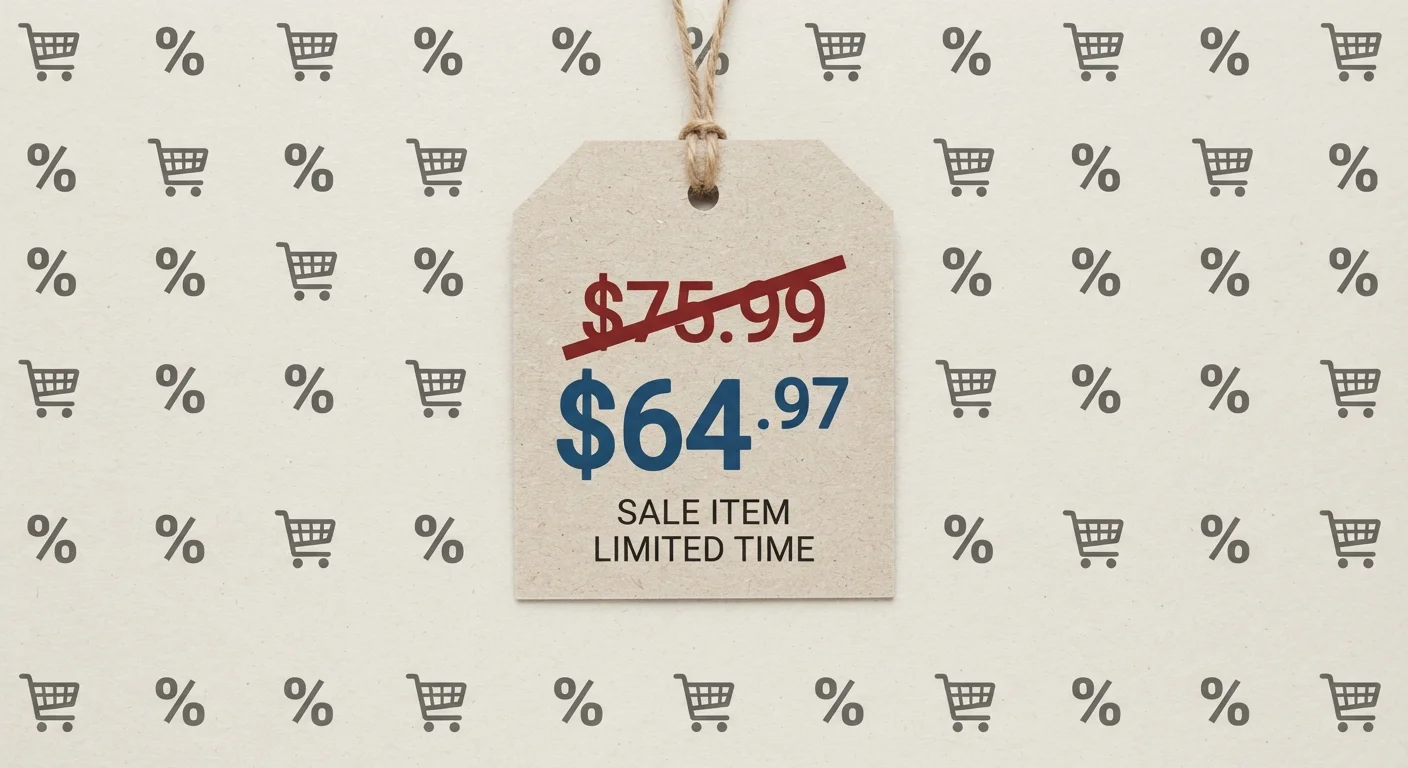

Why the Listed Price Is Just the Starting Point
Online product listings are designed to attract attention, not to give a complete financial picture. The headline price - the large number you see first - is typically the lowest possible version of what you'll actually pay. Fees, required extras, and ongoing costs are routinely disclosed only at checkout, in the fine print, or not at all.
This isn't always deceptive. Retailers structure listings to stay competitive on price comparison tools, where only the base price is surfaced. But the practical result for shoppers is the same: you can't evaluate true value from the listing price alone. Understanding where the gaps appear - and why - is the foundation of more confident product research. For a broader look at how pricing strategies are constructed, see how drip pricing and reference pricing work.
Ignoring shipping costs until checkout.
Why it happens: Listings prominently display the item price, and shipping fees are typically revealed only at the final checkout step - sometimes after an account has been created.
Assuming all necessary accessories are included in the box.
Why it happens: Product photos often show a complete setup, but "what's in the box" details are buried in spec tables or omitted entirely. Shoppers reasonably assume the image reflects the purchase.
Overlooking the ongoing cost of proprietary consumables.
Why it happens: The upfront price of printers, coffee machines, air purifiers, and similar devices is often low - but compatible cartridges, pods, or filters may only work with that brand's ecosystem.
Not checking the return and restocking policy before purchase.
Why it happens: Most shoppers only look up return policies after a problem arises. By then, the return window may have closed or a restocking fee - sometimes 15-25% of the purchase price - applies.
Treating the "sale" price as the true baseline price.
Why it happens: Discounts create a mental anchor that makes the current price feel like a savings event, even when the "original" price was inflated or rarely charged. This is a well-documented feature of reference pricing.
How to Calculate the Real Cost Before You Buy
Once you recognize the categories where hidden costs tend to cluster, you can build a simple pre-purchase checklist. For any significant purchase, total the following before deciding:
- Shipping and handling: Check the exact fee for your address, not just whether "free shipping" is offered - thresholds and exclusions vary widely.
- Taxes and import duties: These are often added at checkout and can add 5-15% or more depending on your state and the item category.
- Required accessories: Identify everything the product needs to function out of the box. Cables, batteries, mounts, and software licenses are common omissions.
- Consumables and replacement parts: Calculate annual cost, not just upfront cost. Ink cartridges, filters, and proprietary refills often cost more than the device itself over time.
- Return and restocking fees: If the product doesn't fit, work, or meet expectations, know what it costs to send it back.
~67%
Online shopping carts abandoned at checkout
Research by the Baymard Institute consistently finds that unexpected costs - primarily shipping fees and taxes - are the leading reason shoppers abandon carts at checkout.
15-25%
Typical restocking fee on returned electronics
Restocking fees in this range are common among electronics retailers and are often disclosed only in the fine-print return policy, not on the product listing itself.
For purchases involving long-term ownership - appliances, tools, electronics - this kind of total-cost thinking applies far beyond online shopping. The same principle of looking past the sticker price is explored in the context of vehicle ownership costs new buyers miss.
Habits like skipping price comparisons or trusting sale labels at face value compound these blind spots. Common patterns that lead to overpaying online are worth reviewing alongside this checklist. It also helps to research across platforms - relying on a single retailer introduces blind spots that a broader search can surface.
Marketplace Listings May Have Different Seller Policies
On large marketplace platforms, individual third-party sellers set their own shipping rates, return windows, and restocking fees - which may differ significantly from the platform's standard policy. Always click through to the specific seller's policy rather than assuming platform-wide terms apply to every listing.