Two Southern Cities, Two Distinct Identities
Ask most Americans to name a Southern city famous for music and food and you'll get two answers almost immediately: New Orleans and Nashville. They share a reputation for hospitality and a passion for good times - but step into either city and the differences become unmistakable almost at once.
New Orleans is a city that feels ancient by American standards, shaped by centuries of French and Spanish colonial rule, a massive African cultural influence from its enslaved population, and the rhythms of Caribbean trade. Walking the French Quarter means moving through a living archive of ironwork balconies, centuries-old architecture, and a culinary tradition - Creole and Cajun cooking - that is wholly its own. The city operates at its own pace, unhurried and unapologetically itself. Its connection to the wider Gulf Coast region is explored in depth in our piece on the Gulf Coast's culture and character.
Nashville, by contrast, pulses with momentum. It has grown explosively over recent decades, attracting new residents, businesses, and travelers from across the country. Its identity is anchored in country and Americana music, but the city has layered a sophisticated restaurant scene, thriving arts community, and energetic social culture on top of that foundation.
| Criterion | New Orleans, Louisiana | Nashville, Tennessee |
|---|---|---|
| Cultural Identity | Creole, French, African, Caribbean fusion | Americana, country music, New South |
| Music Scene | Jazz, blues, brass band, zydeco | Country, Americana, honky-tonk |
| Signature Food | Gumbo, po'boys, beignets, étouffée | Hot chicken, meat-and-three, BBQ |
| Travel Pace | Slow, immersive, wandering | High-energy, social, fast-paced |
| Historic Architecture | French Quarter, Garden District, Tremé | Limited; city growth has replaced much |
| Festival Culture | Mardi Gras, Jazz Fest, French Quarter Fest | CMA Fest, Bonnaroo proximity, local events |
| Climate Considerations | Hot, humid; hurricane season awareness needed | Four seasons; milder summers |
Music, Food, and What Each City Does Differently
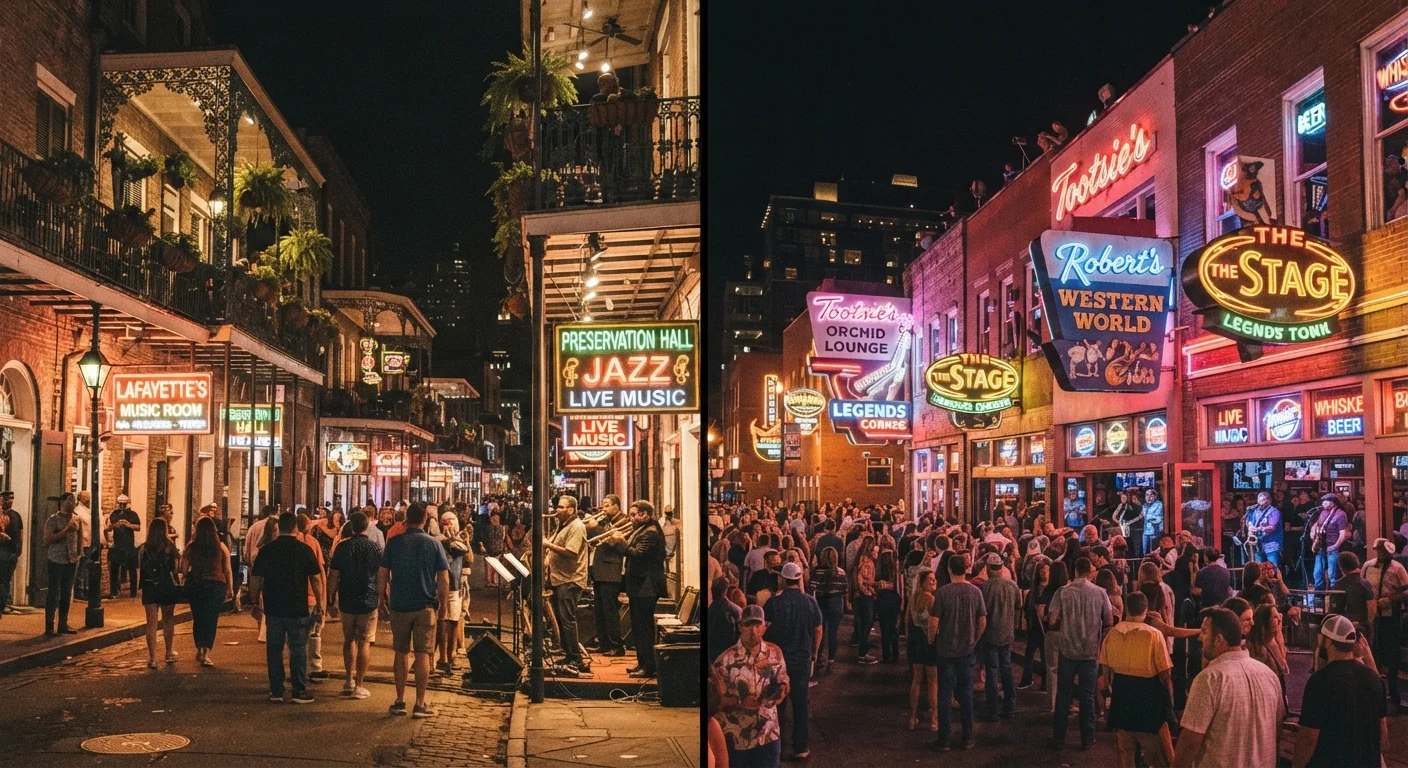
Music is sacred in both cities, but the genres, venues, and rituals surrounding it diverge sharply. In New Orleans, jazz, blues, brass band, and zydeco spill out of clubs and onto sidewalks with an improvisational, communal spirit. Street musicians are part of the city's daily texture, not just a tourist attraction. The music feels rooted in something ancient and deeply emotional.
Nashville's music scene is louder and more celebratory in a different register. Honky-tonks along Lower Broadway run live bands from early afternoon into the early hours, and the city's storied recording history - rooted in the Grand Ole Opry and Music Row - gives it a genuine claim to being the capital of American country music. The experience is exhilarating, social, and designed to be shared.
~19 million
Annual visitors to New Orleans
New Orleans consistently draws tens of millions of visitors annually, driven largely by its festival calendar and culinary reputation.
Top 5
Nashville's US tourism ranking growth
Nashville has ranked among the fastest-growing major US cities for tourism over the past decade, according to various travel industry analyses.
300+
Years of New Orleans history
Founded in 1718 by French colonists, New Orleans is one of the oldest major cities in the United States, giving it a cultural depth rare in American destinations.
On the food front, New Orleans holds a nearly unassailable position in the American culinary landscape. Dishes like gumbo, red beans and rice, po'boys, and beignets reflect centuries of cultural fusion that simply cannot be replicated elsewhere. Nashville, meanwhile, has built a formidable food scene of its own - hot chicken (Nashville's signature dish) has become nationally recognized, and the city's newer restaurant culture spans international cuisines and creative Southern cooking alike.
Atmosphere, Neighborhoods, and How Each City Feels to Explore
Exploring New Orleans means wandering - through the French Quarter's dense historic blocks, across the Garden District's grand antebellum mansions, along the Mississippi riverfront, or into the Tremé neighborhood, one of the oldest African American communities in the country. The city rewards slow travel and unexpected detours. Weather can be intensely humid, particularly in summer, and travelers should plan accordingly.
Nashville's neighborhoods each carry a distinct character: the honky-tonk energy of Lower Broadway, the murals and independent shops of East Nashville, the upscale dining of The Gulch, and the green expanses of Centennial Park. The city is generally easy to navigate and has a walkable, social energy that suits group travel and weekend visitors particularly well.
Plan Around the Season
New Orleans summers are intensely hot and humid, with hurricane season running June through November - spring and fall are generally considered the most comfortable times to visit. Nashville experiences all four seasons, with spring and early fall offering pleasant temperatures for outdoor exploration. Always verify current weather forecasts and any local event schedules before booking travel.
Ultimately, neither city is objectively better - they satisfy different traveler appetites. New Orleans asks you to slow down and absorb; Nashville invites you to jump in and celebrate. Both deliver on their promises with genuine character and warmth.