Why Less Is More in a Makeup Kit
A drawer stuffed with half-used products doesn't translate to better looks - it usually means more decision fatigue and more expired cosmetics. The minimalist approach flips the script: a smaller kit forces you to choose items that genuinely work hard, which means every product earns its spot by doing more than one job.
Stripping back also makes getting ready faster, which is exactly what you need when mornings are rushed. According to beauty educators, beginners in particular benefit from working with fewer products, because it allows them to actually learn what each one does to their skin before adding complexity. That confidence is the real payoff. For a practical morning sequence that builds on a minimal kit, see the getting-ready checklist for low-stress mornings.
The Core Five: Products Every Kit Needs
Tinted moisturizer
A lightweight lotion that combines hydration with a small amount of pigment to even out skin tone without the heavier feel of a full foundation.
Cream blush
A blush in a creamy, blendable formula that can be applied with fingers or a brush and often works double duty as a lip color for a cohesive look.
Monochromatic look
A makeup style where cheeks, lips, and sometimes eyes share the same color family, creating a harmonious, put-together appearance with minimal products.
Spoolie
A small brush shaped like a mascara wand, used to groom and blend eyebrow product or comb through lashes - a simple multi-use tool.
Buildable coverage
A descriptor for makeup products that start sheer but can be layered to provide more coverage, giving you control over how much your skin shows through.
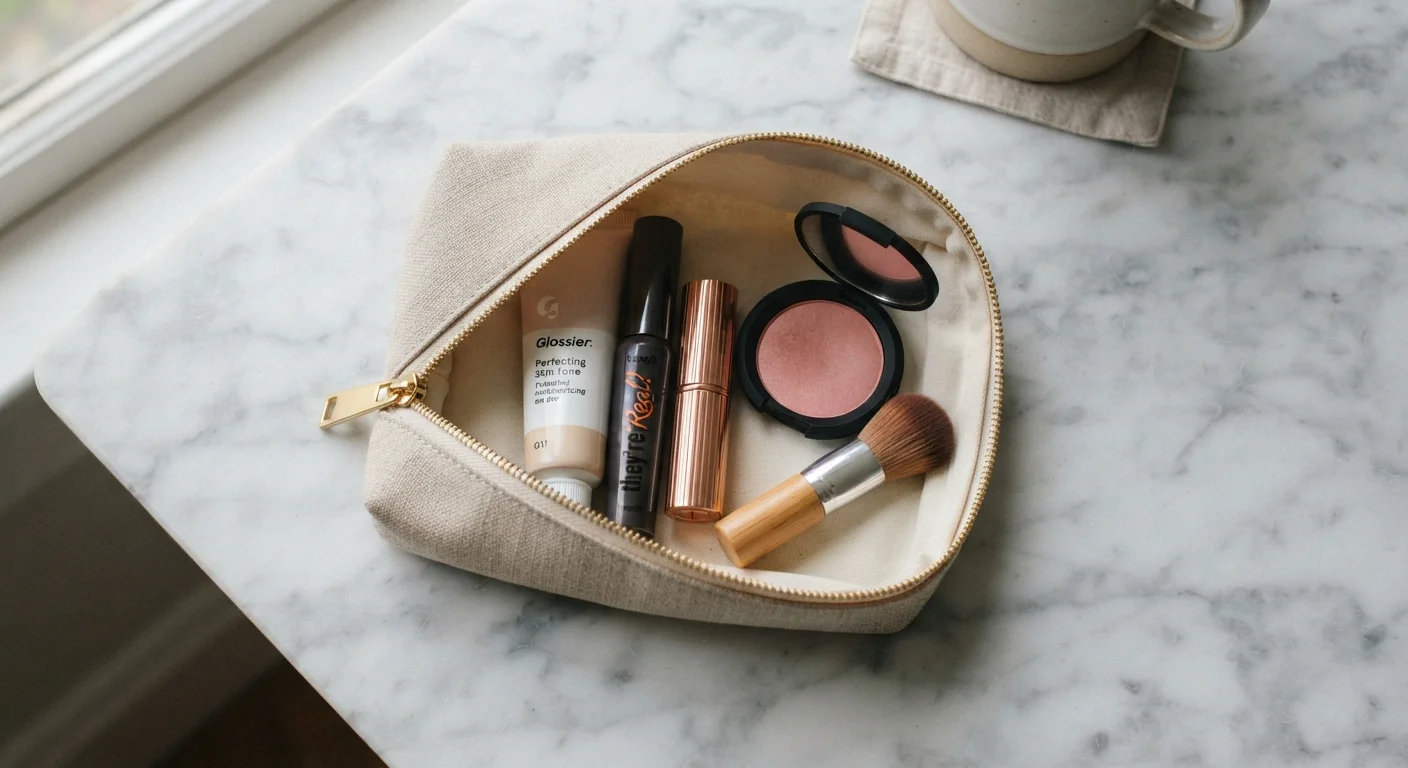
These five categories form the backbone of a versatile routine - and within each one, you only need a single product:
- A skin-evening base. A tinted moisturizer or light-coverage foundation evens skin tone without masking it. Look for something with SPF to consolidate steps.
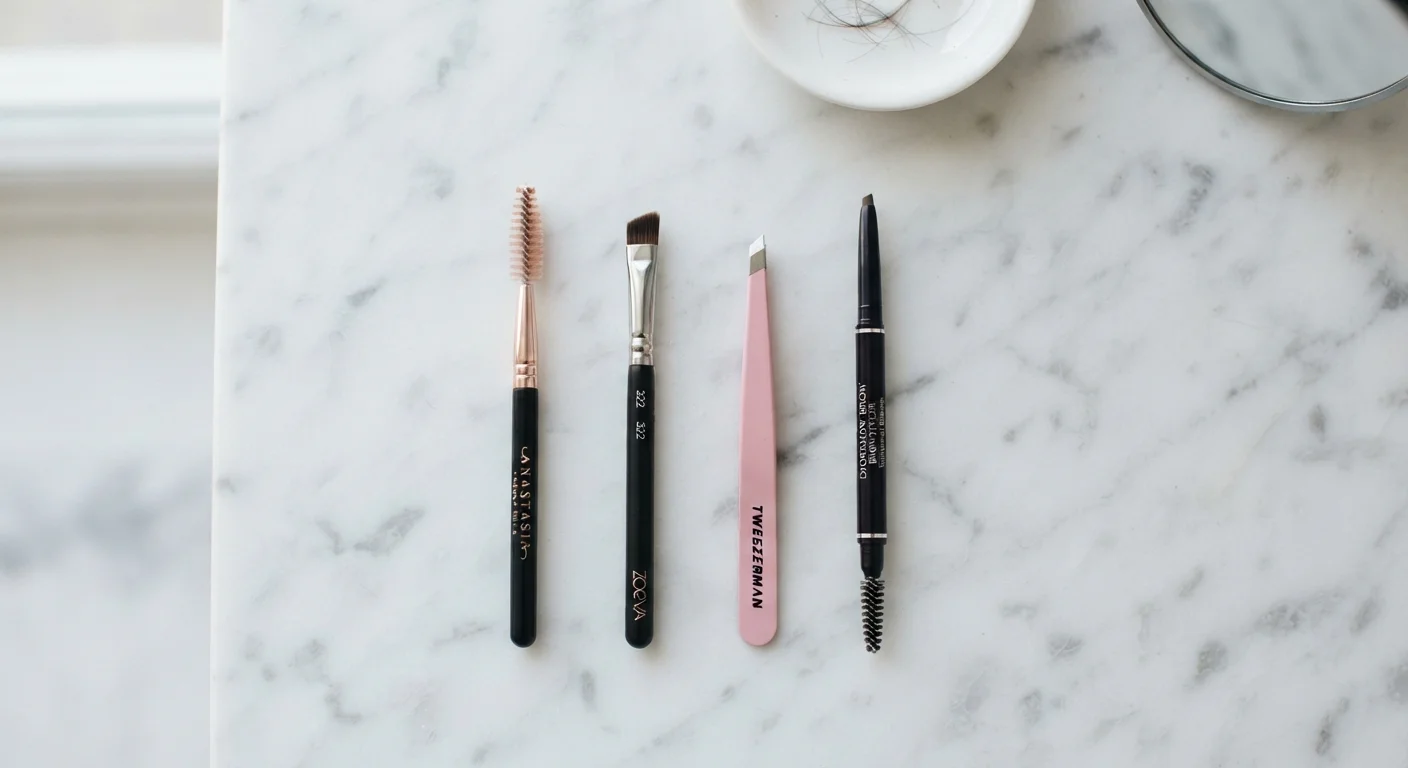
- A brow product. Filled, defined brows frame the face more powerfully than almost any other feature. A pencil or clear gel works for most brow types. Dive deeper with our guide on at-home eyebrow grooming.
- Mascara. A single coat opens the eyes dramatically; two coats signal a more polished evening look. Black or brown-black suits nearly every complexion.
- A cream blush or bronzer. Cream formulas blend easily with fingers, work on more skin types, and can double as a lip tint - true multitasking. If contouring interests you, our contouring guide by face shape is a natural next step.
- A versatile lip color. A sheer berry, nude, or rosy shade reads as polished in any lighting. A tinted balm format adds moisture and color simultaneously.
Stretch Every Product Further
When choosing between powder and cream formulas, lean cream for a minimal kit. Cream blush, cream bronzer, and cream highlighter all blend with fingers - no extra brushes needed. They also tend to look more natural and are more forgiving for beginners.
How to Transition One Look Across Occasions
The secret to occasion flexibility is layering intensity, not switching products. Your daytime application is the base layer - light coverage, one coat of mascara, a soft blush. For evening, you layer on top:
- Apply a second, more concentrated press of cream blush higher on the cheekbone for a more defined look.
- Add a deeper or more vibrant lip color over your daytime shade, or swap to the richer end of your blush for an effortless monochromatic moment.
- A second coat of mascara and a smudged line of dark shadow along the upper lash line shifts eyes from fresh to dramatic.
This approach also makes touching up mid-day simple - you're working with familiar products and familiar placement, so there's no guesswork.
Building Your Kit on Any Budget
Budget shapes which specific products end up in your kit, but it doesn't have to limit your results. The categories above exist at every price point. A few principles help you spend wisely regardless of where you shop:
- Invest where texture matters most. Mascara and lip products behave noticeably differently across formulas, so this is often where readers find it worth spending a bit more.
- Simplify your tools. Three brushes - a fluffy face brush, a small blending brush, and a spoolie - cover everything a minimal kit demands. Many cream products blend just as well with clean fingers.
- Replace by category, not by trend. When a product runs out, replace it with the same type rather than chasing a new trend. This keeps your kit stable and your technique sharp.
If you travel frequently, a minimal kit also solves the packing puzzle. See how to integrate it into a smart carry-on strategy in our guide to packing light without leaving essentials behind.
Check Expiration Dates Regularly
Mascara is typically recommended to be replaced every three months; liquid base products around six to twelve months. Keeping a small kit means you'll actually use products up before they expire - another practical advantage of going minimal.
Skin Prep: The Step That Makes Everything Work Better
No makeup kit, however thoughtfully assembled, performs at its best on unprepared skin. Cleansing, moisturizing, and - when needed - priming are what allow your base to sit smoothly and your color products to stay true throughout the day. These aren't extra steps; they're the foundation that makes every product in your kit do its job.
For a thorough walkthrough of how to build these habits, start with our article on skin prep habits that make products perform better. If you're building your skincare routine from scratch at the same time, the simple morning skincare routine guide is a practical companion. Together, good skin prep and a focused minimal kit give you a complete, low-effort system - one that grows with you as your confidence and curiosity develop.