Why Category-Based Packing Outperforms Guesswork
Most overpacking happens in the first five minutes - when someone opens an empty suitcase and starts mentally picturing scenarios. What if it rains? What if there's a fancy dinner? The result is a bag packed for ten hypothetical trips instead of the actual one. Working category by category - clothing, toiletries, documents, gear - interrupts that pattern and replaces it with a structured audit that's faster and far more reliable.
This method also makes it easy to catch gaps. Documents and health-related travel items, in particular, are frequently underprepared because travelers focus almost entirely on clothing. A category list forces equal attention across all areas of your pack.
What you will need
Packing cubes
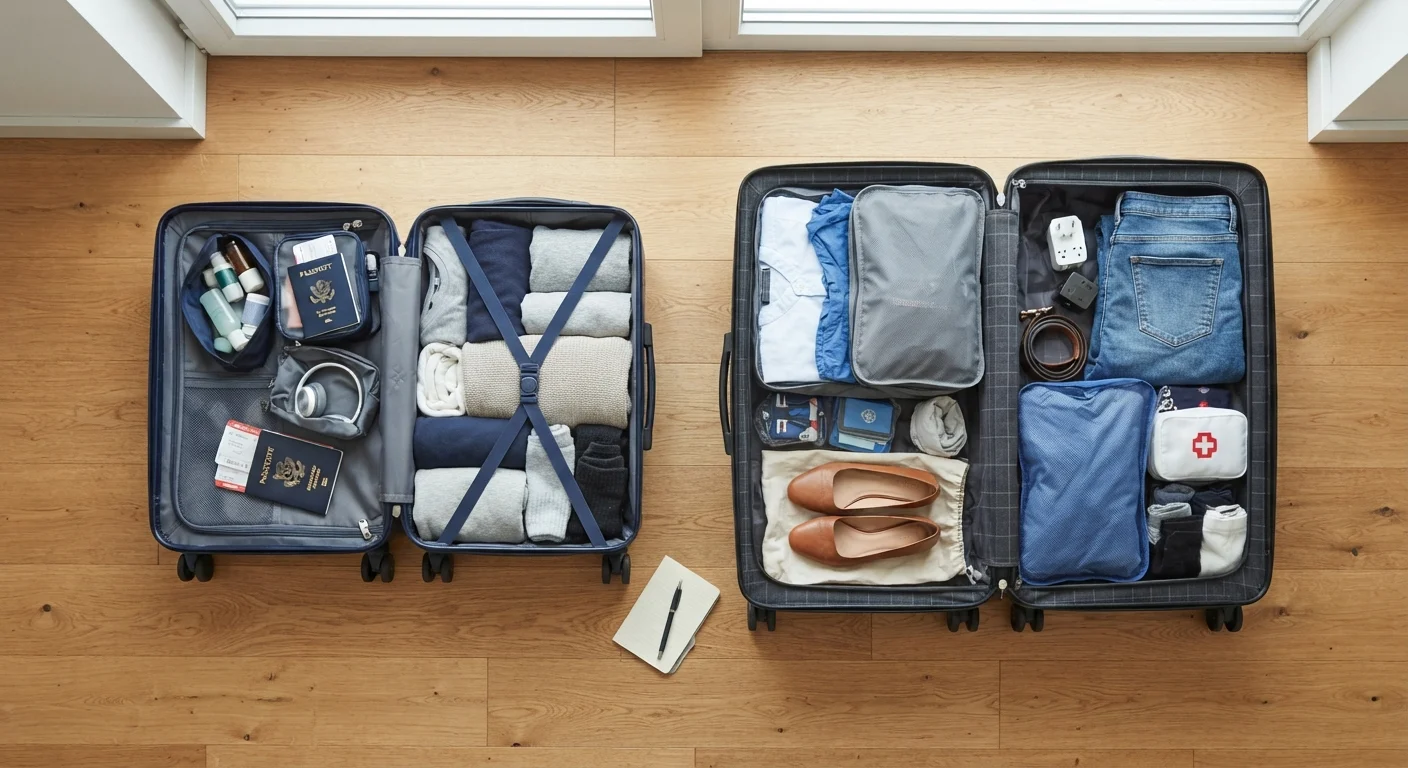
Compress and organize clothing by category so your bag stays tidy and you can find items without unpacking everything.
TSA-compliant quart-sized bag
Required for carrying liquids through airport security in a carry-on bag.
Luggage scale
Weigh your bag at home to avoid surprise overweight fees at check-in.
Digital document storage (phone or cloud app)
Store backup copies of your passport, insurance, and bookings so they're accessible if originals are lost.
How to Follow These Steps
Work through the steps below in order - the sequence matters. Building your list before you touch your bag (Step 1) prevents the psychological trap of packing what's already in your hands. The clothing audit (Step 2) works best when you can physically see all your candidates at once. Documents (Step 4) should be handled while you're still calm and at home, never at the last minute.
If you find the clothing-editing process connects to your broader wardrobe habits, seasonal wardrobe transitions covers related keep-or-cut thinking that translates well to travel packing. Once your trip is over and you're reflecting on what you actually used, those same lessons sharpen every future list.
Start With a Category-Based List, Not a Pile
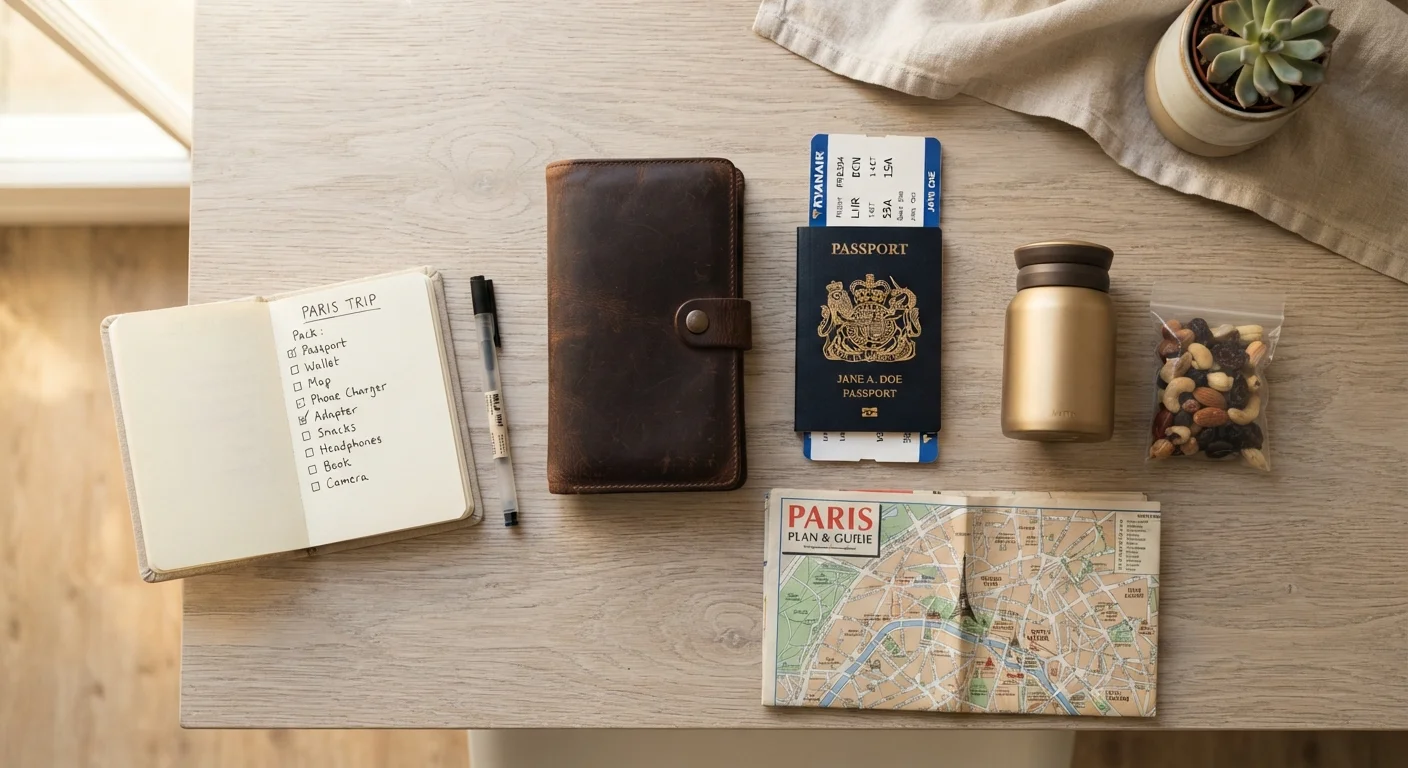
Open a notes app or grab a piece of paper and divide your list into four columns: Clothing, Toiletries, Documents, and Gear/Tech. Work through each category deliberately before a single item goes into your bag. This structure prevents the mental scramble that leads to both overpacking and forgotten essentials.
Think through your actual daily itinerary - not a theoretical worst-case version of it. A weekend city trip and a two-week hiking adventure have almost nothing in common on a packing list.
Audit Your Clothing With the Mix-and-Match Rule
For clothing, every item you pack should work with at least two other pieces in the bag. Lay your candidate items on a bed and physically test combinations. If a piece only goes with one other item - or requires a specific shoe you can't justify bringing - leave it behind.
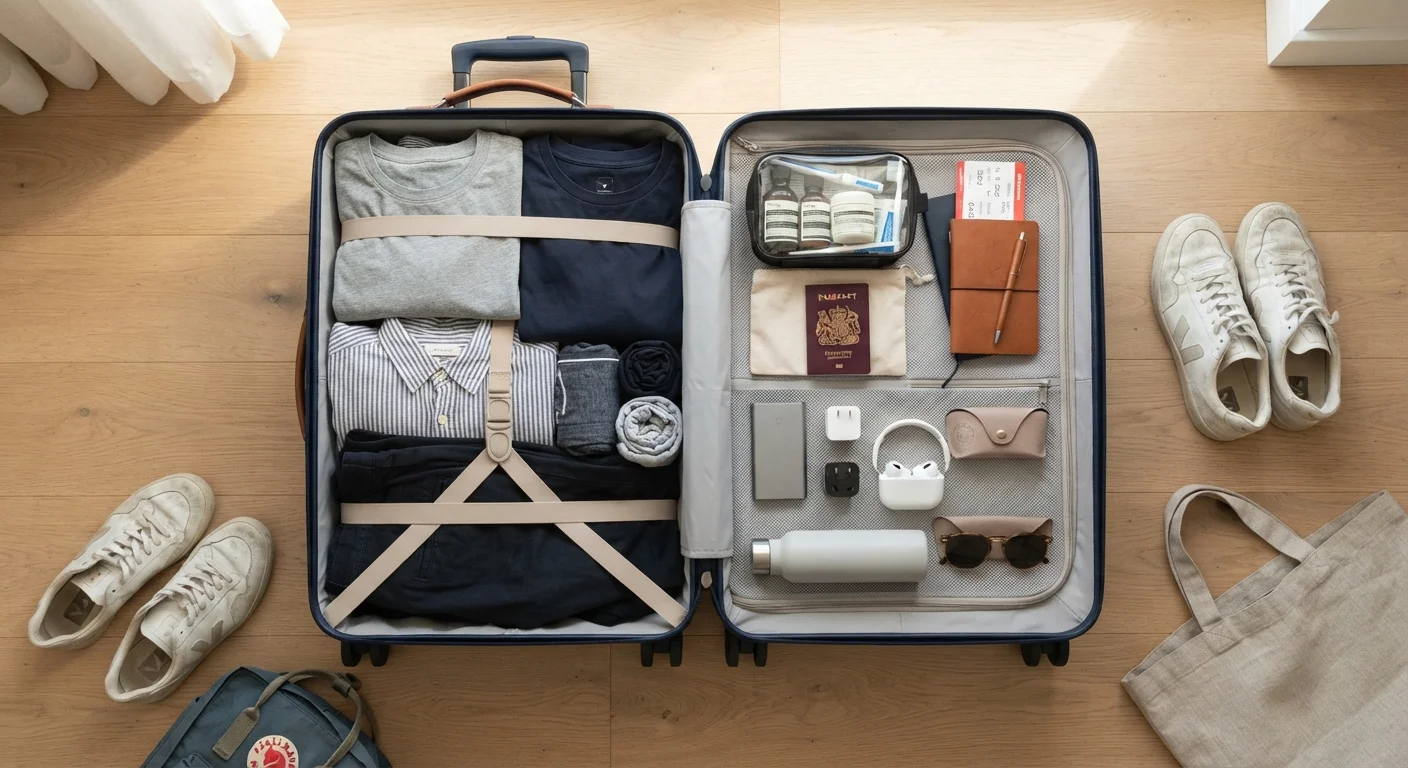
A functional travel wardrobe for most trips follows a simple formula: bottoms × 2, tops × 3-4, one layering piece, versatile shoes × 1-2. Neutral or complementary colors multiply your outfit options without adding bulk. For style guidance on building flexible capsule-style wardrobes, the Style & Fashion hub has useful frameworks to draw from.
Pare Down Toiletries to What You'll Actually Use Daily
Go through your full at-home toiletry routine and ask: Will I realistically use this every day of this trip? Products used once a week at home rarely earn space in a travel bag. Transfer essentials into travel-size containers, or switch to solid formats (shampoo bars, solid sunscreen, etc.) that don't count toward liquid limits and weigh less.
For a minimal but complete approach to your personal kit, see building a minimal makeup kit - the same edit-down principles apply to any toiletry category.
[warning_callout]Organize Your Documents - Physical and Digital
Gather every document your trip requires: passport, visa if applicable, flight and hotel confirmations, travel insurance policy, and any health or vaccination records required at your destination. Place physical documents in one dedicated sleeve or folder that never gets buried at the bottom of your bag.
Photograph or scan each document and store copies in a secure cloud folder or app accessible offline. This backup is genuinely invaluable if a wallet is lost or a bag is delayed. A full pre-departure document check is covered in detail in our pre-trip checklist.
[important_callout]Consolidate Gear and Tech to True Necessities
Tech and gear are where bags quietly balloon. Chargers, adapters, cables, cameras, backup batteries - each item needs to justify its weight. Audit by asking: Can my phone replace this? A universal travel adapter is a genuine necessity for international trips; a dedicated e-reader is a comfort item worth weighing against its bulk.
Pack cables in a small zippered pouch so you're not untangling a nest every morning. If you're weighing carry-on versus checked luggage strategies for gear-heavy trips, our carry-on vs. checked luggage guide walks through the trade-offs clearly.
Do a Final Pack, Weigh, and Cut Round
Pack everything you've selected, then weigh the bag. Check it against your airline's carry-on or checked baggage allowance - these vary by carrier and route, so verify directly with your airline before travel. If you're over the limit or the bag feels unwieldy, apply a simple tiebreaker: remove the item you'd miss least if it weren't there.
[tip_callout]
Once the bag passes the weight and comfort test, you're ready. For international trips, packing principles for international travel covers destination-specific layers like customs considerations and local sourcing that go beyond the universal framework here.