Why Eyebrow Shape Matters So Much
Eyebrows are one of the most structurally influential features on the face. They frame the eyes, balance proportions, and communicate expression before you've said a word. A well-groomed brow can make the entire face appear more lifted, symmetrical, and put-together - even when the rest of your routine is minimal.
The good news? You don't need a salon appointment or professional tools to get great results. With a clear method and a little patience, at-home grooming can be both effective and genuinely confidence-boosting. If you're building out a broader routine, pairing brow grooming with a solid base is a smart move - see our skin prep guide for steps that help makeup sit better all day.
~70%
Of consumers groom brows at home
Industry surveys consistently show the majority of American consumers prefer to manage eyebrow maintenance between professional visits rather than visiting a salon exclusively.
#1
Most regretted DIY beauty mistake
Over-tweezing eyebrows is frequently cited in consumer beauty surveys as the most common and most-regretted at-home grooming error.
Your At-Home Grooming Toolkit
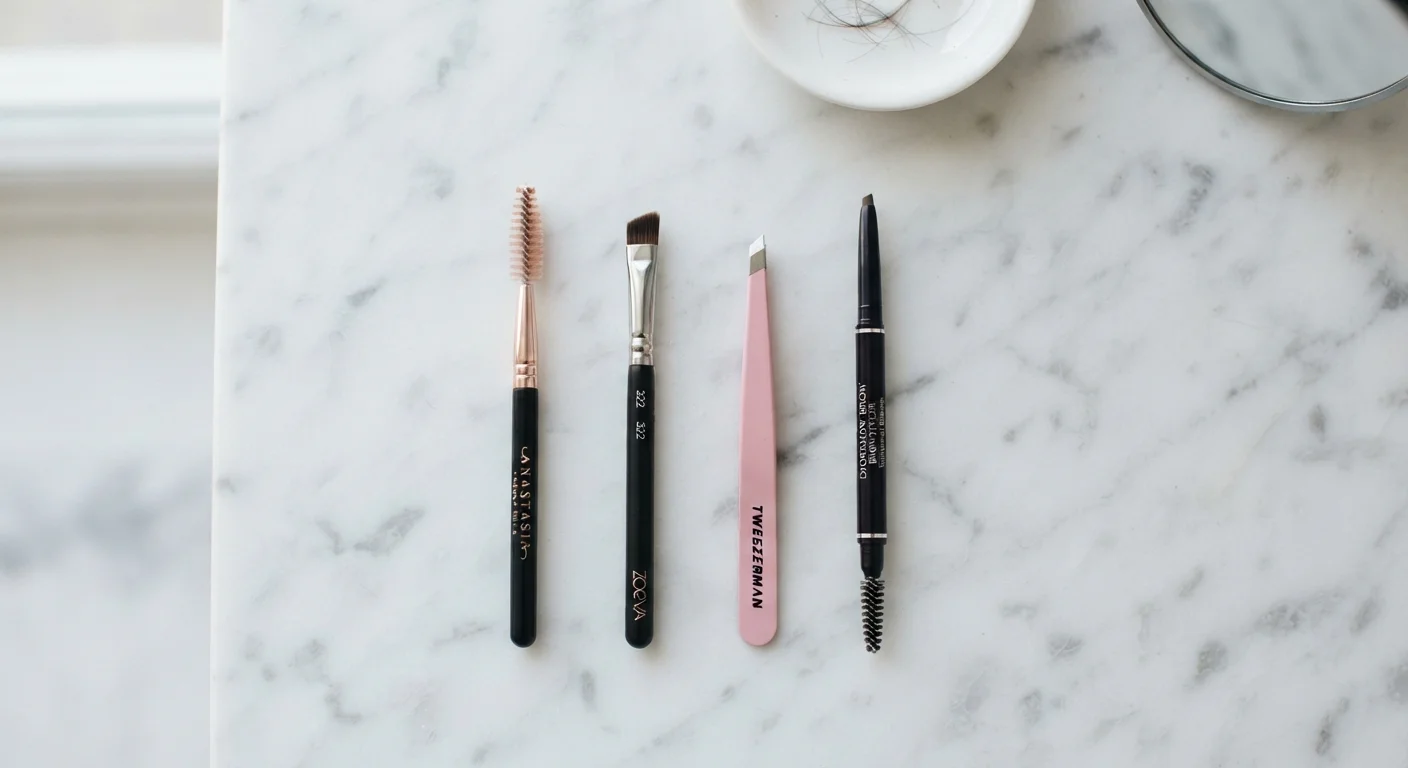
You don't need a drawer full of products. A focused set of tools handles the full process from shaping to finishing:
- Spoolie brush - Combs hairs into place so you can see their natural direction before removing anything.
- Slant-tip tweezers - Offer precision for individual hairs without the slip of pointed tips.
- Small brow scissors - Trim long hairs that extend past the brow line when brushed up.
- Brow pencil or micro-pencil - Mimics hair strokes for natural-looking fill.
- Angled brow brush - Useful for applying powder or pomade with control.
- Clear or tinted brow gel - Sets hairs in place and adds a groomed finish.
That's it. This toolkit pairs naturally with a complete minimal makeup kit if you want to keep your overall collection streamlined.
Build Your Kit Gradually
You don't need to buy everything at once. Start with a spoolie, a pencil in your shade, and a pair of slant-tip tweezers - these three tools handle the vast majority of brow grooming tasks. Add trimming scissors and a setting gel once you're comfortable with the basics.
How to Find Your Natural Brow Shape
Before removing a single hair, map the three key points of your brow using a straight edge - a pencil or makeup brush works perfectly:
- The start: Align the straight edge vertically from the outer edge of your nostril straight up. Where it meets the brow is where your brow should begin.
- The arch: Angle the straight edge from the outer nostril through the outer edge of your iris and upward. That intersection marks your natural high point.
- The tail: Pivot the edge from the nostril to the outer corner of your eye and extend upward. The brow should end at or just beyond that line.
Mark these points lightly with a brow pencil or white eyeliner before tweezing. This visual guide prevents the most common mistake: removing too much. Keep in mind that your face shape influences which arch style flatters you most - our face shape and contouring guide explains the structural principles worth knowing.
Step back from the mirror every few minutes while shaping. Up close, it's easy to lose perspective on symmetry - distance helps you see the full picture.
Working too close to a magnifying mirror is a leading cause of over-tweezing because small asymmetries are amplified out of proportion.
Never tweeze immediately after a shower when skin is most puffed from heat and steam - wait 10 minutes for a clearer view of your actual hair pattern.
Warm water causes temporary pore and skin expansion, which can distort where hairs are rooted and lead to imprecise removal.
Tweezing, Trimming, and Taming: The Core Techniques
With your shape mapped, work in good natural light or near a well-lit mirror. Follow this order for the cleanest result:
Trim First
Brush brow hairs straight up with your spoolie. Any hair extending above your natural brow line can be trimmed carefully with small scissors. Avoid cutting too short - trim a little, then re-brush to check before cutting more.
Tweeze After
Remove only hairs that fall clearly outside your mapped shape. Tweeze in the direction of hair growth using firm, single pulls. Avoid tweezing above the brow unless a stray hair is obviously misplaced - the underside defines your arch and is where most shaping happens.
Soothe Afterward
The skin around freshly tweezed areas can be slightly red or sensitive. A gentle, fragrance-free moisturizer or aloe-based product can help calm the area. If you already have a morning skincare routine, simply follow your normal steps.
Avoid Over-Tweezing - It's Hard to Reverse
Eyebrow hair follicles can be permanently damaged by repeated over-tweezing, meaning some hairs may not grow back. Always remove less than you think you need to on the first pass. You can always tweeze one more hair - you can't put one back.
Filling and Defining for a Polished Finish
Filling in brows is where many people feel uncertain, but the technique is simpler than it looks once you understand a few core principles.
Match Your Tone
Choose a brow product that's one shade lighter than your natural hair color for a softer result. Very dark hair can often use a product that matches exactly. Ash or taupe shades tend to work well for gray or blonde brows.
Use Short, Feathery Strokes
Rather than drawing a single line, use your pencil or angled brush to make small, upward strokes that mimic individual hairs. Work from the arch toward the tail first (where definition matters most), then lightly fill the front third - the head of the brow should always look the most natural and diffused.
Set Everything in Place
A clear or lightly tinted brow gel brushed through in the direction of hair growth locks the look in place. Brush through once - avoid piling on layers, which can create a crunchy texture. For a complete eye look, see our guide on everyday eye makeup to tie everything together.
“The eyebrow is the one feature that frames everything else. When the shape is right for someone's face, the effect is immediate - even before any other makeup is applied.”
— A licensed esthetician and brow specialist, Brow specialist with over a decade of professional experience
Maintaining Your Shape Between Sessions
Consistent, light maintenance is far easier than periodic dramatic reshaping. A realistic upkeep rhythm might look like this:
- Every 3-4 days: A quick spoolie brush-through and removal of any obvious strays.
- Every 2-3 weeks: A fuller tidying session - trim, tweeze, and assess the overall shape.
- Every 6-8 weeks: Consider a professional visit if you want a clean reset or are trying a new shape. Starting from a professionally established baseline can make home maintenance significantly easier.
Hairs grow in cycles, so some regrowth is unpredictable. Avoid the temptation to tweeze tiny hairs too soon - give them a few extra days to confirm they're genuinely outside your shape before removing them.
This article is for general informational and educational purposes only. Individual skin sensitivity and hair type vary; if you experience persistent irritation after grooming, consider consulting a dermatologist or licensed esthetician.