Why Hair Structure Changes Everything
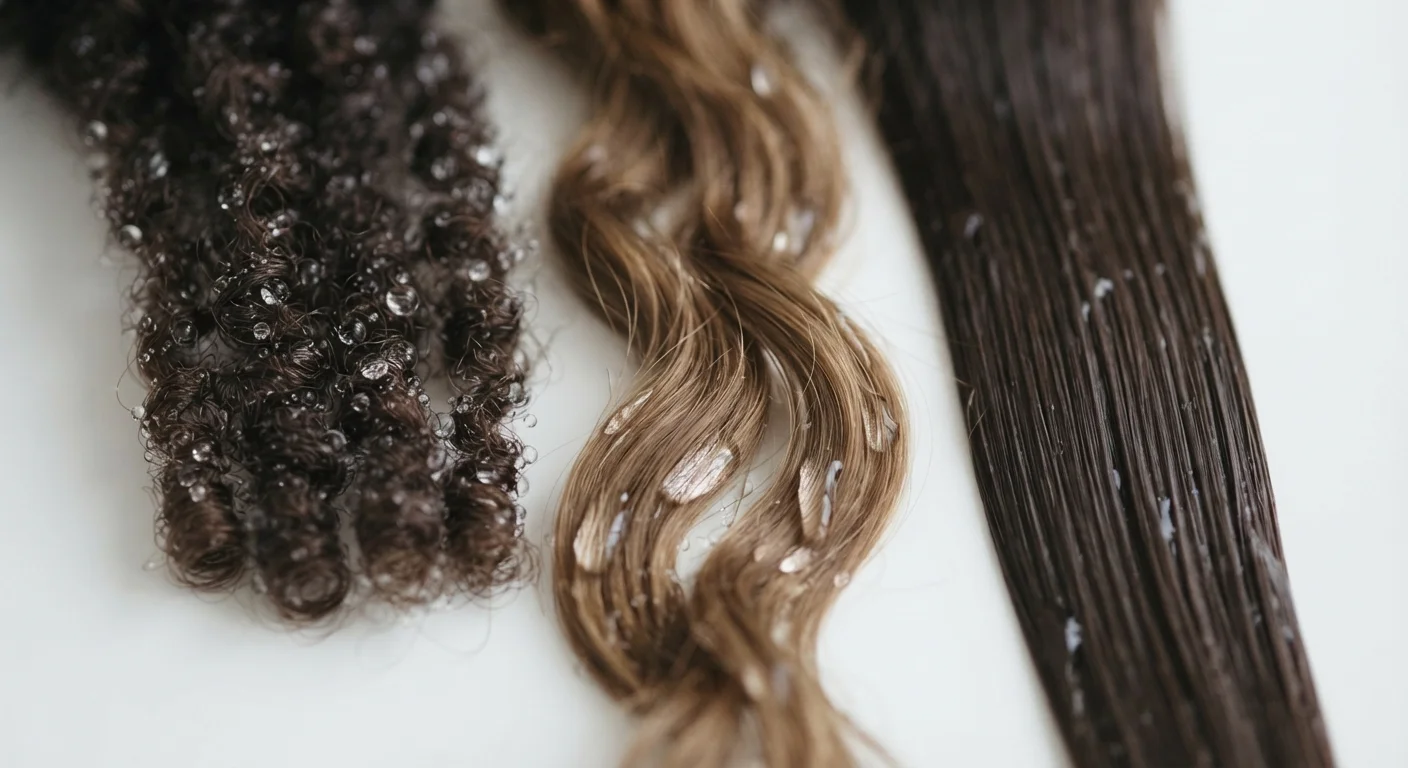
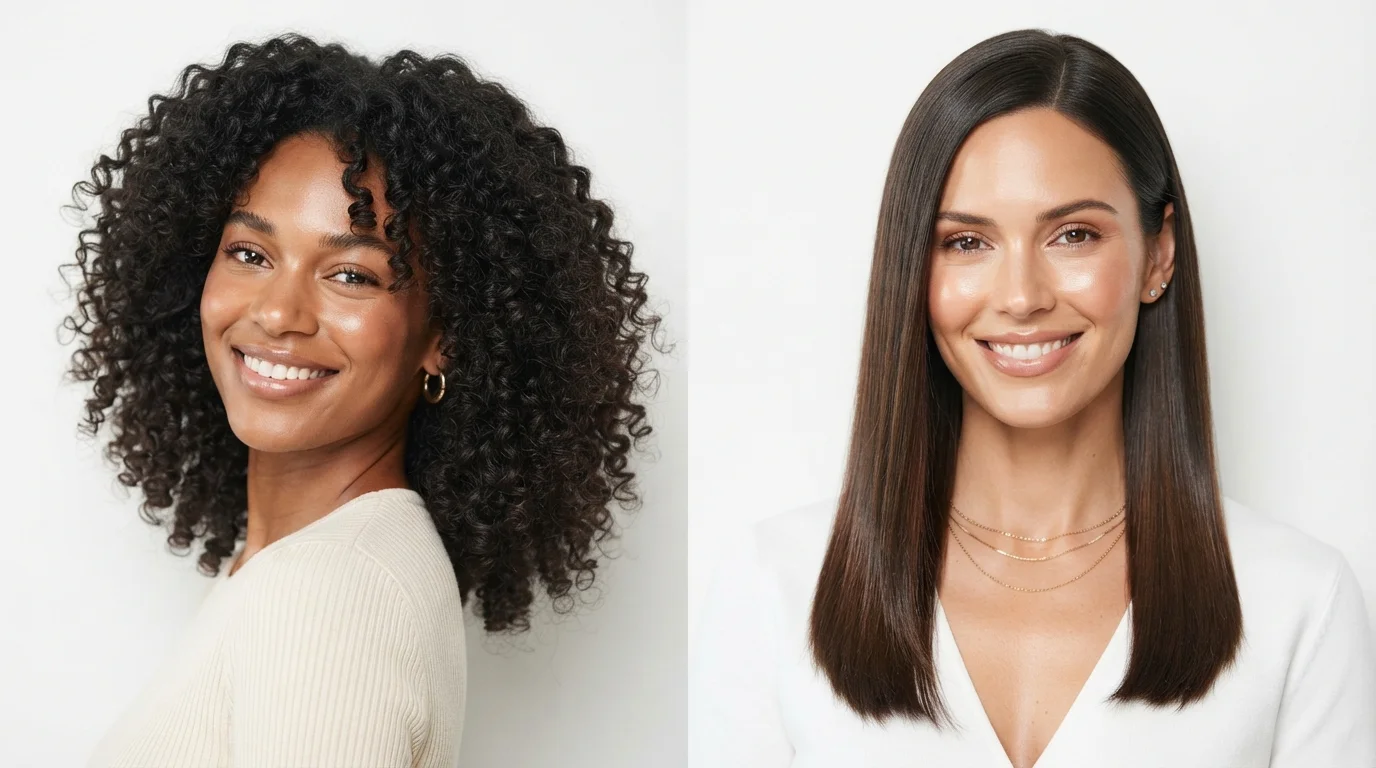
The shape of your hair follicle determines your hair's texture - and that shape affects far more than just how it looks. Curly hair grows from an asymmetrical, oval-shaped follicle, causing strands to coil or spiral as they emerge. Straight hair grows from a round follicle, allowing strands to lay flat.
This structural difference has real consequences for moisture, oil distribution, and product performance. The scalp's natural oil (sebum) travels down straight strands easily, coating each hair and providing built-in conditioning. On curly hair, those same oils struggle to travel down the bends and curves of the strand, leaving the mid-lengths and ends chronically dry.
That's why the two hair types need fundamentally different routines - not just different products. Understanding hair porosity alongside your texture gives you an even clearer picture of how your hair absorbs and retains moisture.
Moisture and Cleansing: Opposite Needs
Moisture is the central tension between curly and straight hair routines.
Curly Hair
Curly routines prioritize deep hydration at every step. Co-washing (using conditioner in place of shampoo) or sulfate-free cleansers are commonly used to avoid stripping the little natural oil that does reach the strand. Deep conditioning treatments - applied weekly or bi-weekly - are considered a core step, not an occasional bonus. Layering a leave-in conditioner, a cream, and a gel or mousse (often called the "LOC" or "LCO" method) helps seal moisture into porous, textured strands.
Straight Hair
Straight hair tends to accumulate sebum at the roots faster, which can make it appear greasy or limp. Clarifying shampoos used periodically help reset buildup. Lightweight conditioners applied mid-length to ends - not at the roots - keep strands smooth without adding heaviness. Rich creams and oils that work beautifully for curly hair can overwhelm fine or straight strands, dragging them down rather than nourishing them.
| Curly Hair | Straight Hair | |
|---|---|---|
| Natural oil distribution | Poor - oils don't travel easily down coils | Efficient - sebum coats strands quickly |
| Moisture needs | High - deep conditioning essential | Moderate - lightweight hydration preferred |
| Cleansing approach | Sulfate-free or co-wash recommended | Regular to clarifying shampoo as needed |
| Drying method | Microfiber towel, diffuse, or air-dry | Blow-dry downward for smoothness |
| Product layering | Multiple layers (leave-in, cream, gel) | Minimal layers; avoid heavy products |
| Heat styling frequency | Low recommended; damage risk higher | Moderate tolerated with protection |
| Frizz management | Central concern; use anti-humidity sealers | Less of a concern; focus on smoothing |
Drying Techniques: The Step That Makes or Breaks Results
How you dry your hair after washing may be as important as what you put on it.
For curly hair, rubbing with a standard terry cloth towel is a common culprit for frizz - the rough texture disrupts the curl pattern and causes friction. Microfiber towels or old cotton T-shirts are gentler alternatives that scrunch out excess water without disturbing the curl's shape. Diffusing on a low-heat setting or air-drying (sometimes called "plopping" when using a towel to encourage curls) helps curls form and hold.
For straight hair, rough towel-drying is less damaging to the pattern but still causes breakage and roughness along the cuticle. Blow-drying on medium heat while directing airflow downward along the shaft smooths the cuticle and adds shine. Letting straight hair air-dry completely can sometimes cause it to dry unevenly or with unwanted wave.
Try the 'Plop' Method for Curls
After washing, flip your hair forward onto a microfiber towel laid flat, then wrap it around your head like a turban for 15-20 minutes. This technique, called 'plopping,' helps curl clumps form naturally while absorbing excess water gently. Many people with wavy to coily hair find it reduces drying time and boosts definition without frizz.
Heat Styling: Frequency and Risk Differ by Texture
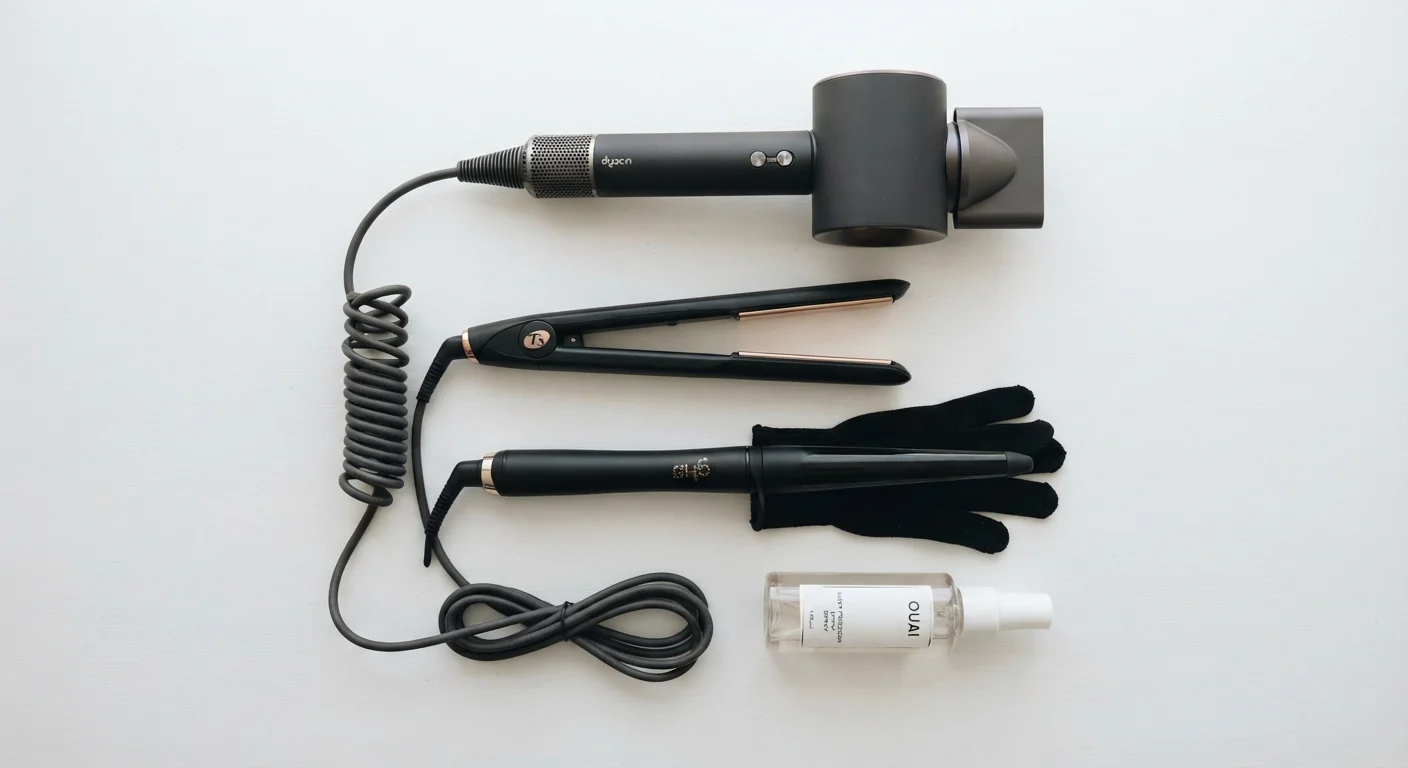
Heat tools carry real risks for both hair types, but the stakes differ. Curly hair is generally more fragile at its bends and curves - those points experience more structural stress, making them susceptible to heat damage. When curly hair is heat-straightened repeatedly without protection, it can lose its curl pattern over time, a phenomenon sometimes called "heat damage."
Straight hair can also be damaged by excessive heat, but it tends to tolerate moderate tool use more readily. That said, heat styling and hair health is a more nuanced topic than most people realize - protective products and temperature settings matter regardless of texture.
A general principle: the lower the heat required to achieve your style, the better for long-term hair health. Always use a heat protectant, and let your hair fully dry before applying direct heat from flat irons or curling wands.
Don't Skip Heat Protectant - Ever
Applying a heat protectant is non-negotiable before using any hot tool, regardless of hair type. Heat damage is cumulative - it may not be visible after one session, but repeated exposure without protection can lead to breakage, split ends, and weakened strands over time. For curly hair specifically, high heat without protection can permanently alter the curl pattern.
Building a Routine That Works for You
The goal isn't to follow a rigid script - it's to understand what your hair actually needs. Curly routines tend to be more product-layered and moisture-focused, while straight routines emphasize oil control and lightweight hold. Both benefit from consistency and from paying attention to how your hair responds seasonally - humidity, cold air, and indoor heating all shift what your hair needs. See how seasonal environmental shifts affect related care routines for a useful parallel.
If you're working to understand your own hair better, start with the basics: How dry or oily does it feel between washes? Does it frizz, go limp, or lose shape quickly? Those answers will guide your product choices far more reliably than any trend-driven routine.
~65%
People with naturally wavy or curly texture
Research on global hair morphology suggests the majority of people worldwide have some degree of curl or wave in their natural hair texture.
3-4x
More moisture lost from curly vs. straight hair
The structural bends in curly strands create more surface exposure and impede sebum distribution, contributing to significantly higher moisture loss.