Why Skin Tone and Undertone Both Matter
When it comes to lip color, two things shape how a shade reads on you: your skin tone (how light or deep your complexion is) and your undertone (the warm, cool, or neutral hue beneath the surface). A caramel-brown lipstick can look luminous on a medium-warm complexion and wash out a cool-toned person of the same depth. Getting both factors right is the real key to a lip color that looks intentional, not accidental.
| Undertone categories | Warm, Cool, Neutral |
| Skin tone spectrum | Fair → Light → Medium → Tan → Deep |
| Most universally flattering lip family | True reds (adjust undertone warm or cool) |
| Undertone stability | Does not change with sun exposure or seasons |
| Best nude-matching method | Swatch against inner wrist in natural light |
| Finish effect on depth | Matte reads deeper; gloss reads lighter |
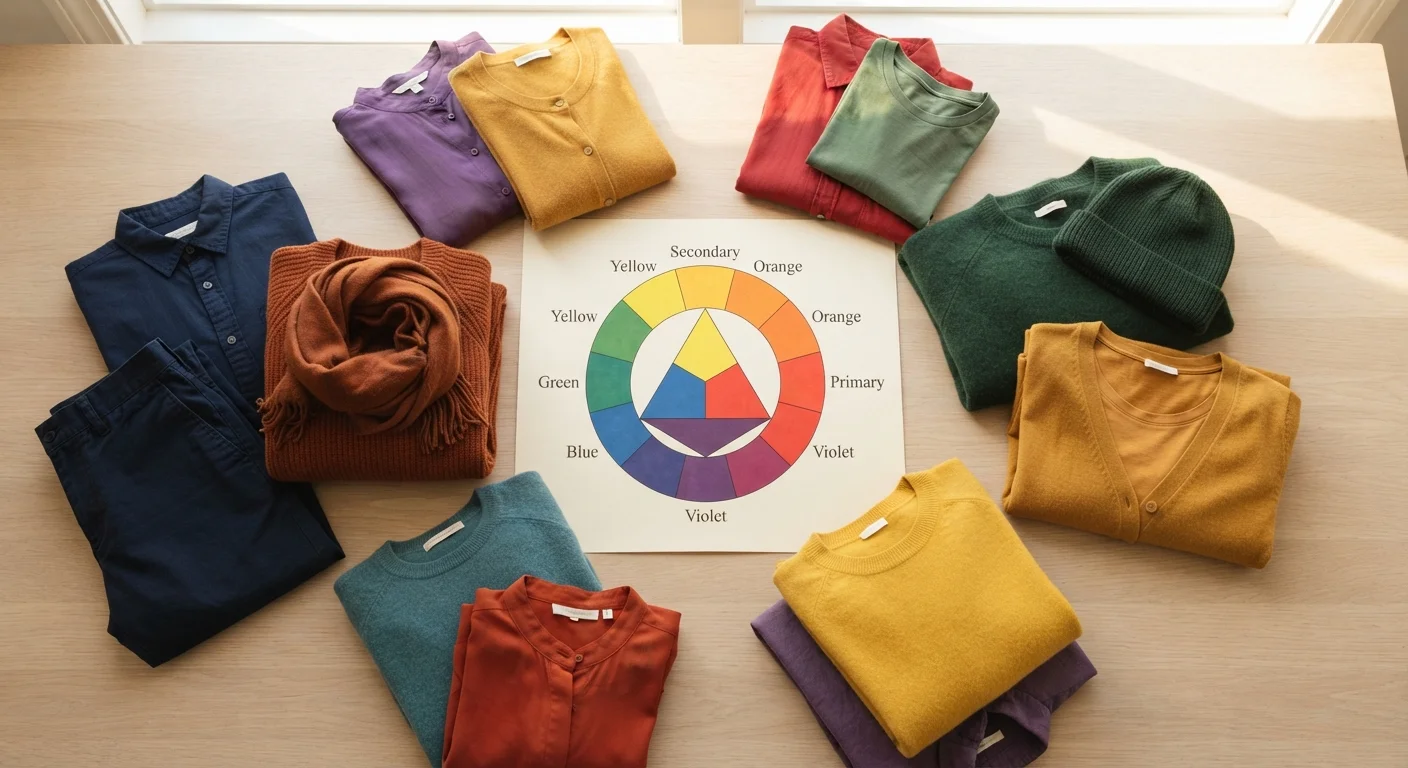
Undertone doesn't change with a tan or season - it stays consistent. Skin tone, on the other hand, exists on a spectrum from fair to deep, and the two dimensions work together. If you've ever wondered why the same nude lipstick looks muddy on you but gorgeous on a friend, undertone is almost always the explanation. Our guide to color theory for everyday style explores how undertones shape all color choices, not just makeup.
Shade Guidelines by Complexion
These aren't rules - they're starting points. Think of them as a framework you can adjust based on your own undertone and personal style.
Skin Tone
The overall lightness or darkness of your complexion, ranging from fair to deep. It's determined primarily by the amount of melanin in the skin.
Undertone
The subtle hue beneath the surface of your skin - warm (yellow, peachy, golden), cool (pink, red, bluish), or neutral (a mix of both). Undertone stays consistent regardless of tan or season.
Nude Lip
A lip color close to or slightly deeper than your natural lip tone. True nude varies widely by individual and is not a single universal shade.
Pigment Load
The concentration of color pigment in a lip product. Higher pigment load means more opacity and a deeper, more saturated result on the lips.
Satin Finish
A lip formula finish that falls between matte and glossy - it reflects some light without being shiny, giving a smooth, slightly luminous look.
Blue-Red
A red lipstick with cool, blue-leaning undertones. It tends to brighten teeth and complements cool and neutral skin undertones particularly well.
Fair Skin Tones
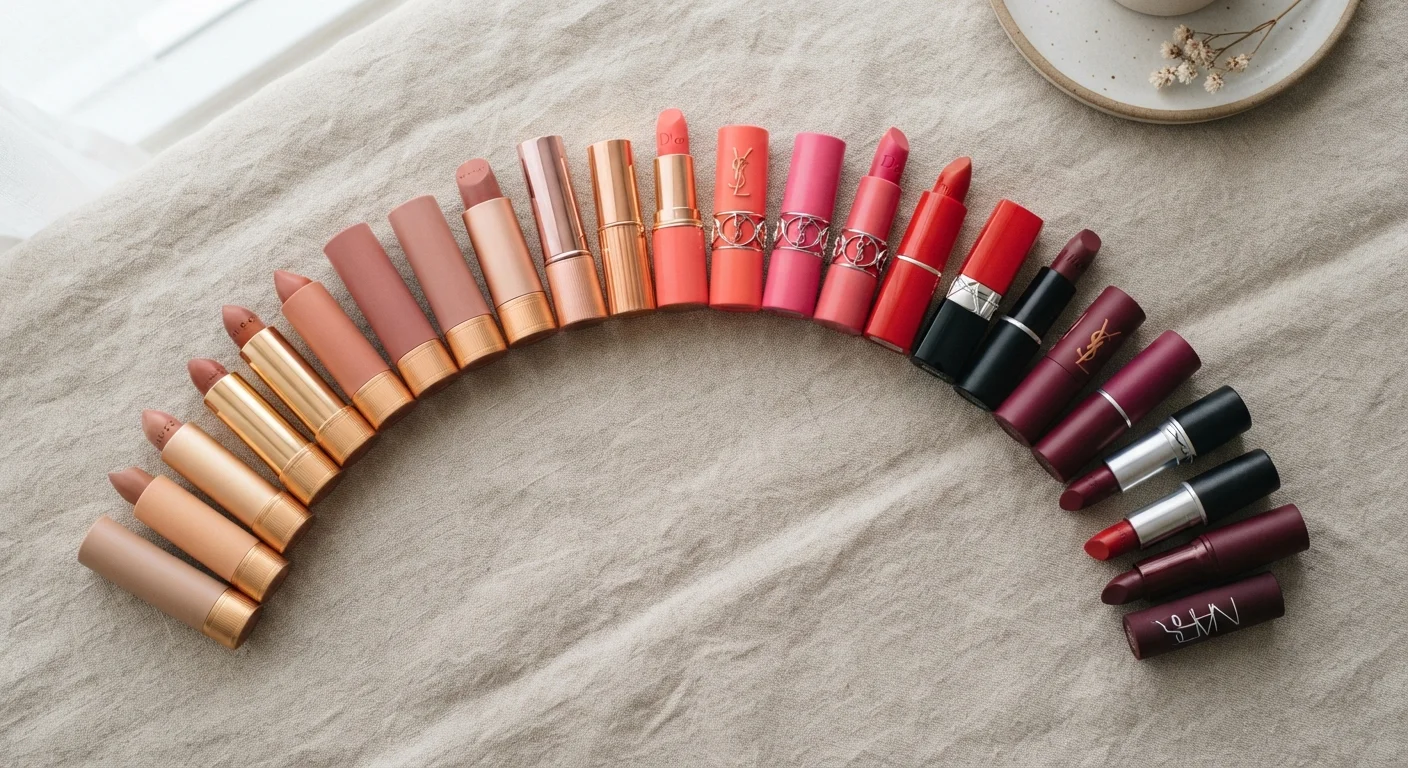
Fair complexions (especially those with cool or neutral undertones) can be easily overpowered by very dark shades early in your lipstick journey. Soft pinks, peachy nudes, and sheer berries tend to complement without overwhelming. If you love bold color, a true red with blue-leaning undertones (a "blue-red") tends to be particularly striking against pale skin.
Light-to-Medium Skin Tones
This range offers the widest flexibility. Warm mauve, dusty rose, and medium corals flatter light-medium warm complexions. Cooler complexions in this range often find muted berries and rosy nudes especially harmonious. Classic reds work beautifully here across most undertones.
Medium-to-Tan Skin Tones
Terracotta, brick red, warm browns, and spiced peach shades tend to sing on medium-to-tan skin. Peachy nudes can edge toward ashy if your undertone is cool - look for nudes with a pink or berry base instead. Rich corals and cranberries add vibrancy without clashing.
Deep Skin Tones
Deep complexions can carry almost any shade beautifully, including rich plums, deep wines, vibrant oranges, and bold fuchsias. "Nude" for deeper skin often means chocolate, caramel, or mahogany - the traditional beige-pink nudes formulated decades ago weren't designed with this range in mind, but the beauty industry has expanded significantly. Shimmery or glossy finishes add dimension without pulling the shade lighter than intended.
The Nude Lipstick Problem (and How to Solve It)
"Nude" is one of the most misunderstood words in beauty. True nude means a lip color close to your own natural lip tone - which is wildly different from person to person. A shade marketed as "nude" that photographs beautifully on a fair model may look chalky or ghostly on deeper complexions, or washed-out on cool undertones.
The fix: instead of buying a named "nude," hold shades up to the inside of your wrist where skin is thinner and more representative of your lip tone. You're looking for a color one to two shades deeper than your lips - enough to define without looking overdone. Finish with a gloss over the center of the lip to add dimension regardless of the base shade.
"Nude" Isn't One Shade for Everyone
The nude lipstick category was historically formulated with a narrow range of complexions in mind. Today, shades explicitly labeled for medium, tan, and deep skin tones are far more widely available. When in doubt, look for descriptors like "warm nude," "caramel nude," or "cool nude" rather than relying on a single product name. Your natural lip color is the truest guide.
Understanding how your complexion interacts with color is also useful beyond lips. See how it applies to choosing between tinted moisturizer and foundation for your base makeup routine.
Tips for Trying New Shades With Confidence
Experimenting with lip color doesn't require a full face of makeup or a trip to a beauty counter. A few practical approaches make the process easier:
- Swatch in natural light. Store and phone lighting distorts how pigment reads against your skin. Step outside or near a window before deciding.
- Layer sheers for adjustability. Sheer formulas let you build intensity gradually, which is useful when testing unfamiliar shades.
- Balance bold lips simply. A bold lip doesn't need competing eye makeup - keeping the rest of your face minimal lets the color lead.
- Adjust for finish. Matte formulas appear deeper and more opaque; glossy or satin finishes reflect light and read slightly lighter. The same pigment can look quite different in each finish.
Your overall makeup approach - including how you even out skin tone - affects how a lip color lands. Our article on contouring and highlighting your features explains how facial balance plays into the overall look.
3
Primary undertone categories that guide shade selection
Warm, cool, and neutral undertones are the foundational framework used across professional makeup application and color matching.
2×
How much finish (matte vs. gloss) can visually shift perceived shade depth
Beauty educators note that the same pigment in matte vs. glossy formulas can read noticeably different in photographs and in person.