The Four Skin Types - In Plain Language
The concept of skin type boils down to one central question: how does your skin naturally manage oil and moisture on its own? Here's a straightforward breakdown of each type:
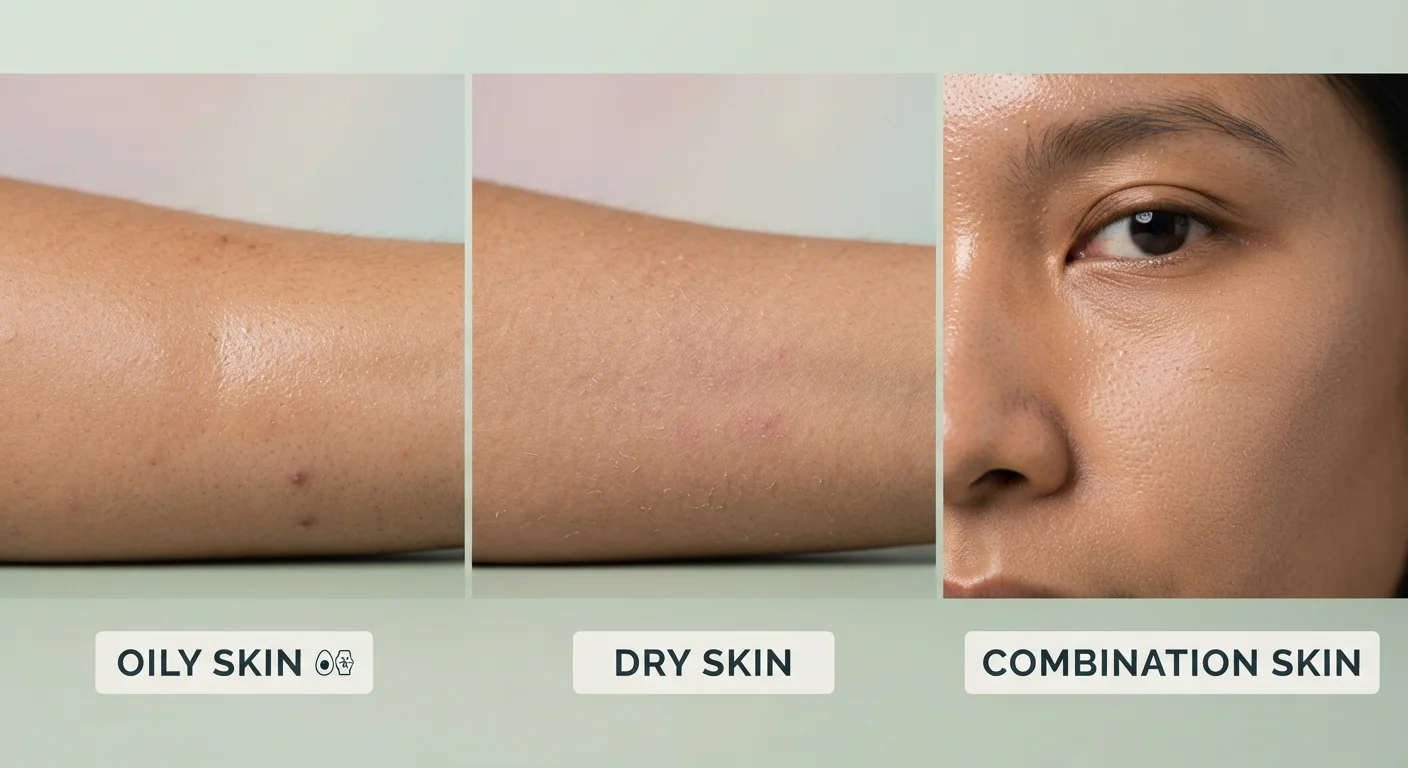
- Oily skin produces excess sebum throughout the day, leaving skin looking shiny, especially across the forehead, nose, and chin. Pores may appear enlarged, and breakouts are more common.
- Dry skin produces less oil than average, which can cause a tight, rough, or flaky feeling - particularly after cleansing or in cold weather.
- Combination skin is exactly what it sounds like: oilier in the T-zone (forehead, nose, chin) and drier or normal on the cheeks. It's actually the most common skin type among adults.
- Sensitive skin tends to react visibly to products, temperature shifts, or environmental triggers - showing redness, stinging, or irritation more readily than other types.
It's worth noting that "normal" skin - a term you'll still see on product labels - simply means skin that's reasonably balanced, neither too oily nor too dry. It's less a distinct category and more the absence of the other types' tendencies.
Understanding where you fall helps you make smarter choices about cleansers, moisturizers, and beyond. Our guide to what each skincare step is actually doing explains how to match products to your type at every stage of a routine.
Why Your Skin Type Isn't Set in Stone
Here's something the beauty aisle rarely tells you: the skin type you identified as a teenager may not be the same one you're living with now - and that's completely normal.
~50%
Adults reporting combination skin type
Combination skin is widely considered the most prevalent skin type among adults, according to general dermatology practice data.
30s-40s
Typical age when oily skin noticeably decreases
Dermatologists commonly note that sebum production begins a measurable decline in the thirties and forties, often shifting previously oily skin toward drier behavior.
~60%
People who self-identify as having sensitive skin
Studies in dermatology literature suggest a significant portion of adults self-report skin sensitivity, though clinically confirmed cases are lower, highlighting a common mismatch between perceived and diagnosed skin type.
Several factors can shift how your skin behaves over time:
- Age
- Sebum production tends to decrease as we get older, especially after age 30. People who struggled with oily or acne-prone skin in their youth often find their skin becomes noticeably drier by midlife.
- Hormones
- Fluctuations tied to the menstrual cycle, pregnancy, postpartum changes, and menopause can swing skin behavior dramatically - often temporarily, sometimes for longer periods.
- Climate and season
- Humidity, temperature, and wind all affect the skin barrier. Cold, dry winters pull moisture out of the skin; hot, humid summers can ramp up oil production. If your routine isn't changing with the seasons, it may not be working as well as it could. Our seasonal skincare audit walks you through when and how to reassess.
- Your current skincare habits
- Over-cleansing can strip the skin's natural oil barrier, prompting it to overproduce sebum in response. This paradox is more common than you'd think - and it's a good example of why product choice matters as much as skin type.
Lifestyle factors - sleep quality, diet, stress levels, and even the mineral content of your tap water - also play a quiet but real role. For a deeper look, see our piece on factors that affect your skin beyond topical products.
Reassess Your Skin Type Each Season
A quick monthly check-in takes less than a minute: cleanse, wait an hour, and observe. If your skin behaves noticeably differently than it did three months ago, your routine may need a small adjustment - not a complete overhaul. Swapping one product at a time makes it easier to identify what's working.
A Common Mistake: Confusing Skin Type With Skin Condition
One of the most frequent mix-ups in skincare is treating a temporary skin condition as though it were a permanent skin type. The most telling example: dehydration.
Dehydrated skin lacks water - not oil - and it can happen to literally any skin type, including oily. Signs include a dull appearance, fine lines that seem to appear suddenly, and skin that feels tight even right after applying moisturizer. But because dehydration can make oily skin feel temporarily dry, people sometimes incorrectly switch to heavier, richer products that their skin doesn't actually need long-term.
Dehydration Can Mimic Dryness
If your skin suddenly feels tight or looks dull, it may simply be dehydrated - a temporary lack of water in the skin - rather than a change in your skin type. Adding a hydrating serum or adjusting your water intake may resolve the issue quickly. Persistent dryness or irritation that doesn't respond to routine adjustments is worth discussing with a dermatologist.
Similarly, a sudden breakout doesn't automatically mean you have oily or acne-prone skin - it might be triggered by stress, a new product, or hormonal fluctuation. Reactive or red skin after travel might reflect environmental stress on the skin barrier, not an underlying sensitive skin type.
The practical takeaway: if your skin seems to have changed dramatically in a short period, consider external causes before overhauling your entire routine. Give changes a few weeks to settle, and when in doubt, consult a dermatologist for a professional assessment.
Skin type is also a distinctly different concept from skin undertone, which affects how colors look against your complexion and matters most in makeup. If you're curious about that distinction, our guide to skin undertones covers it clearly.
This article is for general informational and educational purposes only and is not a substitute for professional skincare or medical advice. If you have concerns about your skin health, consult a qualified dermatologist.