Cost: More Than Just the Price Tag
At face value, thrift stores win on sticker price. A jacket that retailed for $80 might sit on a secondhand rack for $12. But cost isn't purely what you pay at the register. Factor in the time you invest searching - thrifting rewards patience, and not every trip yields results. For shoppers with limited free time, that hidden time cost is real.
Fast fashion, meanwhile, competes on low prices too. Trend-driven retailers frequently run sales that make individual items feel nearly disposable in terms of cost. The catch: those low prices often reflect lower construction quality, meaning you may replace items more frequently - quietly spending more over time. This echoes the same logic behind the new vs. used cost debate: upfront price and total cost of ownership aren't always the same number.
Also worth noting: thrift pricing has shifted. As secondhand shopping has grown in popularity, some stores and resale platforms have raised prices on desirable items significantly. Bargains still exist, but they're less automatic than they once were.
| Criterion | Thrift Store | Fast Fashion |
|---|---|---|
| Typical per-item cost | Low to moderate (variable) | Low to moderate (consistent) |
| Sizing consistency | Unpredictable across eras | Generally consistent by retailer |
| Construction quality | Varies widely; often durable | Often lighter; built for short-term wear |
| Environmental footprint | Lower (extends garment life) | Higher (new production, waste) |
| Trend alignment | Hit or miss; requires patience | Designed for current trends |
| Shopping convenience | Time-intensive; inventory varies | Fast, online or in-store |
| Extended size availability | Inconsistent; location-dependent | Inconsistent; improving slowly |
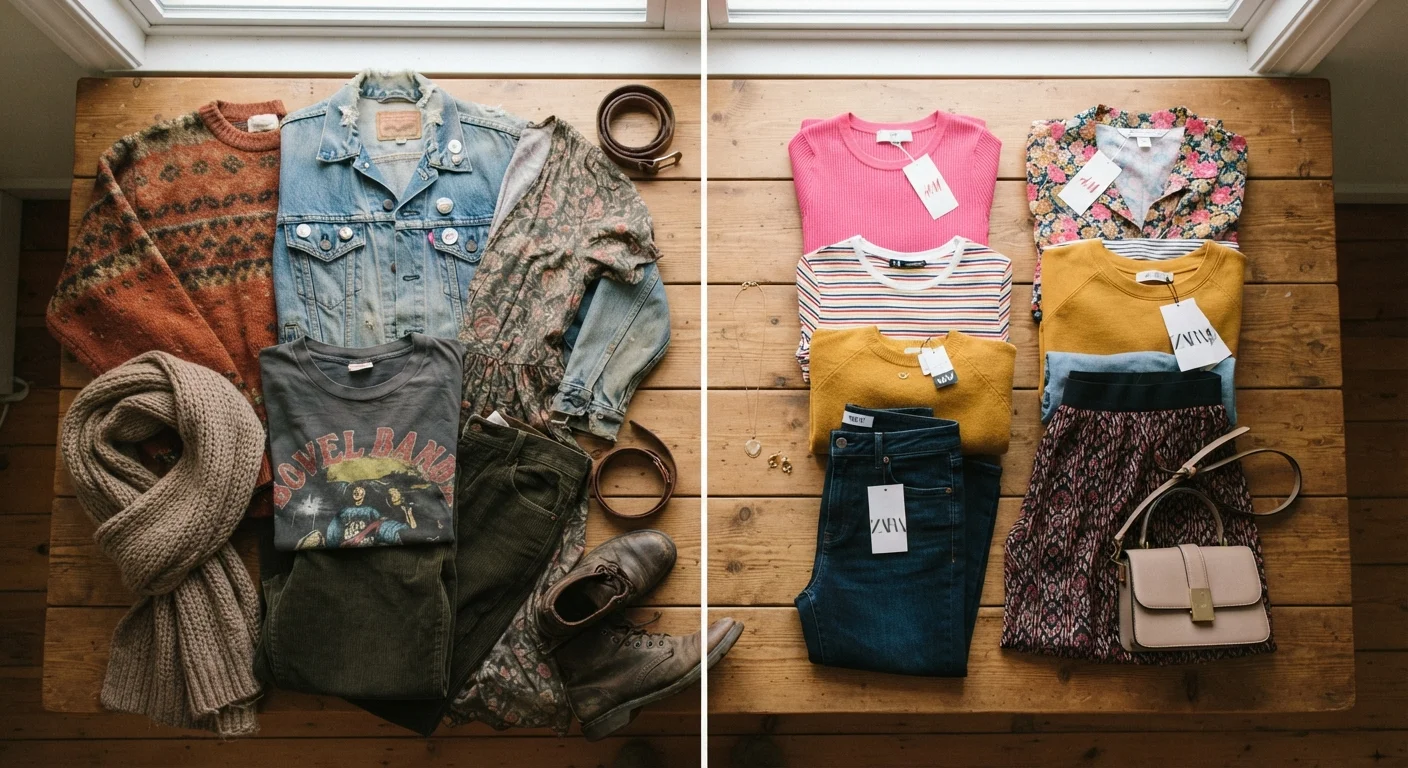
| Uniqueness of pieces | High - often one-of-a-kind | Low - mass-produced styles |
Quality, Fit, and the Real-World Try-On Experience
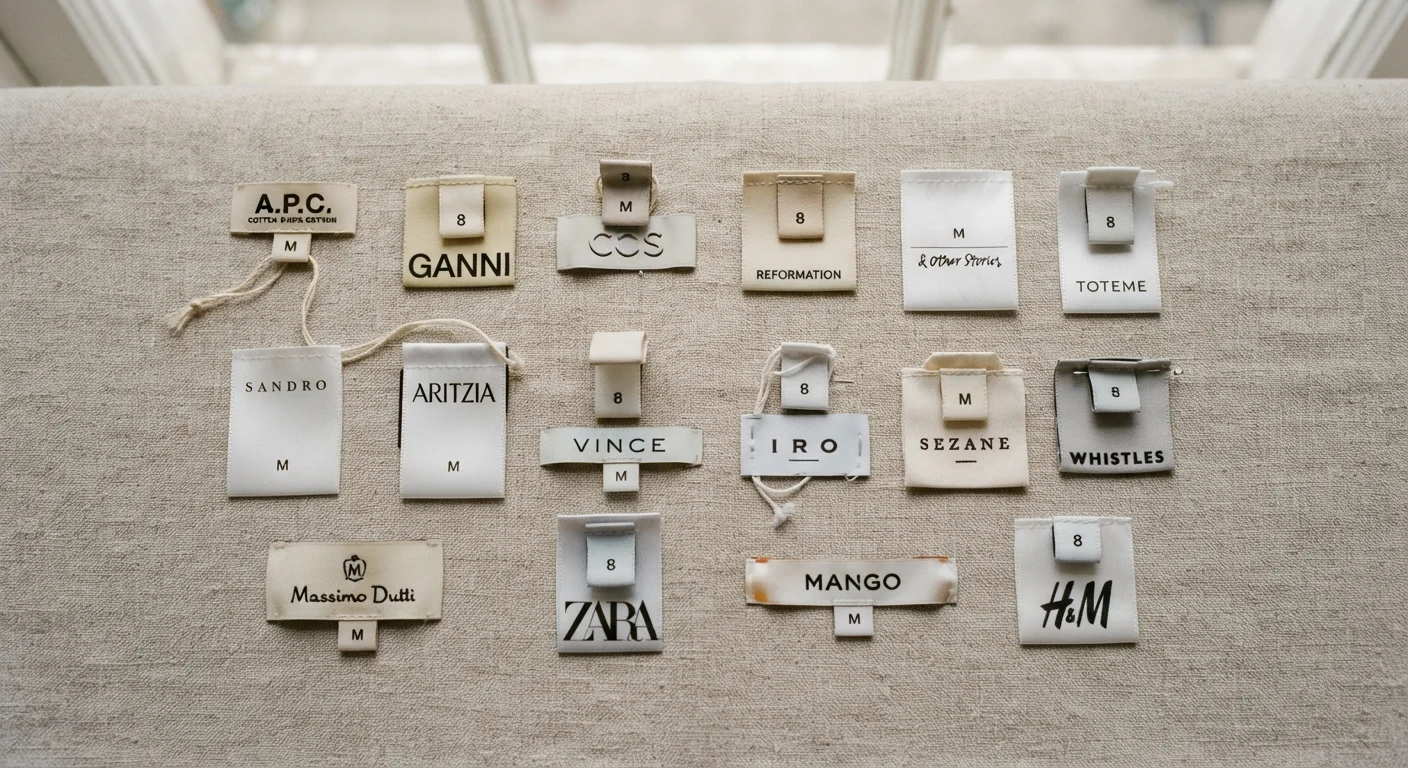
Fast fashion is engineered for trend speed, not longevity. Fabrics tend to be thinner, stitching lighter, and construction optimized for a few seasons of use rather than years. That said, sizing is predictable - you can generally trust that a medium in one collection will fit similarly to a medium in another from the same retailer. For shoppers who struggle with fit variation, that consistency has genuine value. If you've ever been puzzled by inconsistent sizing, our explainer on why clothes fit differently across brands breaks down what's actually going on.
Thrift stores flip this dynamic. Older garments - especially those made before the early 2000s - were often constructed with heavier fabrics and more durable seams. Finding a well-made wool coat or a broken-in pair of jeans at a thrift store is genuinely possible. The trade-off is unpredictability: sizing conventions have shifted dramatically across decades, and secondhand items may have wear, shrinkage, or alterations that affect fit. Trying things on (when possible) is essential.
~92M tons
Textile waste generated globally per year
The UN Environment Programme estimates the fashion industry generates approximately 92 million tons of textile waste annually.
2,700 liters
Water to produce one cotton T-shirt
The World Wildlife Fund estimates it takes roughly 2,700 liters of water - equivalent to what one person drinks in 2.5 years - to produce a single cotton T-shirt.
~$21B
U.S. secondhand apparel market value (2023 estimate)
ThredUp's annual resale report has tracked significant growth in the U.S. secondhand market, reflecting shifting consumer interest in pre-owned clothing.
Environmental Impact: A Clearer Picture
The environmental calculus here tilts fairly clearly toward secondhand. Fast fashion is resource-intensive: producing a single cotton T-shirt requires significant water, and synthetic fabrics like polyester shed microplastics with every wash. The volume of garments produced globally each year - and the volume discarded - contributes meaningfully to textile waste.
Thrift shopping extends the usable life of existing garments, reducing the demand for new production. That said, not all secondhand shopping is zero-impact. Donated clothing that can't be sold often ends up shipped overseas or in landfills. And some thrift shoppers buy in high volume, which partially offsets the sustainability gains.
A Note on 'Sustainable' Shopping Claims
Marketing terms like 'eco-friendly,' 'conscious collection,' or 'recycled fabric' vary widely in what they actually mean - and are not regulated uniformly. When evaluating environmental claims from any retailer, looking for third-party certifications or specific material disclosures gives a more reliable picture than brand messaging alone. Secondhand shopping sidesteps most of these claims entirely, since no new production is involved.
The most environmentally conscious approach, researchers generally suggest, is buying less overall - whether new or secondhand. Before adding anything to your wardrobe, it's worth shopping your own closet first to see what you already own.
Accessibility, Inclusivity, and Finding Your Size
For shoppers with extended size needs, both channels have real limitations. Fast fashion has historically underserved plus-size shoppers - fewer options, different price points, or simply less variety. Some retailers have improved extended sizing, but gaps remain common.
Thrift stores carry whatever was donated, which means size availability is entirely unpredictable. Extended sizes can be harder to find consistently, though larger stores and dedicated plus-size thrift sections do exist. Online resale platforms have expanded access by allowing size-filtered searches across a much larger inventory than any single physical store.
Neither option is universally inclusive today, though the secondhand market's digital expansion has meaningfully broadened what's searchable. Thinking about how your wardrobe shifts seasonally? Our guide on seasonal wardrobe transitions can help you plan what to keep, donate, or refresh - whether you're thrifting or shopping new.