The Size Label Is a Brand's Opinion, Not a Universal Truth
If you've ever grabbed what should be 'your size' off a rack and found it running two sizes too small - or weirdly roomy - you haven't changed. The standard has. Or rather, there isn't one.
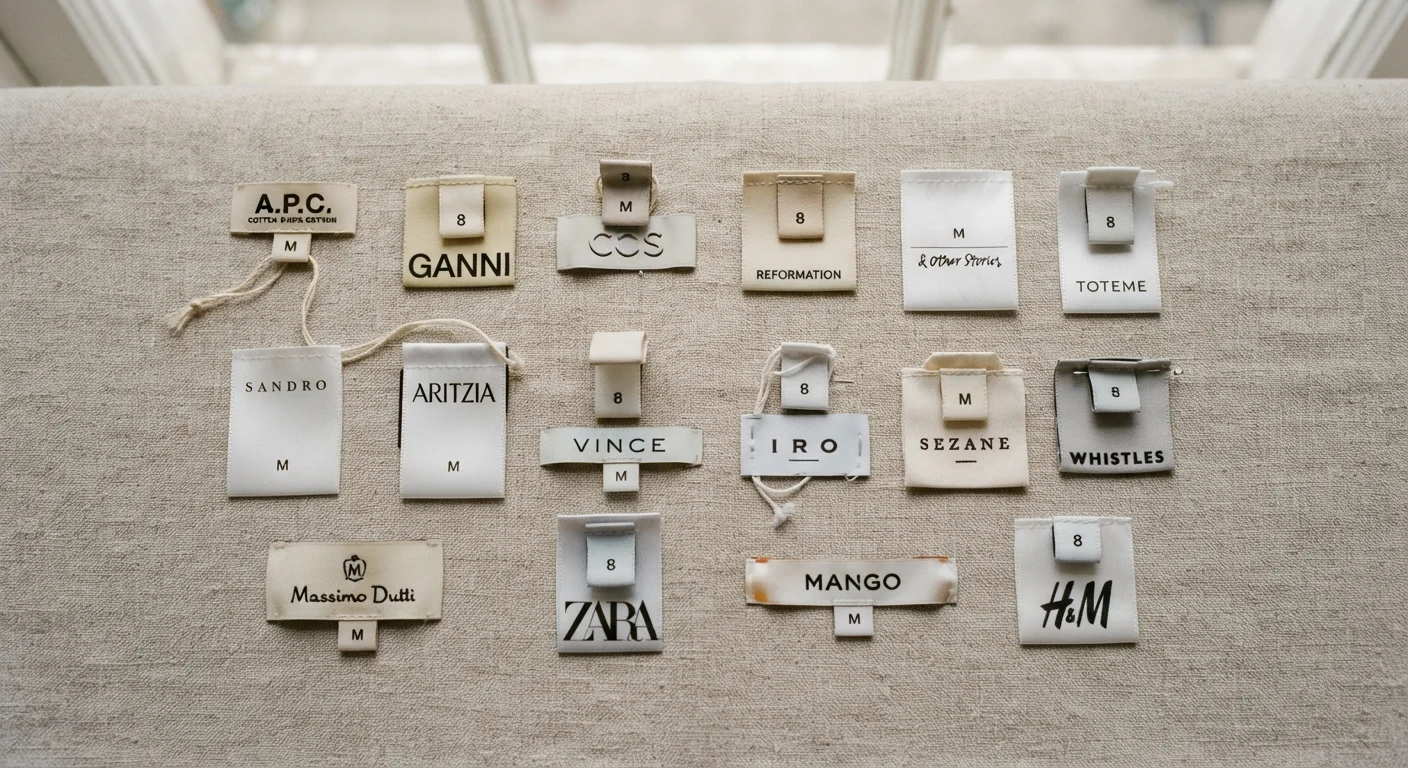
The U.S. has no mandatory, enforceable clothing size standard. When the government's voluntary guidelines were withdrawn in the early 1980s, brands became fully responsible for their own sizing charts. Some aimed their fit at a specific customer body type. Others adjusted labels over time to align with vanity sizing - a gradual inflation of size numbers designed to make shoppers feel they're fitting into a smaller label than they historically would have.
The practical outcome: a size 10 dress at a contemporary fashion retailer might share almost no measurements with a size 10 at a workwear brand or a vintage shop. Both labels are 'correct' within their own system - they just don't speak the same language.
“The clothing size label tells you where to start looking on the rack - it tells you nothing about your body.”
— Attitude toward Sizing in Fashion Education, Widely cited perspective in apparel design and consumer education
What Grading and Fit Models Actually Mean
Every brand starts with a 'sample size' - a base size used to create the original pattern. From there, patterns are scaled up and down through a process called grading. The grading rules a brand uses determine how much fabric is added or removed at each step, and those rules vary widely.
Brands also build garments around a specific fit model - a reference body shape used during design. If a brand's fit model has narrow shoulders and a longer torso, those proportions get baked into every garment in their line. Shoppers whose bodies differ from that template will consistently find the fit off in predictable ways.
On top of grading differences, brands build different amounts of ease into their patterns - that's the intentional extra room beyond your body measurements that allows for movement and silhouette shape. A relaxed-cut blouse might have four inches of ease at the bust. A fitted blazer might have one. This is why the same person can wear the same labeled size in both and feel very differently dressed.
1983
Year U.S. voluntary clothing size standards were withdrawn
The U.S. Commerce Department withdrew its voluntary standard (CS 215-58) in 1983, leaving clothing brands to self-regulate sizing from that point forward.
~2 sizes
Estimated label inflation since the mid-20th century
Fashion historians and researchers have noted that what was once labeled a size 14 in mid-century American clothing patterns now corresponds roughly to a contemporary size 8-10, reflecting decades of gradual vanity sizing shifts.
30%+
Of online clothing purchases returned due to fit issues
Industry research has consistently found that fit is the leading driver of online clothing returns, with many retailers reporting return rates exceeding 30% for apparel categories.
Practical Strategies That Actually Help
The good news: once you understand what's driving the variation, it's much easier to shop around it.
Measure yourself - and use those numbers
Your bust, waist, and hip measurements in inches are the most portable information you can bring to any shopping situation. These numbers stay constant no matter what label a brand assigns. Compare your measurements against a brand's actual size chart - not just the label - before you buy.
Read the fit notes and reviews
Most online retailers include fit descriptors ('runs small,' 'slim fit,' 'true to size') and customer reviews that note how sizing tracks in practice. These are worth a few minutes of reading, especially for a new-to-you brand. For more on avoiding common online shopping missteps, see this practical fit guide.
Check the return policy first
When shopping a brand for the first time, confirm their return window before ordering. Ordering two adjacent sizes to try at home is a reasonable strategy - as long as you know you can send one back without penalty. Our overview of smart shopping strategies covers how to evaluate policies before committing.
Recalibrate your expectations about the number
The size label is a tool for finding a starting point on the rack - not a measure of anything about your body. Dressing well has nothing to do with which number you pull. If that framing is something you'd like to explore further, our piece on what 'flattering' really means is worth a read.
Your Measurements Are Your Real Size
Take five minutes to measure your bust, natural waist, and hips with a soft measuring tape and keep those numbers in your phone's notes app. Every time you shop a new brand - online or in-store - pull up their size chart and compare your measurements directly. This single habit eliminates most sizing surprises before they happen.
When Nothing Fits Quite Right Off the Rack
Even with perfect preparation, some garments simply won't fit every body without some adjustment - and that's a structural reality of mass-market fashion, not a personal failing. A few targeted alterations can make an almost-right piece genuinely work. Hemming trousers, taking in a waist seam, or adjusting shoulder width are all relatively accessible changes.
Before adding new pieces to your wardrobe, it's also worth revisiting what you already own. Shopping your own closet first can surface pieces you'd forgotten and reveal fit patterns that help you shop smarter going forward. And if you're weighing where to buy next, the trade-offs between thrift shopping and fast fashion are worth understanding - including how secondhand sizing adds yet another layer of variation to navigate.
Sizing Varies in Secondhand Shopping Too
Vintage and thrift clothing adds an extra layer of complexity: older garments were often made under different sizing conventions than today's labels reflect. A vintage size 12 may fit more like a contemporary size 6 or 8. When shopping secondhand, rely even more heavily on your body measurements and, when possible, try garments on before purchasing.