Why Your First Actions Matter More Than You Think
A collision compresses a series of high-stakes decisions into a matter of seconds. The choices made in those first minutes - whether to move a vehicle, what to say to the other driver, whether to call police - can directly affect injury outcomes, legal liability, and insurance results. Being mentally prepared before an accident happens is one of the most practical things any driver can do.
Understanding defensive driving principles helps reduce your risk of collisions in the first place, but no amount of skill eliminates the possibility entirely. The steps below apply to the vast majority of on-road collisions - from parking lot fender-benders to multi-vehicle highway incidents.
What you will need
Before beginning, gather your tools and supplies:
Smartphone or Camera
Used to photograph vehicle damage, license plates, road conditions, skid marks, and injury documentation.
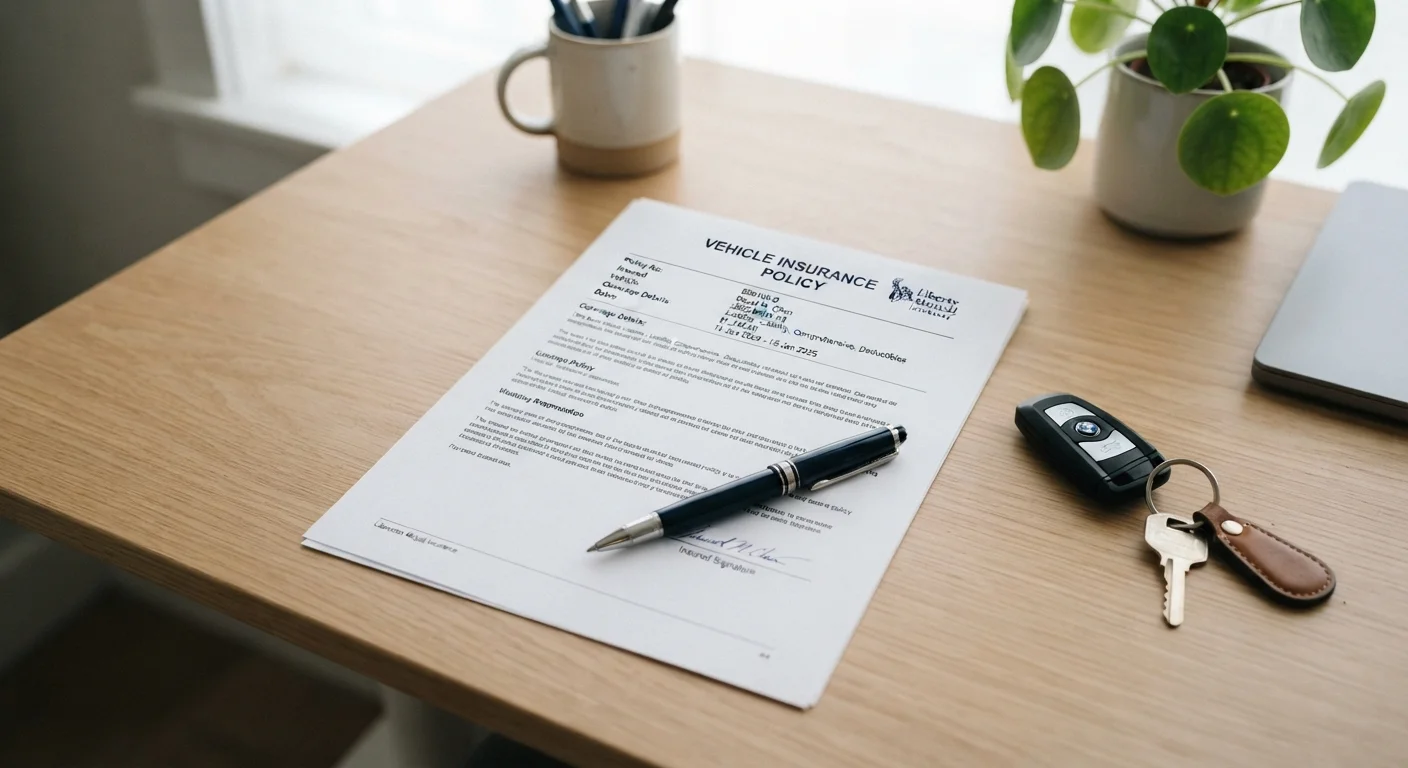
Auto Insurance Card
Required for exchanging policy information with the other driver and for filing a claim.
Pen and Paper (or Notes App)
For recording witness names, contact details, officer badge numbers, and report numbers.
Reflective Warning Triangles or Flares
Placed behind your stopped vehicle to alert oncoming traffic and reduce the risk of a secondary collision.
First Aid Kit
Allows basic wound care for minor injuries while waiting for emergency services.
Step-by-Step: What to Do at the Scene
Never Admit Fault at the Scene
Even a casual "I'm sorry" can be interpreted as an admission of liability. Fault is a legal and insurance determination that depends on evidence, witness accounts, and traffic law - not the emotional reaction of someone in shock. Stick to factual exchanges: name, license, registration, and insurance information only.
Move to Safety and Check for Injuries
If the vehicles are drivable and the crash happened in a traffic lane, move them to the shoulder or a nearby parking lot before stopping. Turn on your hazard lights immediately. Once stopped safely, check yourself and any passengers for injuries before exiting the vehicle.
If anyone is seriously injured or you suspect a spinal injury, do not move them - call 911 and wait for emergency responders.
Call 911
Contact emergency services regardless of how minor the damage appears. Many states legally require you to report accidents involving injury, death, or property damage above a certain threshold - and thresholds are lower than most drivers expect. A police report also creates an official record that is invaluable for insurance claims and any legal proceedings.
When speaking with the dispatcher, give your location as precisely as possible, state whether there are injuries, and follow any instructions given.
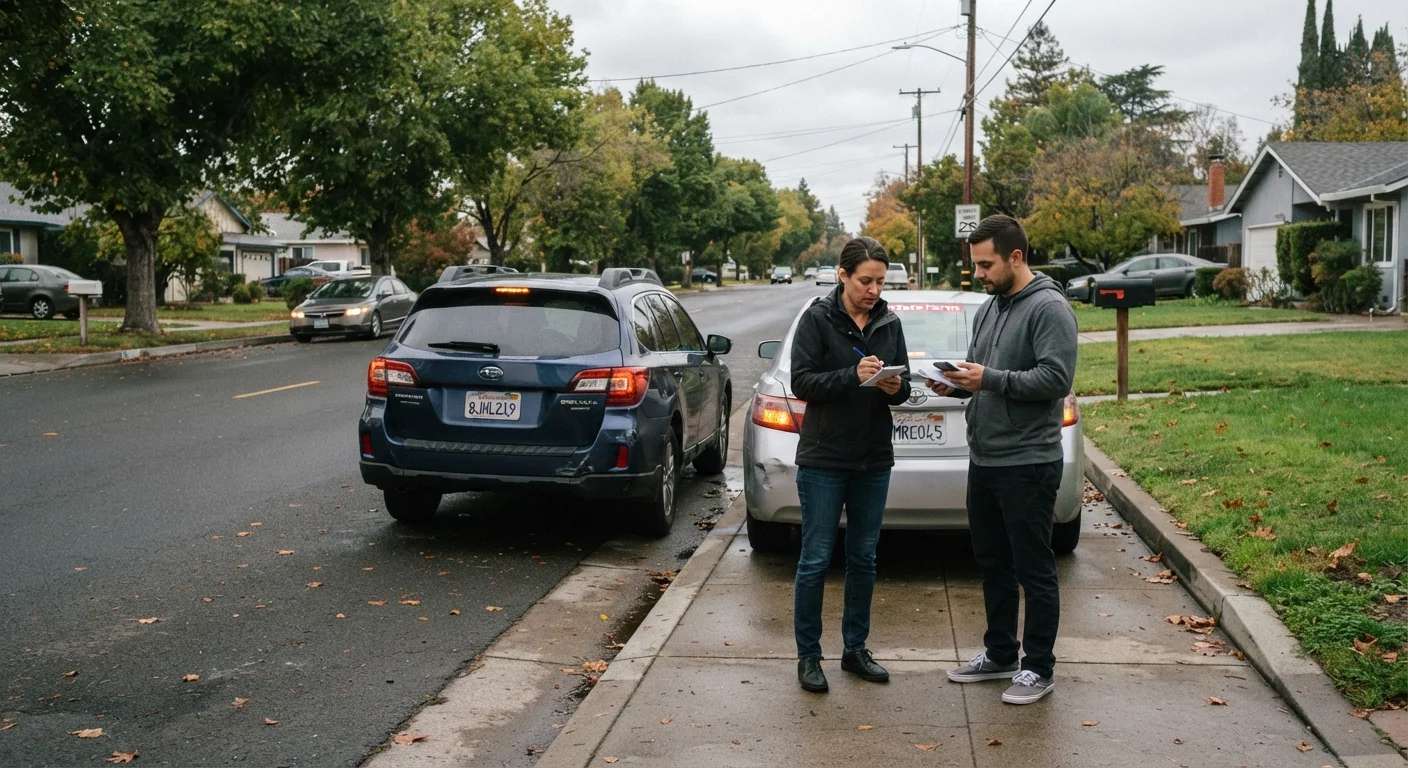
Exchange Information with the Other Driver
Collect and provide the following from every driver involved:
- Full legal name and contact number
- Driver's license number and issuing state
- Vehicle registration information (make, model, year, license plate)
- Insurance company name and policy number
Keep the interaction civil and factual. Do not discuss who was at fault or speculate about what happened.
Document the Scene Thoroughly
Before vehicles are moved (when safe to do so), photograph everything: all points of vehicle damage, the overall scene from multiple angles, road conditions, traffic signs or signals, skid marks, and any visible injuries. More documentation is always better.
If witnesses are present, ask for their names and phone numbers. Bystander accounts can be critical if the other driver's account later changes.
Get the Police Report Number
When the responding officer has finished at the scene, ask for their name, badge number, and the incident or report number. This lets you or your insurance company retrieve the full written report once it's filed - typically within a few business days. The report number is a required field on most insurance claim forms.
Notify Your Insurance Company
Contact your insurer as soon as reasonably possible - ideally the same day. Most policies contain a clause requiring prompt notification, and delays can complicate or jeopardize a claim. Provide them with everything you collected: the police report number, photos, other driver's information, and witness contacts.
To understand what your policy covers in this situation - including collision, liability, and uninsured motorist protections - see our plain-language guide to auto insurance coverage.
Keep an Accident Info Card in Your Glove Box
Print a simple card listing the information you need to collect at a crash scene - other driver's name, license number, insurance carrier, and policy number - plus your own policy details. In a stressful moment, having that checklist on hand ensures you don't forget anything critical.
After You Leave the Scene
Once you're away from the crash site, the work isn't over. See a doctor or visit an urgent care clinic even if you feel fine - this is especially important for collisions above low speed.
Adrenaline Can Hide Serious Injuries
It's common to feel fine immediately after a collision and notice pain or symptoms hours or even days later. Whiplash, concussions, and internal injuries are frequently delayed in presentation. Even if you feel uninjured, a prompt medical evaluation protects both your health and any potential injury claim.
Keep a written log of any symptoms, medical visits, repair estimates, rental car costs, or time lost from work. These records matter if an injury or dispute surfaces later.
If the other driver was uninsured, fled the scene, or if you're unsure whether you have adequate coverage, review your policy carefully. Uninsured motorist coverage, for instance, is something many drivers don't fully understand until they need it. Our guide to what your car insurance policy actually covers breaks down each coverage type in plain language.
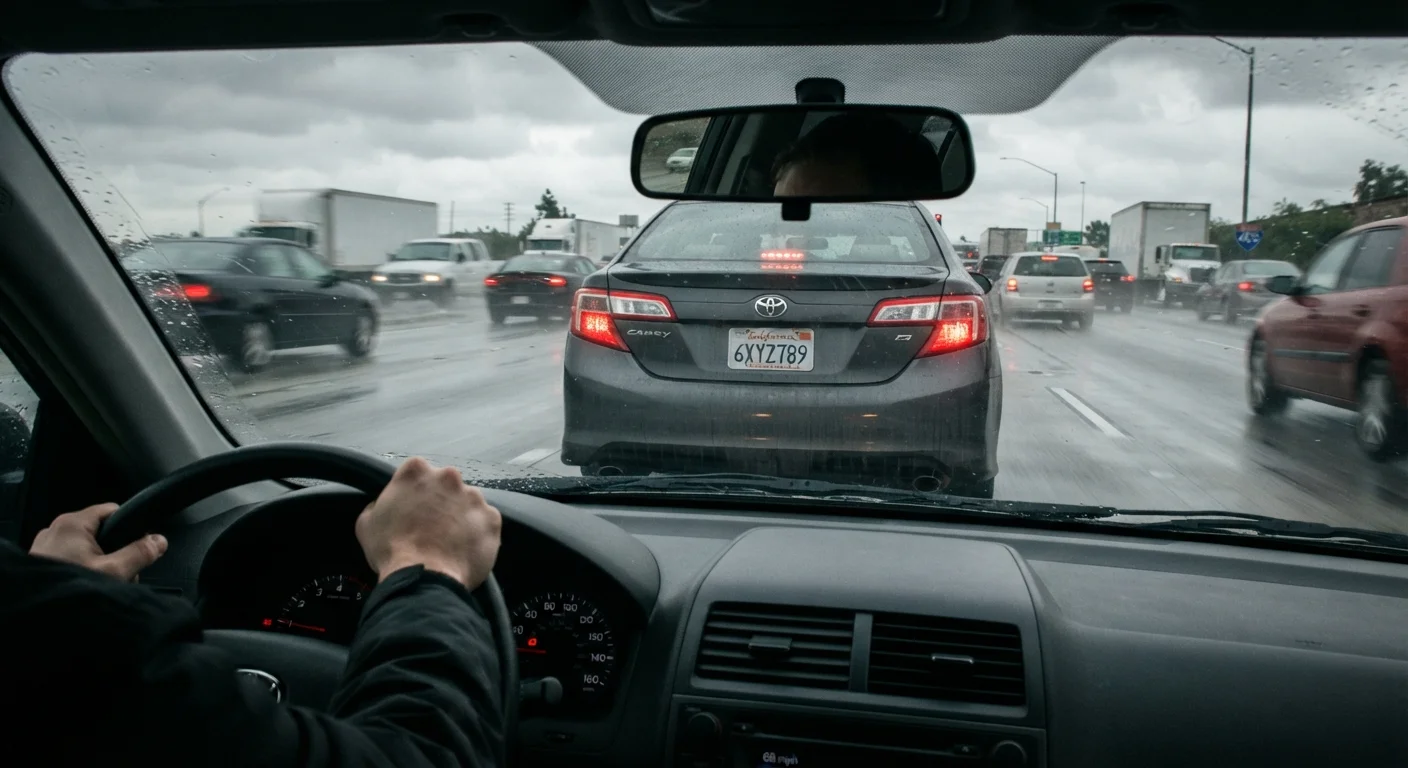
Finally, consider whether this incident points to a habit worth examining. Tailgating and failure to anticipate hazards are leading contributors to the most common crash types - and both are addressable with better technique.
This article is for general informational purposes only and does not constitute legal or insurance advice. Laws and requirements vary by state. Consult a licensed attorney or insurance professional for guidance specific to your situation.