
What Each Format Actually Looks Like
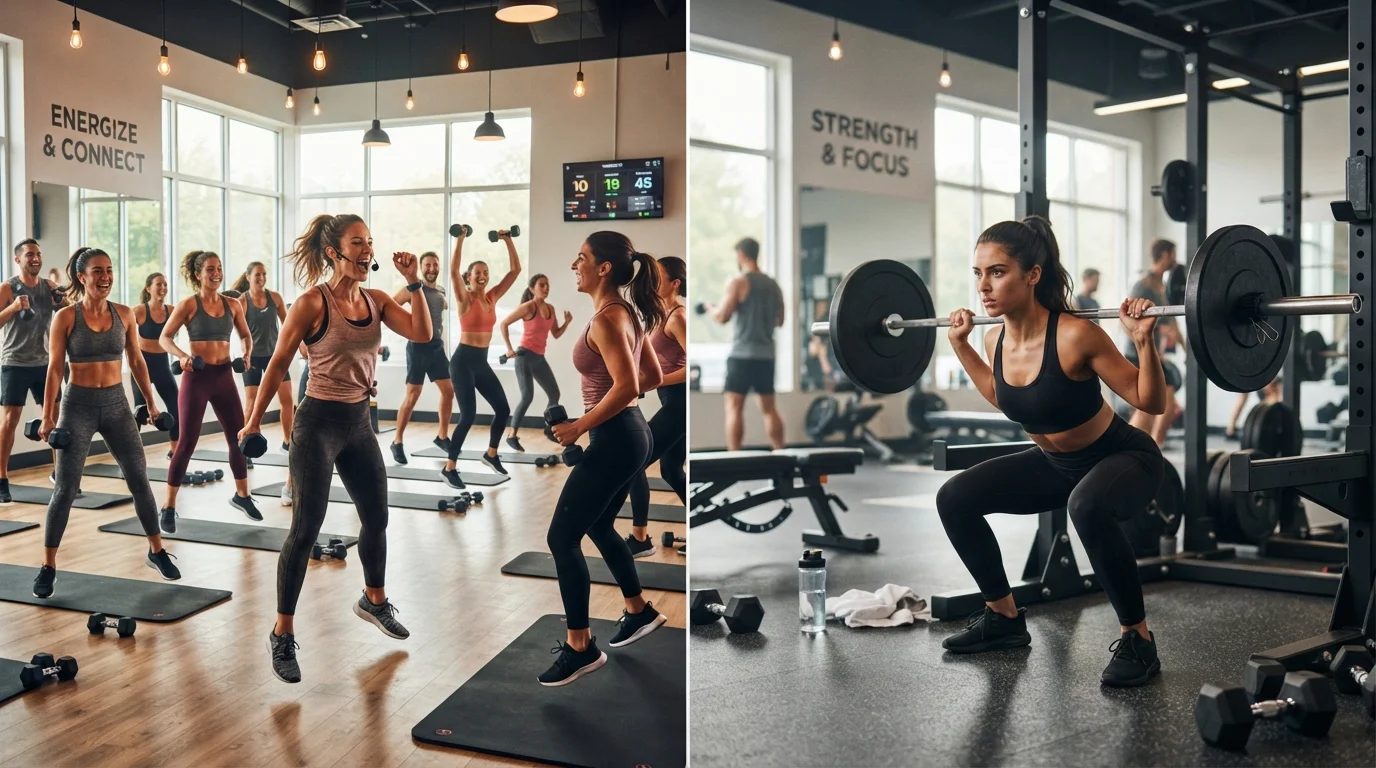
Group fitness classes include any instructor-led session shared with other participants - spin classes, yoga, boot camps, dance cardio, HIIT, pilates, and more. These are typically scheduled at fixed times, run 30-60 minutes, and require little to no personal program design. The instructor curates the workout and the music, sets the pace, and cues participants through each movement.
Solo training means working out on your own schedule and according to your own plan - whether that's lifting at a gym, following a workout app at home, or running a route you designed yourself. It can look like a structured program or a flexible daily habit. For a structured approach you can do without equipment, see our guide to bodyweight training at home.
Both formats can be effective for building fitness. The distinction lies in how they deliver that fitness - and who tends to thrive in each environment.
The Case for Group Fitness Classes
One of the most documented benefits of group training is its effect on adherence. Research in exercise psychology consistently shows that social accountability - even something as simple as knowing others expect you to show up - significantly improves consistency over time. The instructor relationship and peer presence create an informal commitment that's harder to skip than a solo session.
Group classes also remove decision fatigue. You don't have to plan the workout, sequence the exercises, or choose your intensity targets. That cognitive offloading can be especially valuable for beginners or anyone recovering their fitness after a long break.
Finally, the energy of a group environment can push participants to work harder than they might on their own - a phenomenon sometimes called the Köhler effect in group motivation research.
Talk to Your Instructor Before Class
If you have any injuries, chronic conditions, or physical limitations, inform the instructor before a group class begins. A good instructor will offer modifications to keep you safe. Never push through pain to keep pace with a group - sustainable fitness always comes before performance in the short term.
Limitations to keep in mind: Fixed class times may not suit irregular schedules. Instructors can't always tailor movements to individual limitations or injury history, so participants need to be proactive about modifying exercises when needed. Always let an instructor know about any injuries or physical restrictions before class begins.
The Case for Solo Training
Solo training offers something group classes structurally cannot: full customization. You control the timing, the exercises, the rest periods, and the intensity. This matters most for people with specific goals - building toward a particular lift, managing a chronic condition, or following a protocol advised by a physical therapist or physician.
Scheduling freedom is another major advantage. Solo training can happen at 5 a.m. before the household wakes up, during a lunch break, or late at night - without booking or waiting. For Americans juggling work, childcare, and commutes, this flexibility often makes the difference between exercising and not.
Solo formats also allow for more deliberate progression. If you want to understand how different training intensities affect your body - for example, how steady-state aerobic effort differs from high-intensity intervals - you have full control to experiment. Our article on Zone 2 cardio explains how heart rate-based training works and why it benefits many self-directed exercisers.
| Group Fitness Classes | Solo Training | |
|---|---|---|
| Scheduling | Fixed class times required | Fully flexible, any time |
| Accountability | Built-in via instructor and peers | Self-directed; requires personal discipline |
| Customization | Limited; instructor-led program | Full control over all variables |
| Cost | Class fees or studio membership | Varies; gym or home options available |
| Social element | High; community-driven environment | Minimal; largely independent |
| Beginner-friendliness | High; guided instruction provided | Moderate; requires some self-knowledge |
| Goal specificity | Lower; generalized programming | High; fully tailored to individual goals |
How to Choose - and When to Combine Both
Start by honestly assessing two things: your consistency history and your primary goal. If past attempts at solo training have stalled after a few weeks, a class format with built-in accountability may be more sustainable. If you have a specific training goal - like improving a particular lift or following a post-injury rehabilitation protocol - solo training allows the precision that group classes cannot offer.
Many people find that a hybrid approach works well in practice. For example, attending one or two group classes per week for community and motivation while completing one or two solo sessions for targeted work is a reasonable structure that preserves both flexibility and social support.
It's also worth considering low-impact exercise options if joint concerns or fitness level make certain class formats feel inaccessible. Many group formats - water aerobics, yoga, cycling - are inherently low-impact, and solo training allows you to manage intensity carefully as well.
The single most important criterion isn't which format burns more calories or builds more muscle in theory - it's which format you'll actually do next week, and the week after that.
This article is for general informational and educational purposes only. It is not a substitute for professional medical or fitness advice. Consult a qualified healthcare provider or certified fitness professional before starting a new exercise program, especially if you have an existing health condition or injury.