Why Bodyweight Training Works - and Who It's For
The idea that you need a gym, barbells, or expensive equipment to get meaningfully stronger is one of the most persistent fitness myths around. Your own bodyweight - combined with leverage, range of motion, and consistent effort - provides enough resistance to challenge muscles, improve cardiovascular endurance, and build functional strength. These are the qualities that translate into everyday life: carrying groceries, climbing stairs, recovering from a stumble.
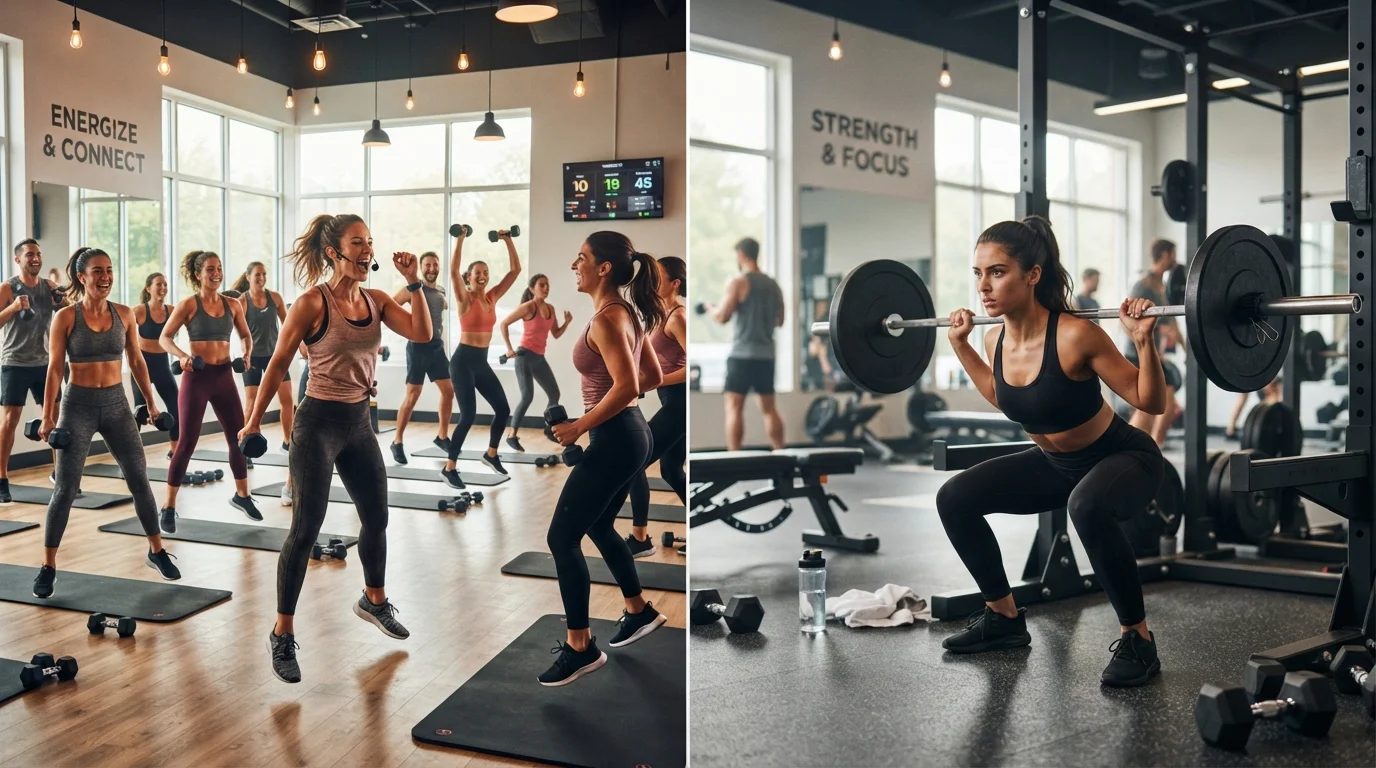
Bodyweight training is particularly well-suited for people who are new to structured exercise, returning after a long gap, or managing tight schedules. If you're in that last category, see our guide to returning to exercise after a break for realistic expectations about the early weeks. And if you've wondered whether training solo at home is even the right format for you, comparing solo training to group fitness classes can help clarify that decision.
The barrier to entry is genuinely low. You need a small amount of space, a reliable schedule, and enough patience to trust a gradual process. That last part is where most people struggle - not the exercises themselves.
When to Check with a Doctor First
This article provides general fitness information and is not medical advice. If you have a chronic condition, recent injury, joint pain, or have been sedentary for an extended period, consult a qualified healthcare professional before starting any new exercise program. This is especially important for older adults and those managing cardiovascular or musculoskeletal conditions.
What You'll Need Before You Start
One of bodyweight training's greatest strengths is its minimal equipment requirement. Before your first session, gather the basics and set up your space so the environment itself doesn't become an obstacle.
What you will need
Yoga or Exercise Mat
Provides cushioning for floor exercises like planks, glute bridges, and core work.
Timer or Interval App
Helps you track work and rest periods accurately without watching a clock.
Chair or Sturdy Couch
Used for supported exercises like incline push-ups or tricep dips.
Water Bottle
Staying hydrated during exercise supports performance and recovery.
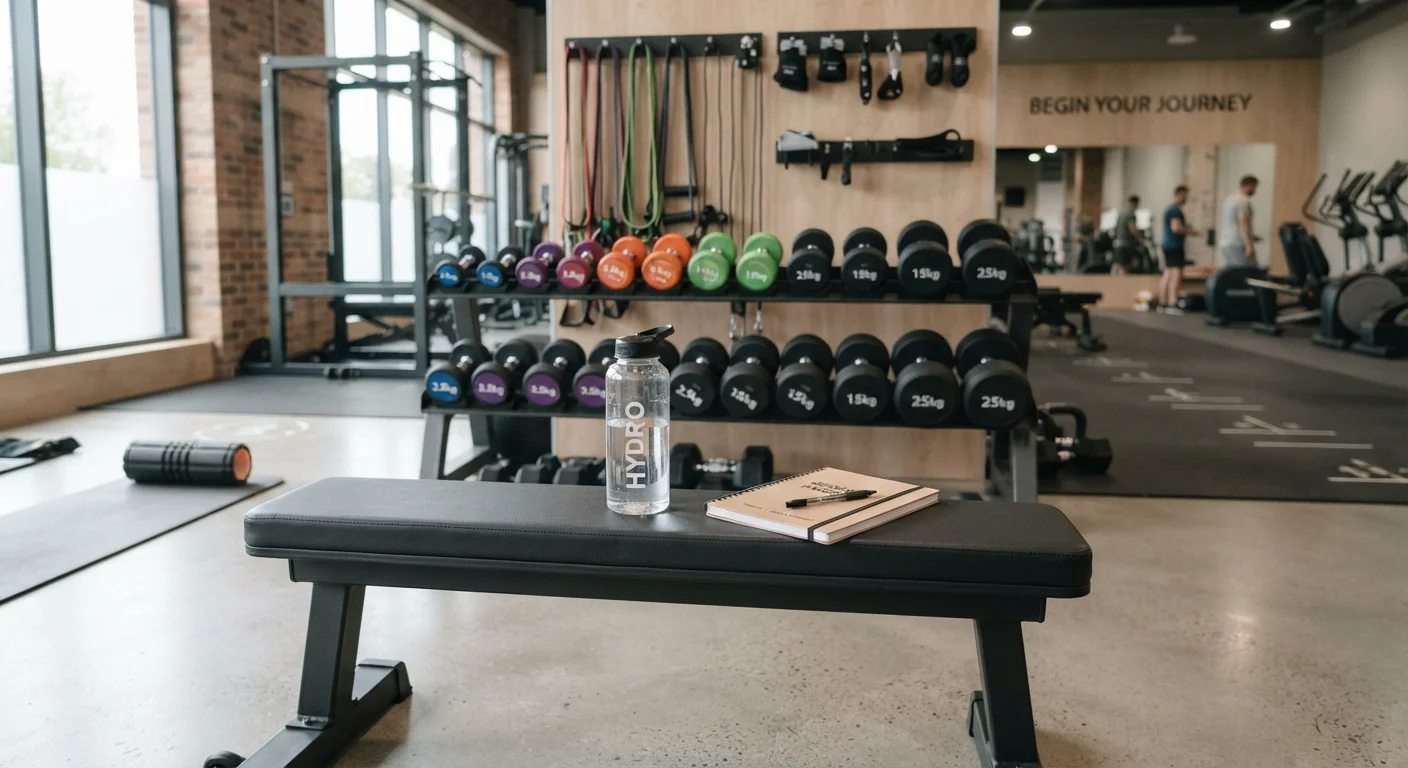
If you're approaching strength training for the first time, you may also find value in our practical preparation checklist for first-time strength training, which covers foundational safety and setup considerations that apply whether you're in a gym or a living room.
Building Your Routine: Step-by-Step
The steps below walk you through setting up a bodyweight routine that is structured enough to produce results but flexible enough to fit real life. Follow them in order - each one builds on the last.
Don't Skip the Warm-Up
Jumping straight into push-ups or squats with cold muscles increases the risk of strains and joint discomfort. Even five minutes of light movement - marching in place, arm circles, hip rotations - meaningfully prepares your body for the work ahead. Treat the warm-up as part of the workout, not optional prep.
Set a Realistic Weekly Schedule
Begin with three non-consecutive days per week - for example, Monday, Wednesday, and Friday. This spacing allows muscle tissue to recover between sessions, which is when strength actually develops. Avoid the common beginner mistake of training every day out of enthusiasm; accumulated fatigue without recovery leads to soreness, burnout, and dropped routines.
Write the sessions into your calendar as fixed appointments. Research consistently shows that treating exercise as a scheduled commitment - rather than something fit in when time allows - dramatically improves adherence.
Choose a Small Core Movement Set
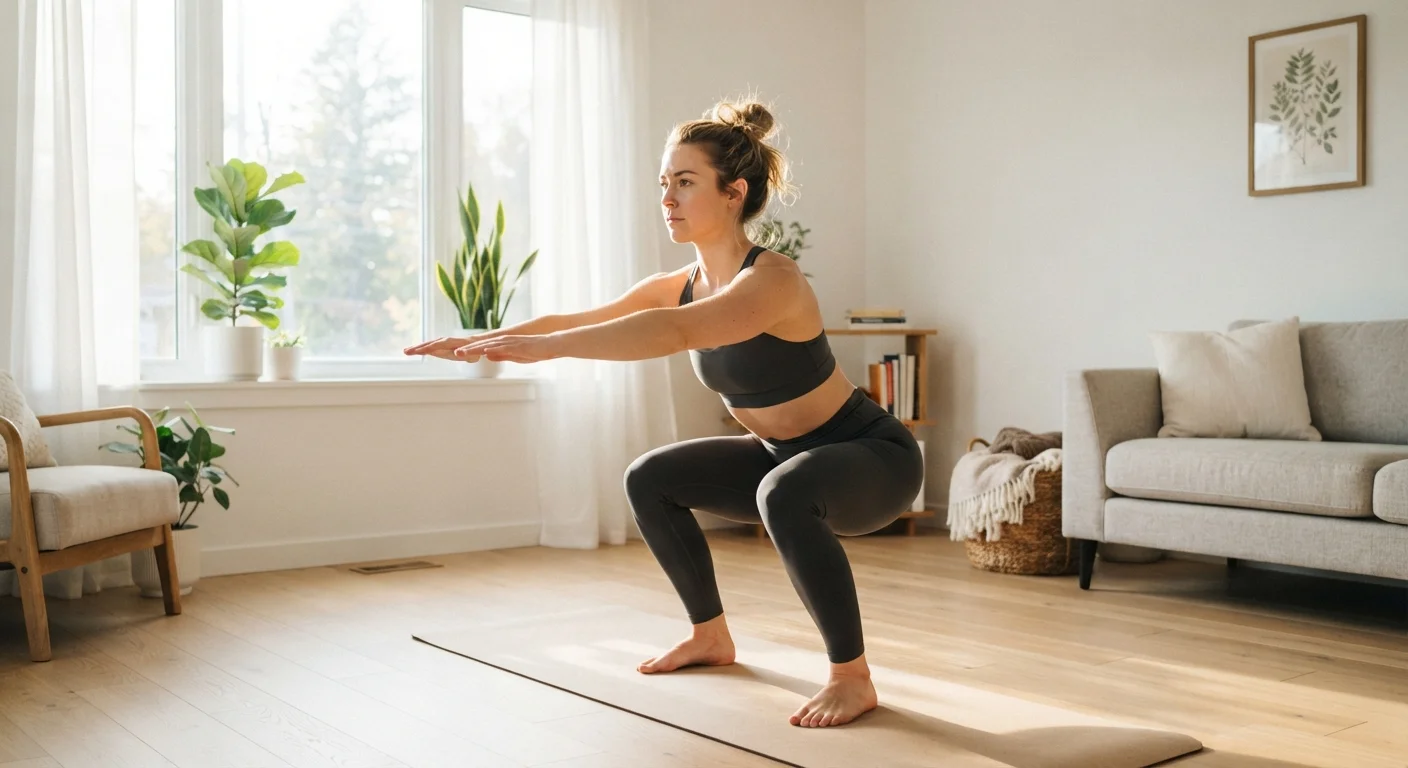
Rather than assembling a complicated 20-exercise program, select four to six fundamental movements that cover the major muscle groups. A well-rounded beginner set might include: push-ups (chest, shoulders, triceps), bodyweight squats (quads, glutes, hamstrings), glute bridges (posterior chain and core), plank holds (full core stability), and reverse lunges (lower body balance and unilateral strength).
Learn proper form for each movement before increasing volume. Poor mechanics practiced repeatedly lead to imbalances and injury - prioritize quality over quantity, especially in the first few weeks.
Structure Each Session with Work and Rest
A simple and effective structure for beginners is circuit training: perform each exercise back-to-back with minimal rest, then rest one to two minutes between full rounds. Aim for two to three rounds per session, lasting 20 to 30 minutes total including warm-up and cool-down.
For example: 10 squats → 8 push-ups → 30-second plank → 10 glute bridges → 10 reverse lunges (each leg). Rest 90 seconds. Repeat twice more. This format keeps heart rate elevated while building muscular endurance across multiple movement patterns.
Apply Progressive Overload Over Time
Progressive overload - gradually increasing the challenge - is the core principle behind any effective strength program, including bodyweight training. Once an exercise feels manageable for the prescribed reps, make it harder rather than simply doing more sets of an easy version.
Practical ways to progress bodyweight movements include: increasing reps, slowing the tempo (a 3-second descent on a squat is significantly harder), reducing rest time between rounds, or advancing to a harder variation (e.g., moving from a wide-stance squat to a single-leg squat progression). Aim to add one small challenge every one to two weeks.
Build Recovery Into the Plan
Rest days are training days for your recovery systems. Use them for light activity - a walk, gentle stretching, or simply relaxed movement - rather than complete inactivity or, worse, additional intense sessions. Sleep is the most powerful recovery tool available: most adults need seven to nine hours for muscle repair and hormonal regulation to function properly.
If muscle soreness is limiting your ability to move normally for more than two to three days after a workout, that is a signal to reduce volume or intensity in your next session, not push through it.
Track Progress Simply and Honestly
Keep a basic log - even a notes app on your phone - recording how many reps or rounds you completed each session. Over weeks, this record shows real improvement that motivation alone can't supply. Seeing that you moved from 8 push-ups to 15 is a powerful reason to keep going.
Keeping the Routine Going After the First Month
The hardest part of any fitness routine is the transition from novelty to habit - roughly the four-to-eight week window when early enthusiasm has faded but the identity of someone who exercises regularly hasn't fully formed yet. A few strategies help bridge that gap.
Anchor your workouts to an existing habit - exercising immediately after your morning coffee or before your evening shower removes the decision of when to do it. Keep sessions short enough that skipping feels worse than starting. A 20-minute workout done consistently outperforms a 60-minute program abandoned after two weeks every time.
It's also worth interrogating any beliefs that are quietly discouraging you. Our article on common fitness myths that hold beginners back addresses several that specifically affect people training at home. And if high-impact movements ever feel like too much on certain days, low-impact exercise options offer genuine fitness benefits without the joint stress.
Sustainable training isn't dramatic. It's showing up three times a week, moving with intention, and adding a small challenge every couple of weeks. Over months, that compounds into real, measurable change.
This article is for general informational purposes only and does not constitute medical advice. Consult a qualified healthcare professional before beginning any new exercise program, particularly if you have existing health conditions or concerns.