Why Wood Floors Need a Different Approach
Wood is a living material - it expands, contracts, and responds to its environment in ways that tile and vinyl simply don't. That responsiveness is part of its appeal, but it also means that the wrong cleaning habits can undo years of beauty in a surprisingly short time. Harsh chemicals, standing water, and abrasive tools are among the most common culprits, and many homeowners use them without realizing the harm being done.
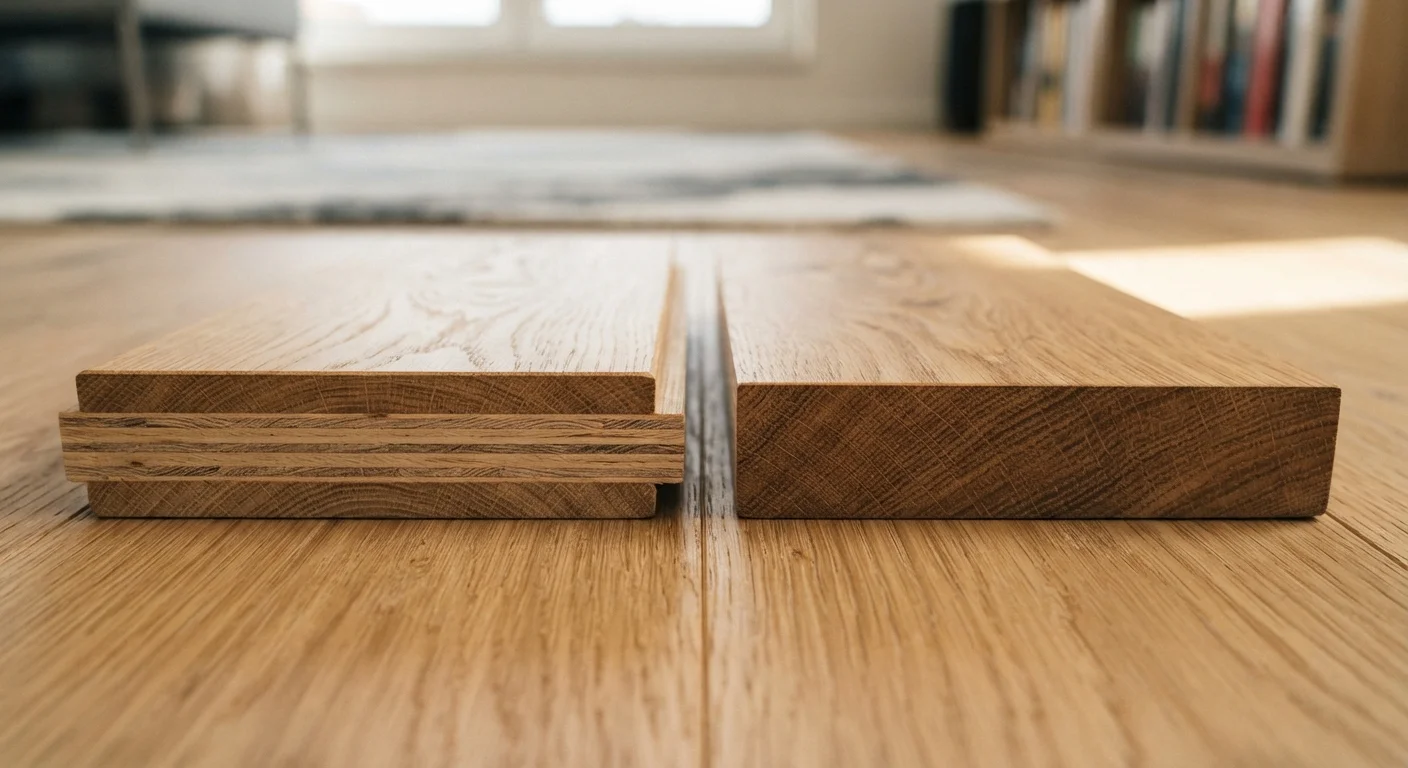
Whether you have solid hardwood or an engineered product, the foundational rules of care are similar. If you're still deciding between the two, our guide on engineered versus solid hardwood flooring explains how each behaves under humidity and foot traffic. Understanding your floor type helps you calibrate how cautious you need to be with moisture and refinishing.
Daily and Weekly Habits That Protect the Finish
The finish on a wood floor - whether polyurethane, oil, or wax - is the first line of defense against scratches, stains, and moisture. Protecting it doesn't require expensive products or long routines. It requires consistency with a few simple actions.
One habit that catches many homeowners off guard: dragging furniture even a few inches during rearranging can leave deep scratches that no amount of cleaning removes. Lift, don't drag - always. For rooms that see high traffic, adding area rugs at entry points traps the grit and moisture tracked in from outside before it reaches the wood surface.
Moisture, Humidity, and Seasonal Stress
Wood floors are vulnerable to humidity swings throughout the year. During winter, heated indoor air tends to become very dry, causing boards to contract and small gaps to form between planks. In humid summer months, boards can absorb moisture and expand, leading to cupping or crowning if conditions are severe.
35-55%
Ideal indoor relative humidity for wood floors
Most hardwood flooring manufacturers specify this range in their care documentation to minimize expansion and contraction.
7-10 years
Typical interval between floor refinishing sessions
This estimate varies based on foot traffic, finish type, and how consistently protective habits are maintained.
A whole-home humidifier in winter and proper ventilation or air conditioning in summer helps keep indoor relative humidity within the range that most flooring manufacturers recommend - generally between 35% and 55%. Spills should be blotted immediately with a dry cloth; never allow liquid to sit on a wood floor, even for a few minutes. This single habit prevents a large share of the staining and warping that shows up over time.
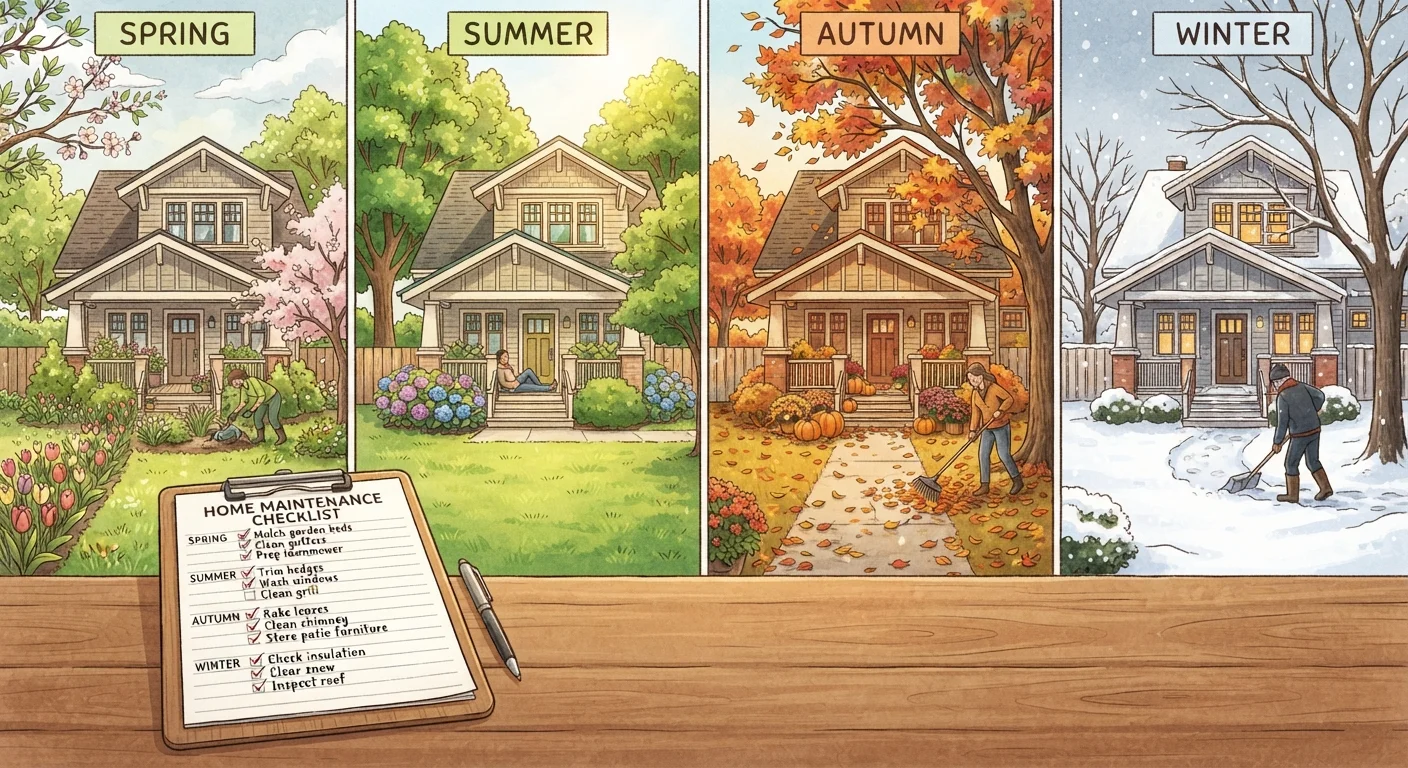
Seasonal floor care fits naturally into a broader home maintenance rhythm. The seasonal home maintenance calendar is a helpful reference for timing these tasks alongside your other annual upkeep.
When to Clean, When to Refinish, and What to Avoid
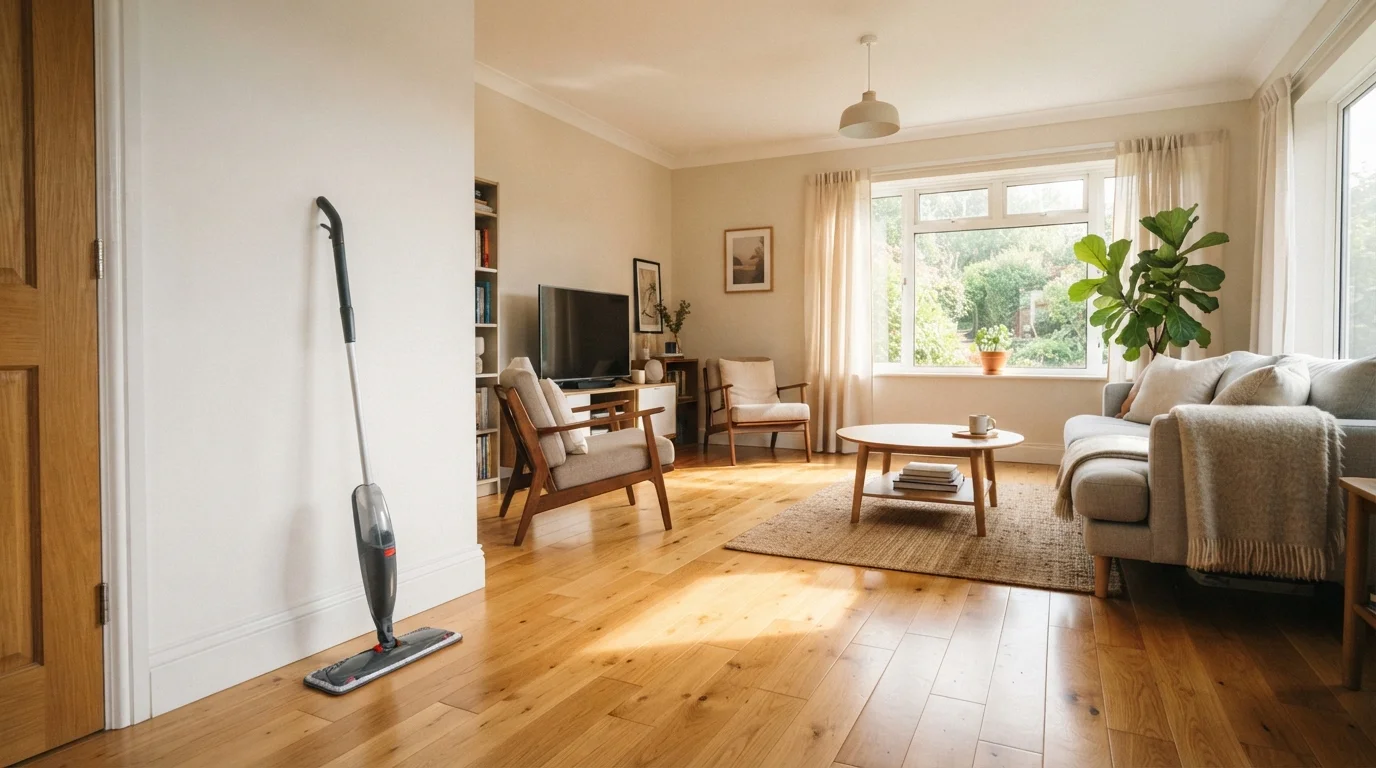
Routine cleaning should rely on a barely damp microfiber mop and a cleaner specifically formulated for finished hardwood. Avoid steam mops entirely - the heat and moisture penetrate the finish and can cause warping or delamination. Ammonia-based cleaners, vinegar solutions, and anything labeled as a general multi-surface cleaner can dull or break down the protective coating over time.
Test Before You Mop a Whole Room
If you're unsure whether a new cleaner is safe for your specific finish, test it in a small, low-visibility area - such as inside a closet - before using it across the main floor. Wait a few minutes and check for any cloudiness, stickiness, or discoloration. This takes less than five minutes and can prevent costly damage to an entire room.
Refinishing - the process of sanding the surface down and applying fresh finish - is typically needed every 7 to 10 years depending on traffic, though this varies widely. Signs that refinishing is overdue include visible scratches that catch light, dull patches that don't respond to cleaning, and areas where the wood itself looks discolored or gray. Addressing these signs early, before bare wood is exposed for long periods, keeps the repair straightforward. Neglecting this stage is one of those easily forgotten tasks that quietly grow into expensive repairs.
For a full picture of how floor care fits into your home's overall upkeep, the home improvement hub covers a wide range of practical guidance for DIY-capable homeowners.