Why Organizing Feels So Overwhelming at First
Standing in a cluttered room and trying to decide where to begin is genuinely disorienting. The problem isn't a lack of motivation - it's that clutter presents itself all at once, as an undifferentiated mass of things that all seem equally urgent. Your brain registers the whole room rather than discrete, solvable problems.
This is partly why the advice to "just get started" rarely helps. Without a clear entry point, most people cycle between spaces, move things from one pile to another, and end the day feeling like nothing actually changed. Recognizing this pattern is the first step toward breaking it.
The good news: organization is a learnable skill, not a personality trait. A disorganized home usually reflects a missing system - not a character flaw. Once you understand what a functional system looks like and how to build one incrementally, the process becomes far more manageable.
Clutter and stress are connected
Research suggests that living in a cluttered environment can contribute to feelings of stress and being overwhelmed, though the relationship is complex and individual. If disorganization is affecting your daily wellbeing, addressing your living space can be one part of a broader self-care approach. Our mental wellbeing hub covers additional strategies for managing everyday stress.
Core Concepts Every Beginner Should Understand
Before touching a single item, it helps to understand a few foundational ideas that experienced organizers rely on.
Decluttering
The process of deciding which items to keep, donate, or discard. It always comes before organizing - you can't effectively organize more than you need.
Designated home
A specific, consistent spot where a particular item always lives. When every item has a home, returning things becomes automatic rather than a decision.
Maintenance habit
A small, routine action that keeps an organized space from reverting to clutter over time - like a daily reset or a one-touch return rule.
Editing
In organizing, editing means reducing the number of items you own in a category before deciding how to store what remains.
Zones
Defined areas within a room where related items are grouped together based on how and when they're used - for example, a breakfast zone near the toaster and coffee maker.
Everything needs a home. The most reliable insight in home organization is simple: clutter accumulates where items don't have a designated place to live. When something doesn't have a home, it lands on the nearest flat surface indefinitely. Your job as an organizer is to assign homes - and make those homes easy to return to.
Edit before you organize. Attempting to organize too much stuff is one of the most common reasons systems collapse quickly. Reduce what you own before you invest in storage solutions. You can read more about why organizing habits unravel to understand what pitfalls to watch for.
Organize for your actual habits, not ideal ones. If your keys end up on the kitchen counter every day, put a hook near the kitchen counter - not by the front door where you're supposed to leave them. Systems that work with your natural tendencies last far longer than systems designed around aspirational behavior.
How to Choose Your First Project
The most effective starting point shares two qualities: it's small enough to complete in one or two sessions, and it's somewhere you interact with every day. High-impact beginner zones include kitchen countertops, the entryway, a nightstand, or the bathroom vanity.
Avoid starting with emotionally complex areas - childhood keepsakes, inherited items, or anything tied to significant memories. These require more decision-making energy and can derail momentum early on. Save them for when you've built confidence in easier spaces.
Start with a 20-minute timer
Set a timer for 20 minutes and work only within one defined area until it goes off. This prevents scope creep - the tendency to wander from space to space without finishing anything. A completed small zone is far more motivating than a half-organized large one.
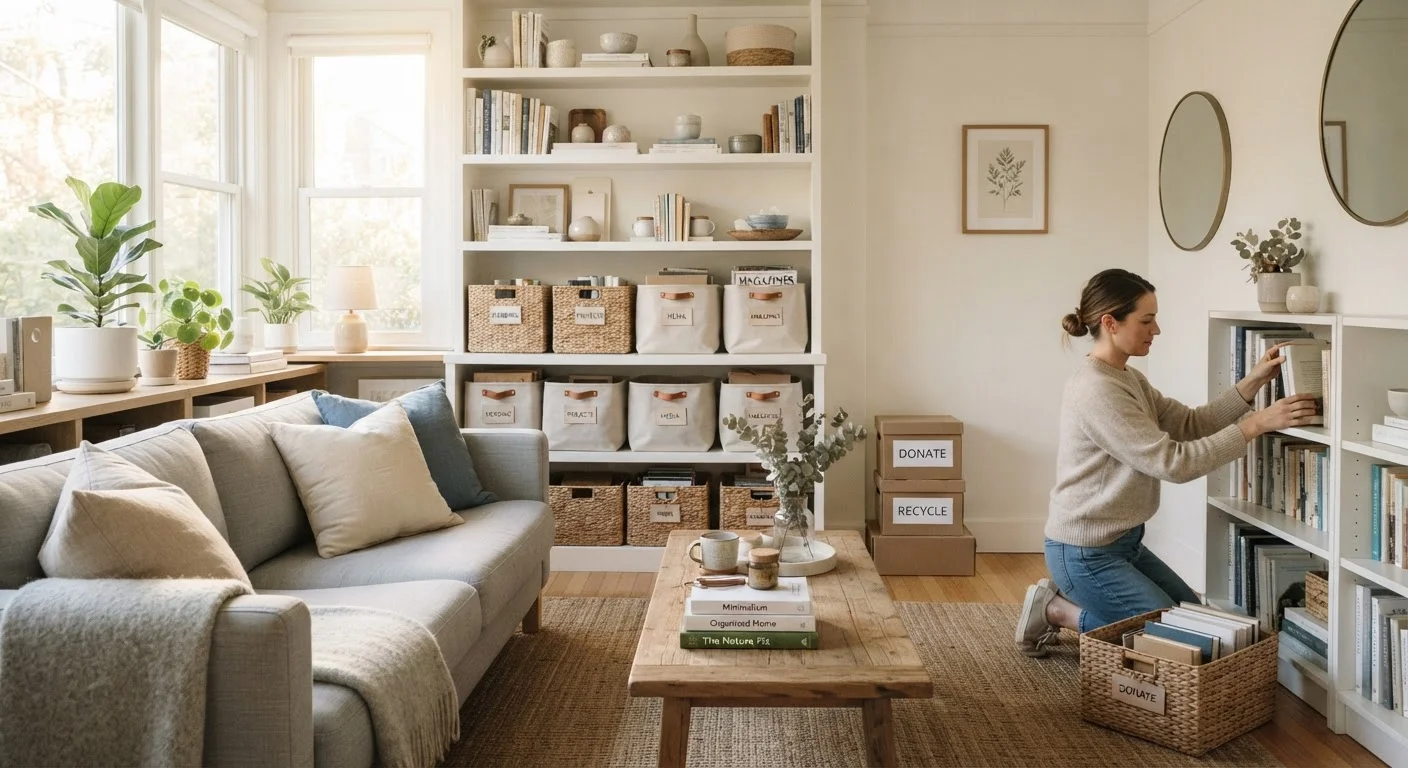
Use a simple four-category sort: keep here, keep elsewhere, donate or give away, and discard. Physically separating items into these groups - even temporarily - forces a decision about each object rather than letting you shuffle things around indefinitely. Once you've edited, group what remains by how you use it, not by what it is. Items used together should be stored together.
Building Habits That Actually Last
The initial declutter and setup is only half the work. Without maintenance habits, even a beautifully organized space will drift back toward clutter within weeks. The key is attaching small upkeep actions to things you already do.
A useful concept here is the "one-touch" rule: when you pick something up, bring it to its home rather than setting it down somewhere temporary. This single habit, practiced consistently, prevents most surface clutter from forming in the first place.
A brief end-of-day reset - 5 to 10 minutes of returning items to their designated places - is more effective than occasional large organizing sessions. Think of it the way you might think about brushing your teeth: a small daily action that prevents a larger problem from forming. The practice of daily reflection that many people find helpful for mental clarity follows a similar logic: small, consistent effort compounds over time.
If a system keeps failing - items don't make it back, the same surfaces keep collecting clutter - treat that as information. The system probably doesn't match your actual behavior. Adjust the system before concluding that you lack discipline.
Organizing With Others in Mind
If you share your home with a partner, roommates, or children, organizing becomes a collaborative challenge. A system that works perfectly for one person can be invisible or confusing to another. Imposing a system without buy-in from other household members is one of the fastest ways to see it unravel.
Start by identifying shared spaces - kitchens, bathrooms, living rooms - and having honest conversations about what friction points bother everyone. Prioritize those areas. Build systems that account for how other people actually behave, not just how you'd prefer them to behave.
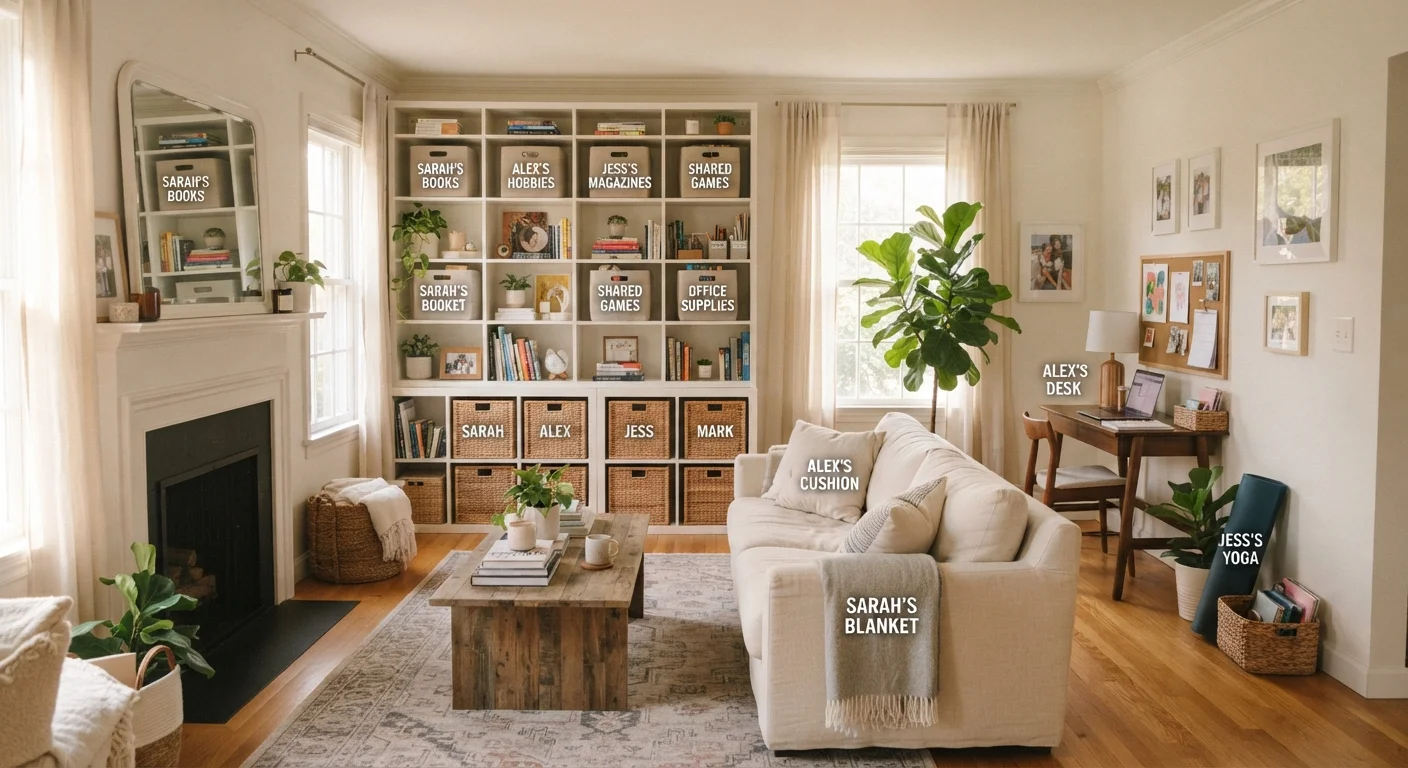
Labels, visual cues, and clearly defined zones can help when household members have genuinely different organizational styles. For a deeper look at navigating these differences, see our guide on organizing shared spaces with multiple people.
The goal is a home that functions well enough for everyone who lives in it - not a showroom. Sustainability matters more than perfection.