Why Multi-Person Households Are Harder to Organize
Organizing a home on your own is straightforward enough - you set the rules and live by them. Add a partner, a roommate, or a couple of kids, and suddenly every system you build depends on people who have their own habits, tolerances, and ideas about where things belong. That's not a flaw in the people - it's just the reality of shared spaces.
The most common mistake households make is treating organization as a one-time project rather than an ongoing agreement. One person declutters and labels everything, the others don't fully buy in, and within a few weeks the system quietly collapses. If you've experienced this pattern, you're not alone - and the problem usually isn't effort or laziness. It's that the system wasn't designed with everyone's actual behavior in mind. See why organizing habits unravel for a deeper look at what causes these breakdowns.
The good news: durable household organization doesn't require everyone to share the same standards. It requires clear agreements, flexible structures, and honest conversations about what actually works day-to-day.
Best Practices for Organizing a Home With Multiple People
These approaches are designed for real households - not magazine photoshoots. They work across different living situations, from families with young children to adult roommates sharing an apartment.
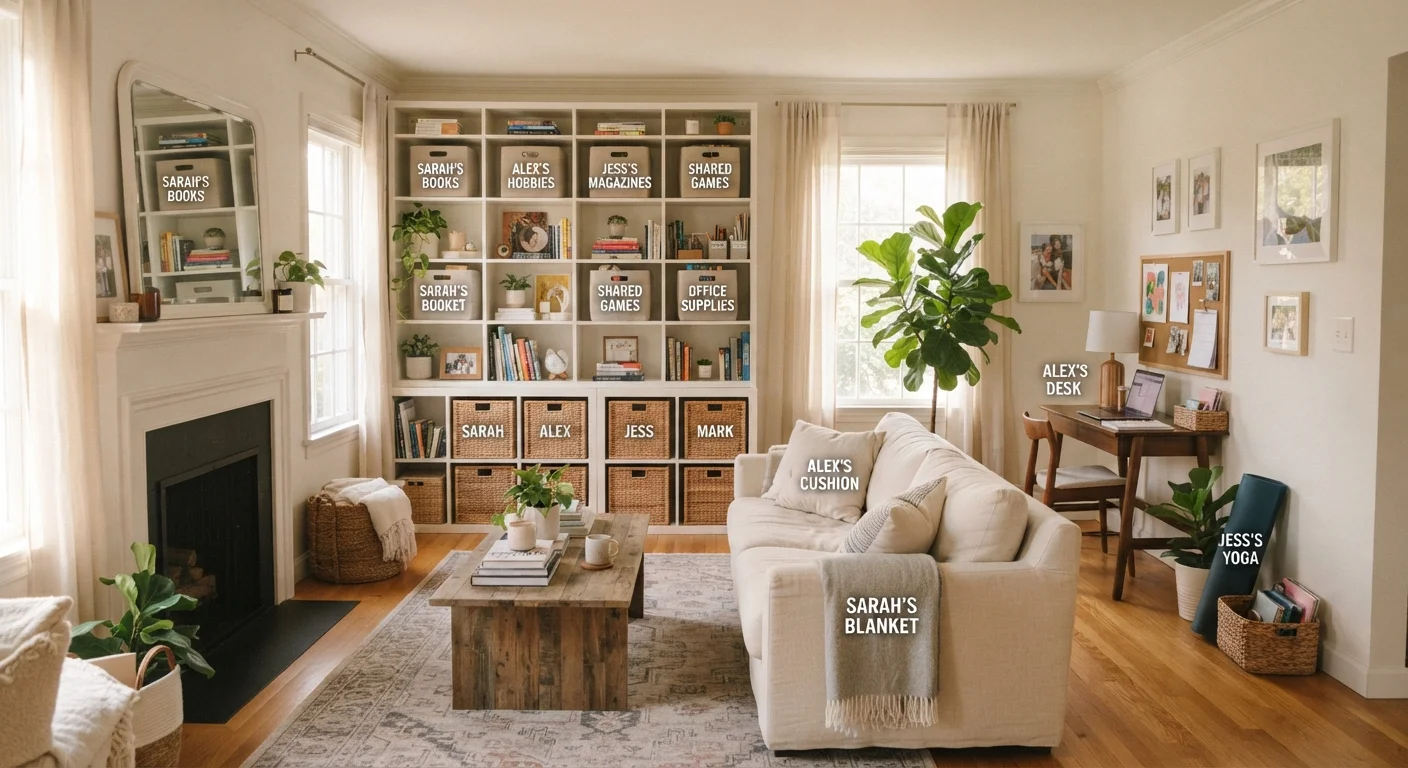
Establish personal zones within shared rooms
When people have a clearly defined area that's 'theirs' - even within a shared space like a living room or kitchen - they're less likely to encroach on others' areas and more likely to maintain their own. It separates the question of personal style from shared order.
Design storage around the least consistent user
If your system requires a high level of precision to work, it will only be maintained by the most organized person in the household. Building for the path of least resistance means the system stays intact even on busy or distracted days.
Create non-negotiable shared standards for common areas only
Trying to impose identical standards across every inch of the home creates resentment and is rarely sustainable. Focusing shared rules on genuinely communal spaces - kitchen counters, entryways, bathrooms - protects everyone's comfort without policing private preferences.
Schedule brief, regular resets rather than waiting for things to break down
In shared homes, clutter accumulates faster and often belongs to multiple people, making it harder for one person to address alone. A short weekly reset - 10 to 20 minutes together - distributes the responsibility and prevents buildup from becoming overwhelming.
Label storage with words or pictures that everyone understands
Labels reduce the cognitive load of remembering where things go, which matters especially in households with children or anyone new to the space. They also reduce the number of times items are put back in the wrong place by well-meaning but unsure household members.
Allow for individual variation in private spaces
A shared household doesn't have to be uniform throughout. Allowing individuals to manage their own bedrooms or personal storage areas according to their own preferences reduces conflict and gives people a sense of autonomy that actually makes them more cooperative in communal areas.
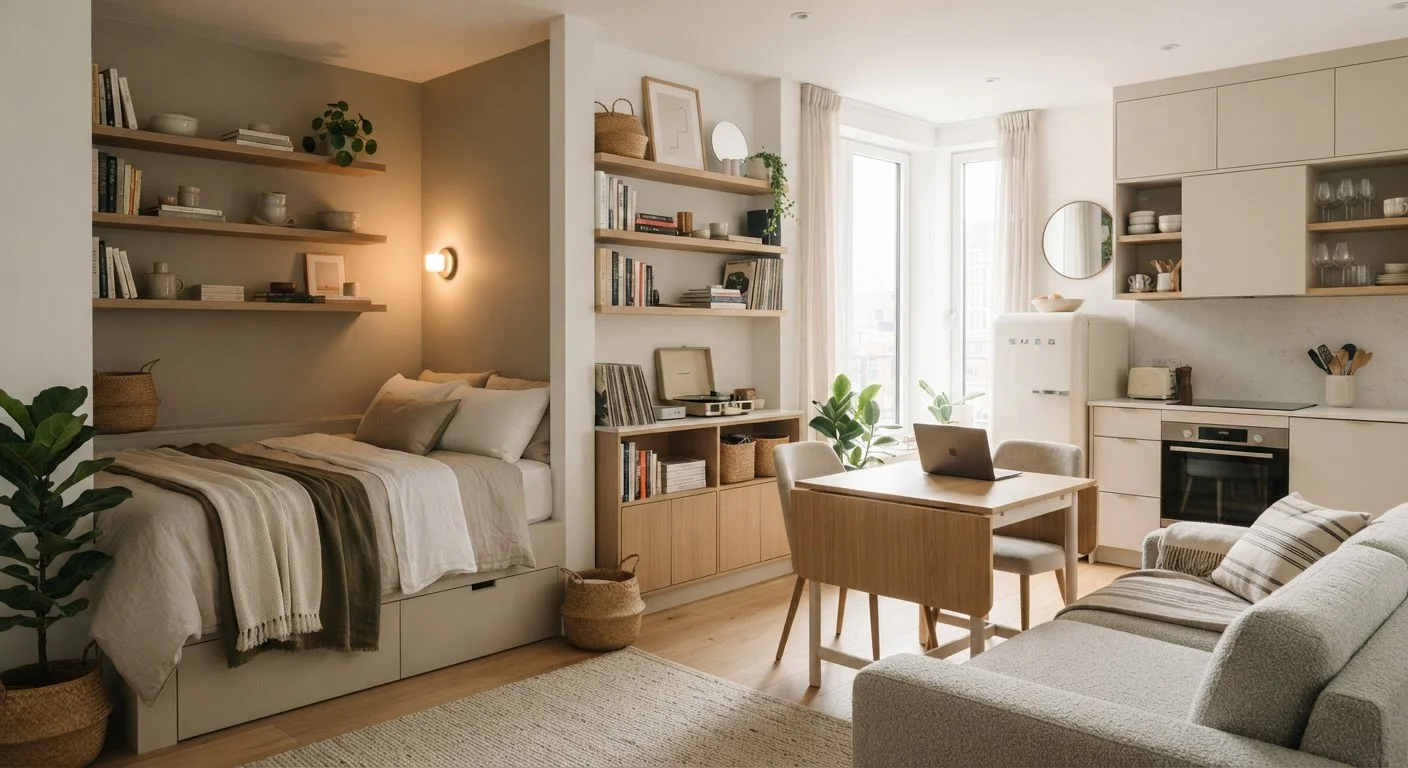
For households dealing with limited square footage, some of these principles apply with slight modifications - see organizing for small apartments for approaches tailored to tighter spaces.
Starting With a Household Conversation
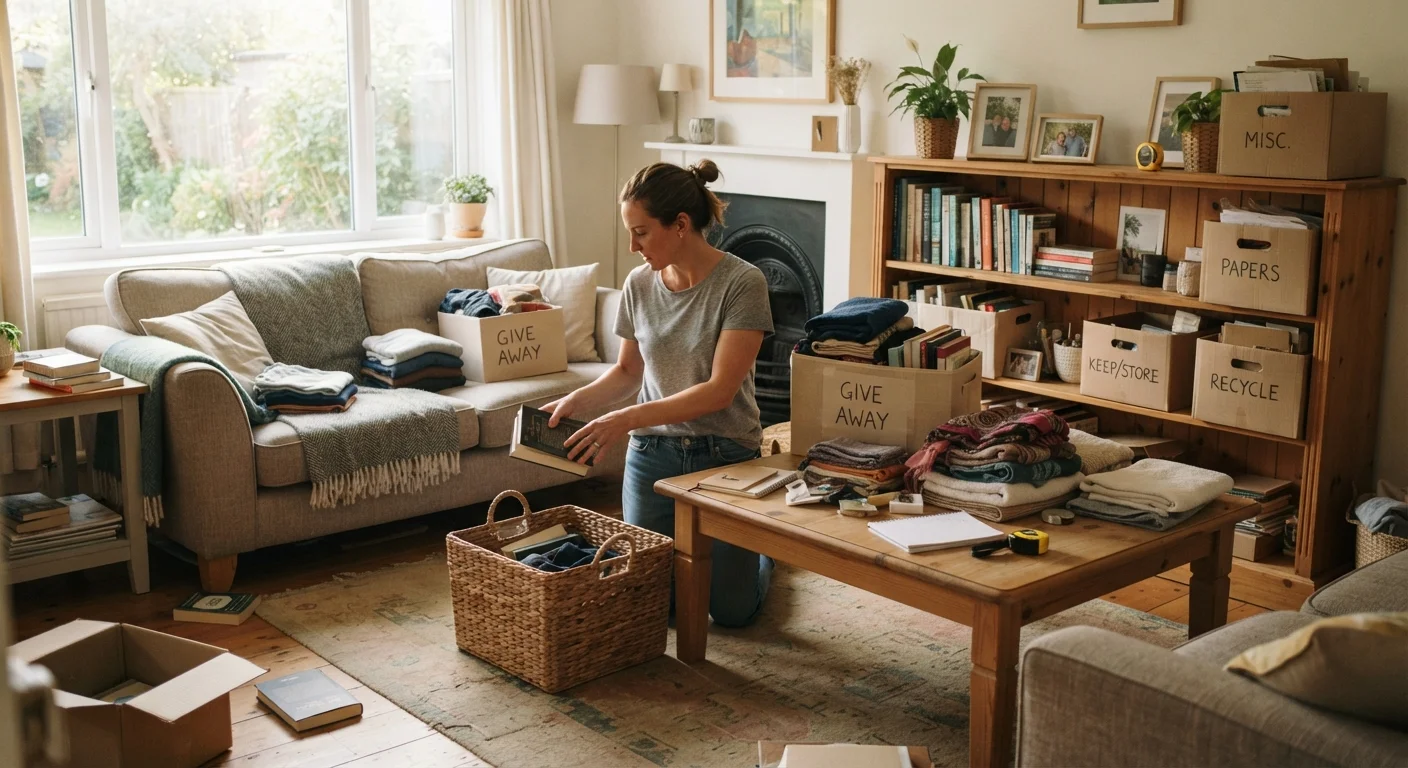
Before rearranging a single drawer, talk. A brief, low-stakes conversation - even 15 minutes - about what's working and what's frustrating can surface more useful information than hours of solo planning. Ask each person to name two or three specific pain points: the counter that's always cluttered, the shoes that pile up at the door, the cabinet nobody can close properly.
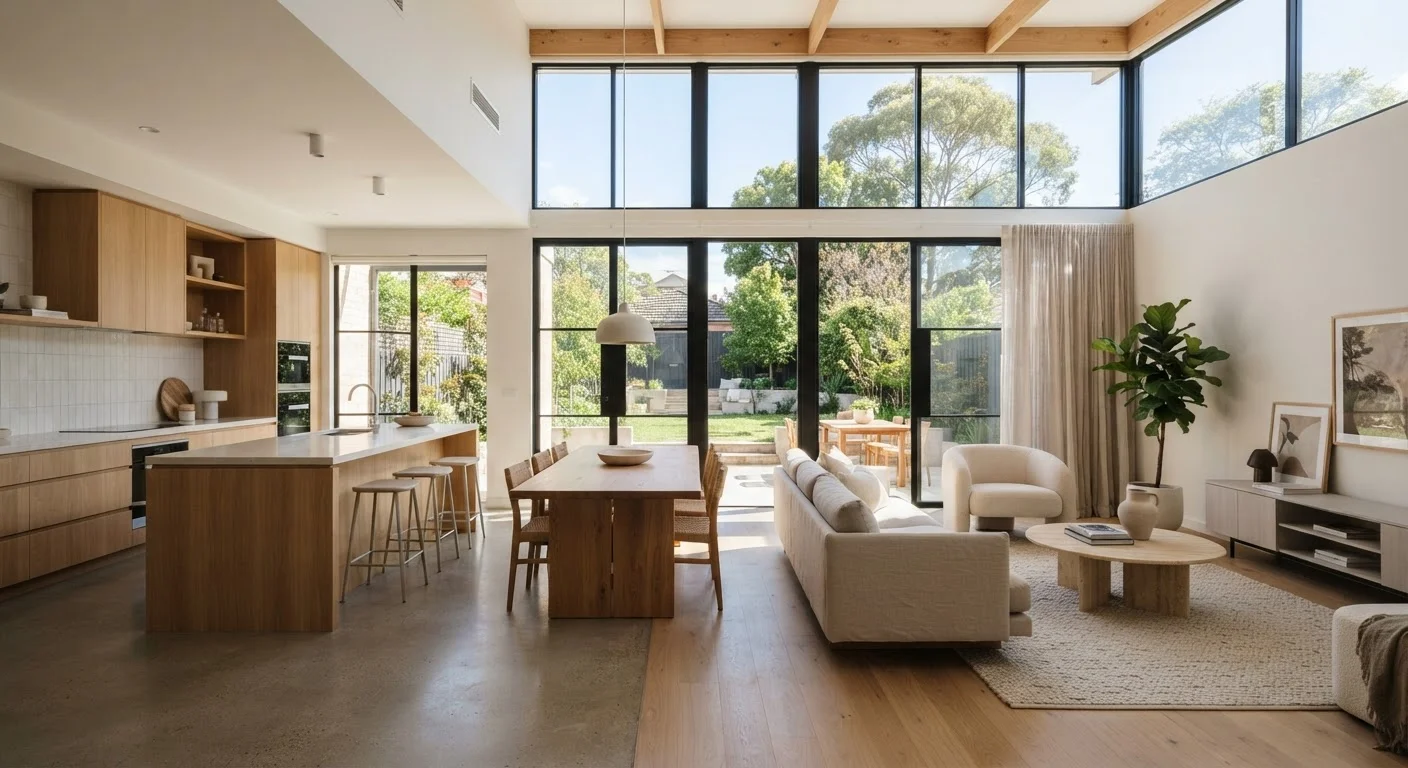
This kind of input helps you design systems around actual behavior rather than ideal behavior. It also builds early buy-in - people are far more likely to maintain a system they helped shape. For shared open-concept areas especially, getting alignment upfront matters; those spaces can quickly feel chaotic without agreed-upon boundaries. Consider reading what open-plan living actually involves before committing to any major layout changes.
If you want to think through how to organize before deciding where things go, comparing zone-based and category-based organizing methods is a useful starting point for multi-person homes in particular.
Keeping Systems Simple Enough for Everyone to Use
The most elegant organizational system in the world fails if it takes too many steps to maintain. In a multi-person home, simplicity isn't a compromise - it's a requirement. Every step you remove from putting something away increases the odds that it actually gets put away.
54%
Adults reporting home clutter causes stress
A survey by the American Psychological Association found that over half of adults associate a disorganized home environment with elevated stress levels.
2-3x
More likely to maintain systems with household input
Organizational research consistently suggests that people are significantly more likely to follow through on shared systems when they had a role in designing them.
Open bins, broad categories, and consistent "home" locations for high-traffic items - keys, mail, chargers, shoes - tend to outperform highly specific, labeled micro-systems over time. Comparing drawer dividers and open bins can help you decide which containment approach works best in each part of your home.
Don't overlook your walls and upper shelving, either. Vertical storage is one of the most underused tools in shared homes, especially when floor and counter space is already spoken for. Putting vertical space to work can meaningfully expand what's available without requiring more square footage.
“The goal of organizing a shared home isn't uniformity - it's reducing the number of daily decisions and negotiations everyone has to make. A good system quietly handles what used to require a conversation.”
— Julie Morgenstern, Professional organizer and author of 'Organizing from the Inside Out'